Ads from 1 June 2023 onward
The library does not reach further back than that, so a competitor who has advertised on LinkedIn for a decade still only shows you the recent stretch. Treat it as a rolling record, not an archive.
LinkedIn Ad Library
The LinkedIn Ad Library is a free, public database of the ads that have run on LinkedIn. It opened in June 2023, it needs no advertising account, and it is the only way to see what a business-to-business competitor is actually saying to the same buyers you are chasing. It is also narrower than most guides admit. This page covers what sits inside it, the four ways to search it, and the two questions it will never answer.
Every creative below came out of the LinkedIn Ad Library on the day this page was written, and each card links back to the ad it was taken from. Read the line inside the frame rather than the brand. Four of the five argue something; one of them only announces.
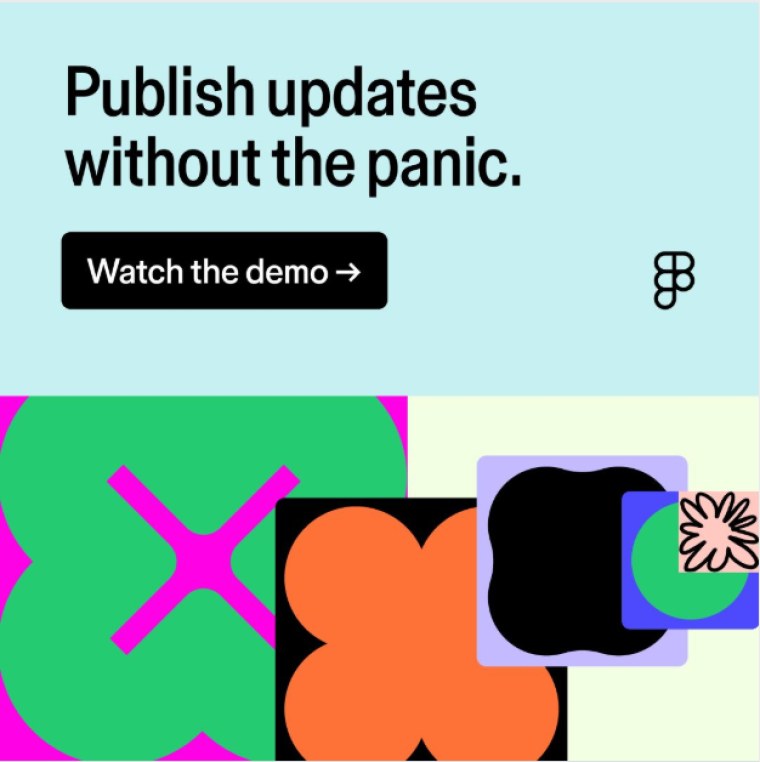
Objection first
Publish updates without the panic.
It names the feeling the buyer already has about shipping changes, then offers the demo. No feature is mentioned anywhere in the frame.
See it in the LinkedIn Ad Library
Mechanism claim
AI coding agents work better when they know your design system.
A full sentence doing an argument rather than a slogan. Same advertiser as the card above, a completely different job, which is what running two searches on one brand is for.
See it in the LinkedIn Ad Library
Research as the offer
Inside the research. The Great Renovation: AI Transformation in Europe
The product is absent and a report is the whole offer. On LinkedIn this is the dominant pattern for buyers too early to want a demo.
See it in the LinkedIn Ad Library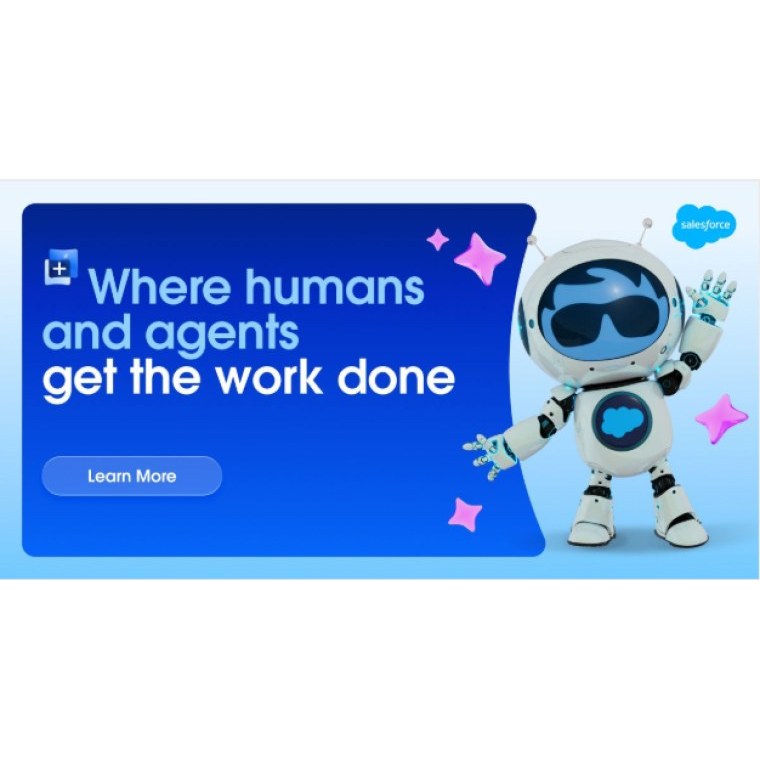
Category slogan
Where humans and agents get the work done
Brand advertising with a Learn More attached. Useful mainly as a control: this is what an ad looks like when nobody has to prove anything.
See it in the LinkedIn Ad Library
Pattern interrupt, video
Results this good? Definitely not the smoothie.
A video whose opening frame carries no text at all, so the line has to work from the body copy. Worth noticing because it is the one shape a still-image library cannot really show you.
See it in the LinkedIn Ad LibraryFour properties decide whether the library is useful for a given competitor. Read them before you plan any research around it, because two of them quietly limit what you can ever retrieve.
The library does not reach further back than that, so a competitor who has advertised on LinkedIn for a decade still only shows you the recent stretch. Treat it as a rolling record, not an archive.
An ad that stopped running eleven months ago is still there. One that stopped thirteen months ago is gone, with no notice and no way to retrieve it. If a competitor ad matters to you, screenshot it rather than bookmarking it.
It sits outside Campaign Manager and is readable by anyone, which means your competitors can read yours on the same terms. Anything you run on LinkedIn is public by default for at least a year.
For those, LinkedIn publishes an impression range and the targeting parameters behind the ad. Everywhere else you get the creative and little context, so an EU-targeted competitor is a far richer research subject than a US-only one.
The obvious route and the narrowest one. It answers what a single competitor is arguing right now. Run it on the two or three brands your buyers actually compare you against rather than the long list your team recites in meetings.
LinkedIn records who paid for an ad separately from whose page it ran on. That distinction matters when an agency, a parent company, or a regional subsidiary is buying, because searching the brand alone quietly misses everything bought under another name.
The mode most people skip and the one that pays. Searching a category term shows you how the whole market argues its case, including competitors you did not know were bidding for the same attention. Do this after the brand searches, because this is where the surprises live.
Both filters answer the same underlying question: how long has this message survived. An ad still running in a competitive market after several months has been paid for repeatedly, and nobody keeps paying for a loser.
Two gaps matter more than everything the library does publish. The first is performance: LinkedIn reports no spend, no click-through rate and no conversion data for another advertiser anywhere in the tool. Outside the EU there is not even an impression range. Any product promising you exact competitor numbers is modelling them, not measuring them, and the only genuine signal available to you is how long an ad has stayed in market.
The second is restricted ads. Where the law requires it, LinkedIn withholds the creative preview, the advertiser name and the payer name, so a category with regulatory sensitivity will read as emptier than it really is. Combined with the one-year retention rule, this means an absence of ads in the library is never proof that a competitor is not advertising. It is only proof that you cannot see it.
The opening line of the ad is the part doing the work. It names who the ad is for and what it claims. Design is the least transferable thing in a competitor ad and the most tempting thing to copy.
For every ad worth keeping, write down what it claims, which buyer objection that claim answers, and what proof it offers. Three lines per ad. A folder of screenshots without those notes is a folder nobody reopens.
Longevity is the only performance signal any public ad library gives you. It is weak on its own and strong in aggregate: five competitors all still running the same argument after six months is a market telling you something.
The output of this work is never a copied ad. It is the objection you now know the market answers, rewritten against what your product can actually prove. Copy the argument, never the execution.
An ad library tells you what your market argues. It cannot tell you what your buyers care about, because every ad in it was written for somebody else's customers. The gap between those two answers is usually where a winning angle sits, and closing it means reading your own reviews, comments and campaign data rather than more competitor creative. If you want the same view across Meta, TikTok and Google as well, the guide to finding competitor ads on all four platforms covers the other three libraries and how they differ.
LinkedIn is not the deepest of the public libraries and it is not the shallowest. It is the only one worth opening when your competitors sell to businesses or recruit against you, and the partial marks below are where most research plans quietly break.
| Capability | Meta | TikTok | ||
|---|---|---|---|---|
| Look up a named advertiser | Full support | Full support | Not supported | Full support |
| Search by keyword across advertisers | Full support | Full support | Partial support | Not supported |
| Shows the ad creative itself | Full support | Full support | Full support | Full support |
| A complete record rather than a curated selection | Full support | Full support | Not supported | Full support |
| Any engagement or reach signal | Partial support | Partial support | Full support | Not supported |
| Targeting parameters disclosed | Partial support | Partial support | Not supported | Not supported |
| Filter by date range | Full support | Partial support | Full support | Full support |
| Spend for a named competitor | Not supported | Not supported | Not supported | Not supported |
Partial means the platform publishes it for some ads only. On LinkedIn and Meta the extra impression and targeting detail applies to ads aimed at the EU; TikTok publishes engagement indicators on the top ads it selects rather than across the board. No public library publishes spend for a commercial advertiser. Checked at the linked sources on 12 September 2026.
Between the June 2023 start date, the one-year retention rule, and restricted ads whose preview and advertiser name are withheld, a competitor can be advertising heavily and still look absent. Absence here means you cannot see it, never that it is not happening.
LinkedIn records the payer separately from the page the ad ran on. If an agency, a parent company or a regional entity is buying, a company-name search quietly returns a fraction of the real picture. Run the payer search too.
Longevity is the best signal available and it is still weak on its own. Large advertisers leave brand campaigns running for reasons that have nothing to do with performance. Five competitors converging on the same argument is evidence; one brand repeating itself is not.
Yes, and it needs no advertising account. It is published as a transparency tool and sits outside Campaign Manager, which also means anything you run on LinkedIn is readable by your competitors on exactly the same terms.
It covers ads that ran from 1 June 2023 onward, and each ad remains visible for one year after its last impression. Both limits bite: there is no deeper archive to request, and an ad you saw last year may simply be gone today.
Not as a number. For ads targeted at the EU, LinkedIn publishes an impression range and the targeting parameters used. Everywhere else you get the creative with no performance context at all, so how long an ad has run is the only signal worth reading.
Usually one of three reasons. Their ads may be bought under a different payer name, such as an agency or a parent company. The ads may have stopped more than a year ago. Or they may be restricted ads, where LinkedIn withholds the preview and the names to comply with law.
Paid tools mostly read the same public data and add search, alerting and saved boards on top. That is worth paying for when you track many competitors continuously, and hard to justify when you check five brands once a month.
The claim it makes, the objection that claim answers, and the proof it offers. Those three lines are the transferable part. The layout, the font and the stock photography are the least useful things in any competitor ad.
Bring a competitor whose LinkedIn ads you cannot out-argue, and a set of your own customer reviews. We will show you the objection they are leaving unanswered and the customer language that answers it.
See Selzee in Action, Request a DemoKeep exploring: how to find competitor ads on all four platforms, competitor ads analysis, the best Facebook ads spy tools compared, the competitor advertising analysis framework.