Alternatives

Pomelli Alternatives: What to Use When Free Is Not the Constraint

Pomelli reads your website, builds a brand profile from it and generates campaign assets, for nothing. It does not schedule and it does not publish, it runs in English only, and it is an experiment Google can retire. Here is what it builds, where it stops, and what to use instead depending on which half you need.

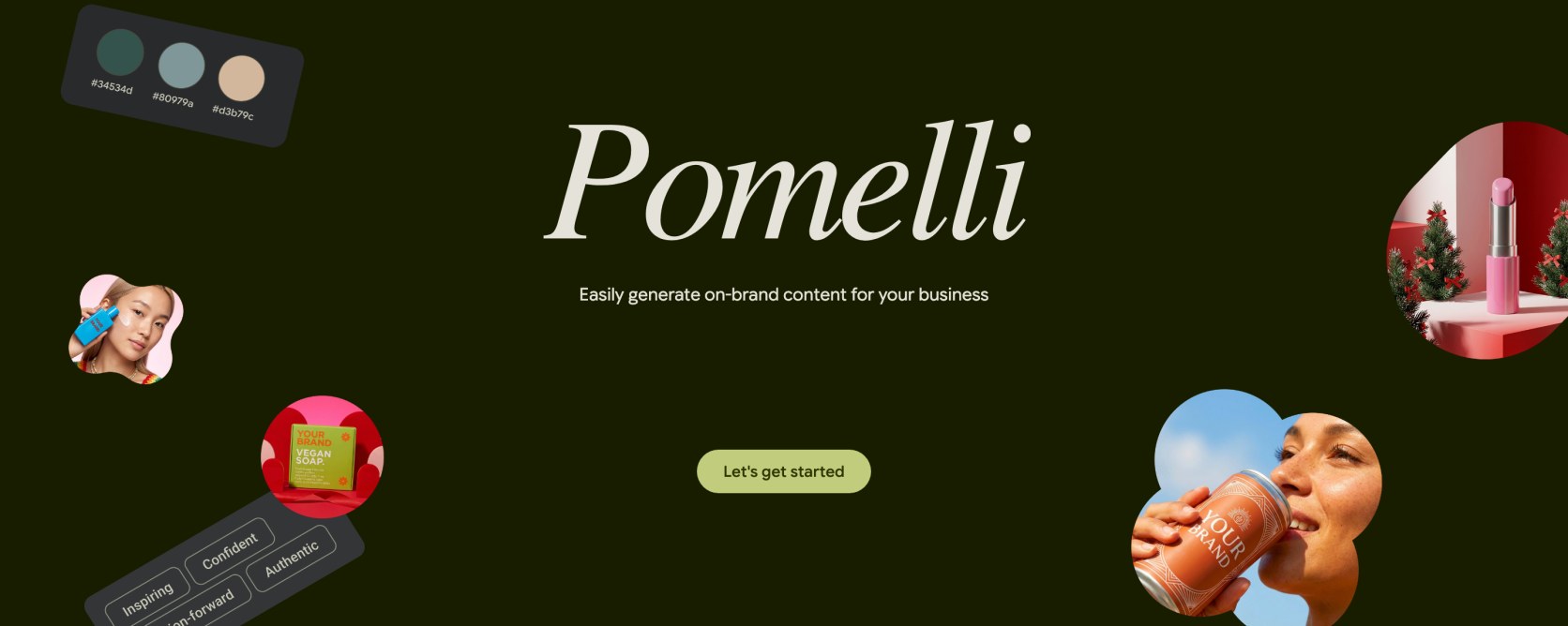
The Pomelli product page: the wordmark, the line "Easily generate on-brand content for your business", a colour palette card showing hex codes, tone-of-voice chips reading Inspiring, Confident and Authentic, and product mockups labelled YOUR BRAND
Pomelli's own page, and the whole pitch in one frame: a palette with the hex codes, a typeface, tone words, and product mockups wearing them. All of it read off a website in about a minute. What it does not do is anywhere on this page below. Screenshot: labs.google.com/pomelli

Key takeaways

  • Pomelli is free and is a Google Labs experiment, which are the same fact read two ways. Free is the right price for testing an idea and the wrong price for something your quarter depends on.
  • It makes assets and stops. Sharing to Google Ads does not launch a campaign, and Instagram sharing needs a connected professional account, so pairing it with a cheap scheduler is a real answer and often the cheapest one.
  • Every tool here that reads a URL, Pomelli included, reads the same thing: your website. That is the ceiling on all of them, and it is why switching between them changes the invoice more often than the results. A website is what you already said about yourself, so a tool that reads only your website can only rephrase you. Canva and the schedulers read nothing and ask you to bring the idea; Selzee reads somewhere else.

What Pomelli Is, and What It Builds

Pomelli launched on 28 October 2025 as a Google Labs experiment built with Google DeepMind. You give it a website, it reads the site, and it extracts what Google calls a Business DNA profile: tone of voice, custom fonts, images and colour palette. Everything else it makes is generated from that profile, which is why the profile is the part worth getting right. Three more screens below, all captured from Google's own documentation, because the price and the two limits that decide this comparison are written down rather than alleged.

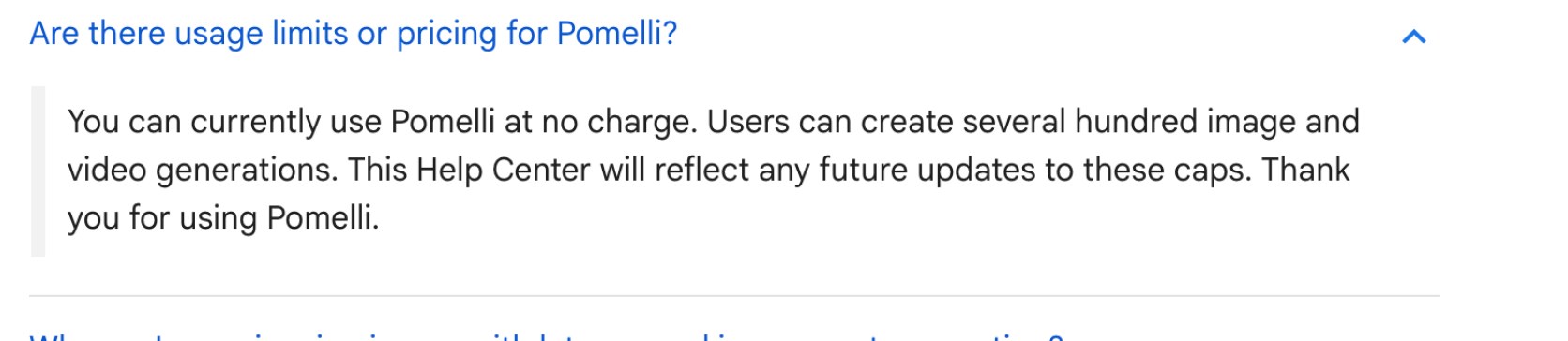
Google Labs Help documentation answering "Are there usage limits or pricing for Pomelli?" with "You can currently use Pomelli at no charge. Users can create several hundred image and video generations. This Help Center will reflect any future updates to these caps."
Screenshot: Google Labs Help, Get started with Pomelli

The price

Free, and Google says so in writing

No rate card, no paid tier, no trial that expires: you can currently use Pomelli at no charge, with several hundred image and video generations included. Google adds that the Help Center will reflect any future updates to these caps, which is the polite version of the risk. Free is a property of the experimental phase rather than a promise.

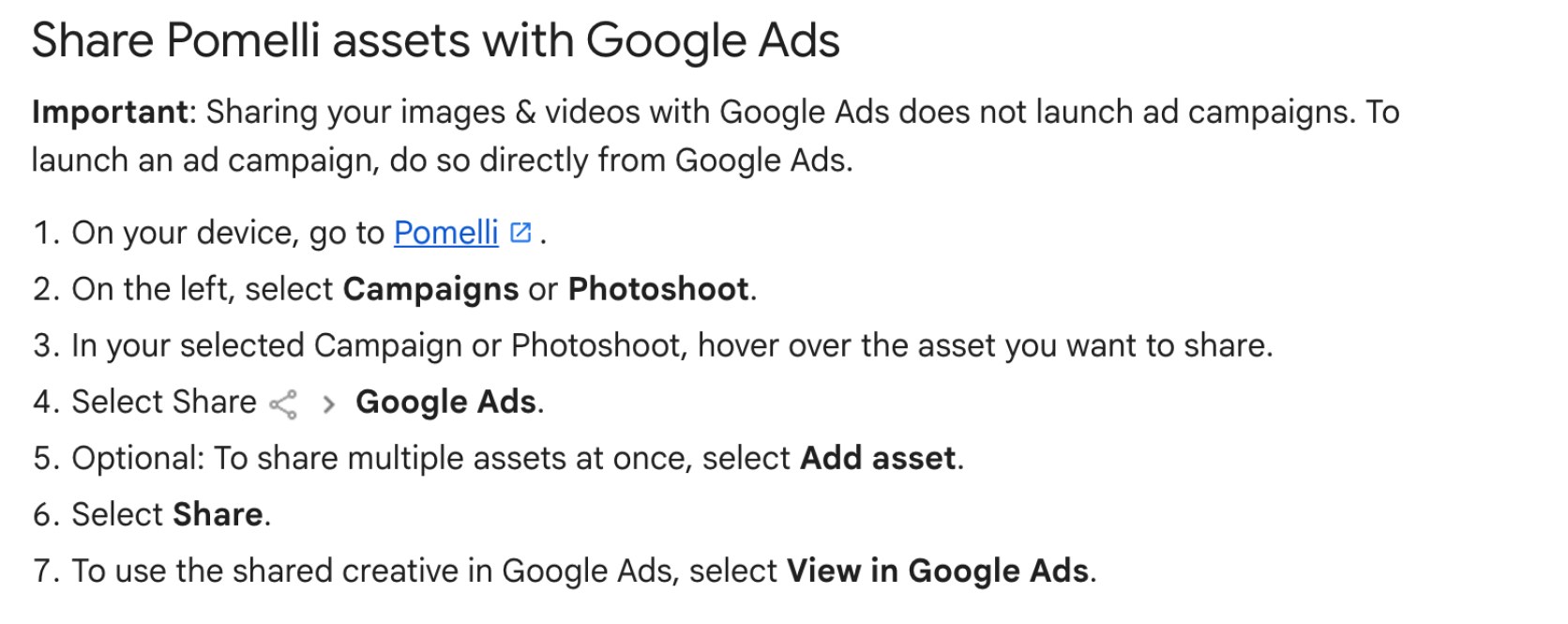
Google Labs Help documentation reading "Important: Sharing your images & videos with Google Ads does not launch ad campaigns. To launch an ad campaign, do so directly from Google Ads."
Screenshot: Google Labs Help, Share assets to connected apps

Limit one

Sharing an asset is not running an ad

This is the sentence the rest of the page hangs on, and it is Google's, in bold, in its own help centre: sharing your images and videos with Google Ads does not launch ad campaigns. Instagram works the same way and needs a connected professional account. Pomelli makes the asset and hands it over. Somebody still has to run it.

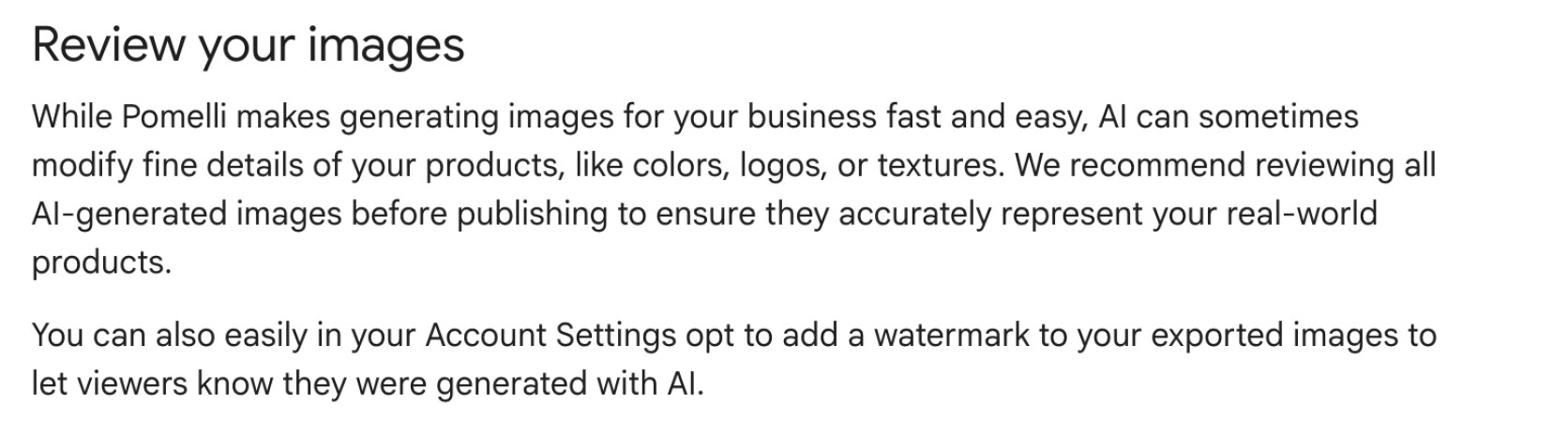
Google Labs Help documentation headed "Review your images", warning that AI can sometimes modify fine details of your products, like colors, logos, or textures, and recommending review before publishing
Screenshot: Google Labs Help, Get started with Pomelli

Limit two

Check the product before it goes out

Google says AI can sometimes modify fine details of your products, like colours, logos or textures, and recommends reviewing every generated image before publishing. On a catalogue of three that is a glance. On a catalogue of three hundred it is a job, and it is the cost that does not appear next to the price.

Captured 17 September 2026 from labs.google.com and the Google Labs Help Center. Pomelli has expanded from the four launch countries to more than 170 countries and territories, in English only, for users aged 18 and over.

The Six Things Pomelli Builds

In the order Google's own help centre lists them. If you have not opened it yet, this is what sits behind the login.

Step one

Business DNA

The first thing it makes and the thing everything else reads. Point it at your website and it extracts what Google calls your brand identity: tone of voice, custom fonts, images and colour palette. About a minute of setup instead of an afternoon of brand-kit admin, and it stays editable.

Step one

Catalog

The products and brand information it pulled off your site, held as a list you can correct. It matters more than it looks, because the Catalog is what campaigns are generated from. A thin or wrong Catalog is the usual reason output feels generic, and it is fixable by hand.

Output

Campaigns

Pick a product, get a campaign brief and a series of creatives with a header, a description and a call to action on each. Every asset is editable, and you can feed a campaign up to three images and a product URL as ingredients to steer it.

Output

Photoshoots

Turns a plain product photo into a styled shot. This is the feature that gets Pomelli compared to paid product-photography tools, and for a seller with phone photos and no studio budget it is the strongest thing in the product.

Output

Brand Books

Your Business DNA written out as a document you can hand to a freelancer or an agency. Worth generating on day one even if you never use Pomelli again, because it is the one artefact here that keeps its value outside the tool.

Output

Websites

Generate and manage a site from the same brand profile. The newest surface and the least load-bearing for most people who arrive wanting social creative, but it is there and it is included.

The limits

Where Pomelli Stops

Four limits send people shopping, and all four sit in Google's own documentation rather than in a competitor's marketing. Two of them are in the screenshots above.

It does not publish

Sharing to Google Ads does not launch a campaign, and Instagram sharing needs a connected professional account. For most teams that means downloading files and uploading them somewhere else, every time.

It cannot read every site

Google puts it plainly: some websites will not work with Pomelli if there are bot blocking mechanisms such as captchas. Business DNA is the first step and everything else reads it, so when that fails the whole product fails with it.

It can get your product wrong

AI can sometimes modify fine details of your products, like colours, logos or textures, so Google recommends reviewing every generated image before publishing. There is an optional watermark in account settings marking exports as AI generated.

It is an experiment

Labs retires experiments, which is what Labs is for. There is no rate card, no contract and no notice period, so anything you build on top of it is borrowed rather than owned.

Selzee vs Pomelli, Row by Row

The closest functional twin on this page, so it is worth doing properly. Selzee loses the price row outright and does not publish either. The row that decides it is the first one.

Dimension Pomelli Selzee Recommended
What it reads first Your website. Tone of voice, fonts, images, colour palette, products. Your reviews, your comments, competitor ads that have been running long enough to have earned it, and what your own campaigns did.
What it decides How the asset should look, from the brand profile it built. What the next ad should argue, then how it should look.
What it produces Campaign creatives, styled product shots, a brand book, a site. 50 ready-to-launch ads a month on the entry plan, 150 on the next one, sized for paid social.
Publishing No. It shares to connected apps, and sharing to Google Ads does not launch a campaign. No. You download the creative and run it yourself.
Learning from results Not documented. Each campaign starts from the same brand profile. Yes. Analytics on what worked feed the next round of concepts.
Brands covered One Business DNA profile per business. One brand on the entry plan, more on the plans above it.
Availability 170+ countries and territories, English only, 18+. Anywhere, and it works in your own language and tone.
Price Free while it is an experiment. No published rate card. From $75 a month, 2,000 free credits on signup, no card.
What you are trusting A Google Labs experiment, which Labs can retire. A paid product with a contract behind it.

Scored against what each product publishes about itself. Pomelli's rows come from the Google Labs help centre and the launch post, and Selzee's price comes from the plan catalogue, so neither can go stale in copy.

The Row That Decides It

Both products start by reading something, and what they read is the difference that survives a trial. Pomelli reads your website, which is the right input for what it sells: your site is where your brand describes itself, so a profile built from it produces assets that look like you and sound like you, in about a minute. What a website cannot tell any generator is which argument to make next, because a website is the argument you already chose. Selzee reads the other material: your reviews, your comments, the competitor ads that have been running long enough to have earned their place, and what your own campaigns did. That is a slower input and a more specific one. The two shortages that send people shopping are the blank page and the flat line. Pomelli is built for the first and is free, which is a hard combination to argue with. Selzee is built for the second, costs money, and is the wrong purchase if the blank page is your actual problem.

Every tool here that reads a URL reads the same thing: your website.

Your website is what you already said, which is why the fourth week of output looks like the first, whichever of them you picked.

When Pomelli Is the Right Answer

Four cases where the free tool wins and paying for anything on this page, including us, is the wrong move. A comparison page that cannot say this is not worth reading.

Budget

You have no budget at all

Nothing on this page beats free, and Pomelli is a real product rather than a trial that expires. If the choice is Pomelli or nothing, take Pomelli and come back when the spend justifies the question.

Product photography

Your photos are the problem

Photoshoots is the strongest thing Pomelli does. If your product shots are the weak link and your copy is fine, buying a creative strategy tool solves a problem you do not have.

Setup

You want a brand kit in a minute

Extracting fonts, colours and voice from a URL is genuinely fast, and the Brand Book it writes is useful even if you leave. Generate it, export it, keep it.

Stage

You have not started posting yet

If there are no reviews, no comments and no campaign history, the material Selzee reads does not exist yet. Post for a quarter with a free tool, then the question changes.

The switching triggers

Five Signs You Have Outgrown Pomelli

  1. 1

    Week four looks like week one

    The assets are on brand and they keep making the same claim, because the website they are built from makes the same claim. This is the ceiling of any tool that reads only your own site, and a different generator does not raise it.

  2. 2

    Nothing goes out

    Assets pile up in a downloads folder because somebody has to upload each one by hand. That is a distribution problem. Buy a scheduler, not a better generator.

  3. 3

    Your site is not readable

    Google says some websites will not work with Pomelli if there are bot blocking mechanisms such as captchas. Almost every tool in this category starts from a URL, so fixing the crawl is worth more than switching.

  4. 4

    You are checking every asset for errors

    Google warns that generation can alter colours, logos and textures. Once review costs more than production saved, you are paying with attention instead of money.

  5. 5

    Something real now depends on it

    The campaign calendar, a launch, a client. Labs retires experiments without notice and without a contract behind them. Free is the right price for testing an idea.

Pomelli Alternatives and Competitors, With Prices

Eight tools, cheapest first, with what each one suits. Two are free. Selzee is on the list, is the dearest row, and is a different shape of product, which its verdict column says plainly.

Tool Price Who it is for Verdict
Pomelli (Google Labs) Free while it is an experiment, several hundred image and video generations at no charge Small businesses that want on-brand campaign assets generated from their own website at no cost. The tool you are comparing against, and the cheapest row here by a distance. It costs nothing and it is an experiment, which are the same fact read two ways.
Canva Free plan, then $144/year for Pro and $250/year per person for Business Anyone who will lay the ad out themselves and only wants the tools to do it. The other free floor, and the one most teams already have open. You do the layout, so it answers a tooling shortage rather than a time one.
Predis.ai $24/mo Core, $55/mo Rise, $212/mo Enterprise+, 7 days free but it takes a card up front Small teams who want social posts and ad creative generated from a product catalogue. Cheapest paid entry on the page, and the first row that also schedules. The seven free days take a card up front.
Zeely First cycle $29.95 Starter, $49.95 Plus or $79.95 Growth, renewing at $49.95, $89.95 and $149.95, plus up to 12% of ad spend when you run campaigns through it Solo founders and small Shopify sellers who want ad creative without hiring a designer. Cheapest first cycle here and the dearest renewal. Read the second number before the first.
AdCreative.ai $39/mo Starter, $249/mo Professional, $999/mo Ultimate Small teams and solo operators who need ad visuals produced without a designer. Static-first and the most established paid name in the category. One brand at the entry tier, and the credits go quickly.
Creatify Free tier with watermarked exports, then $39/mo Starter and $99/mo Pro Advertisers who specifically want AI avatar video ads built from a product URL. The specialist. Buy it if what you wanted out of Pomelli was video, and take the free watermarked tier first.
Native (native.no) $79/mo Pro for 1 brand, $249/mo Max for 3, from $499/mo Agency for 10 workspaces, extra brands $39 each and extra workspaces $69 Small businesses that want posts written and published to their channels without touching either step. The only row that publishes for you. It removes the step Pomelli leaves with you, which for most people is the reason they went shopping.
Selzee From $75/mo, 2,000 free credits on signup Brands running paid social who need the next ad to argue something their own buyers already said. The dearest row and the narrowest. It decides what to make before making it, and like Pomelli it publishes nothing.

Read the verdict column before the price column. Pomelli and Canva cost nothing, Zeely is the cheapest first cycle and the dearest renewal, and Native is the only row that publishes what it makes. Checked at the linked sources on 8 September 2026. Where a vendor publishes no rate card, the table says so.

The Prices, as Each Vendor Publishes Them

Three of the rows above, captured from the vendors' own rate cards on 17 September 2026, because the numbers are the part of a comparison page a reader cannot check without leaving it.

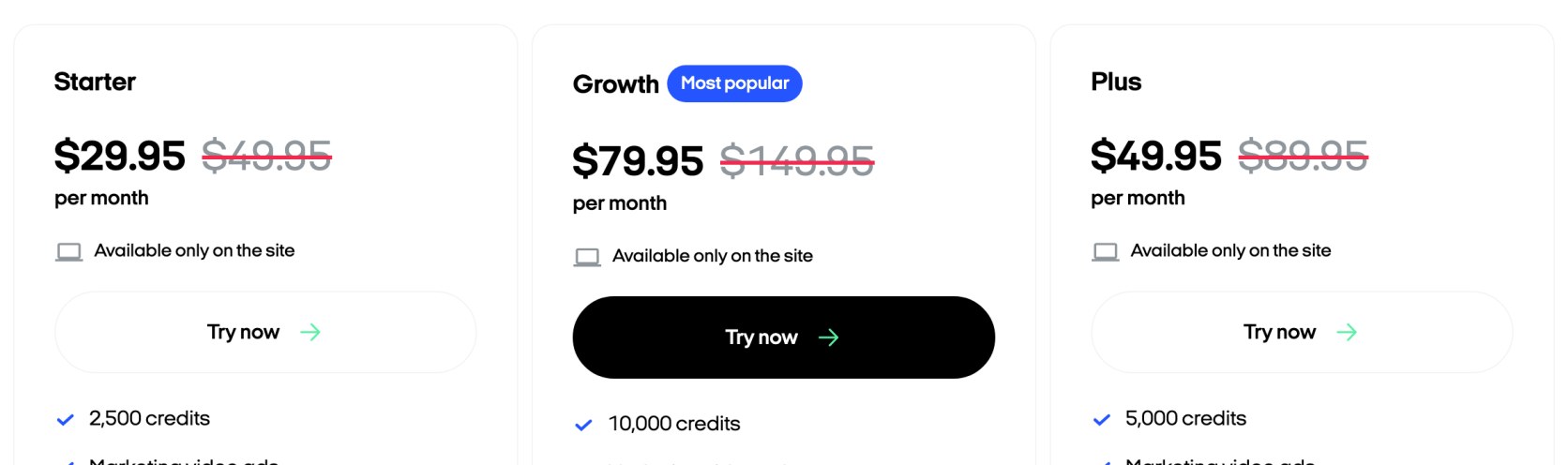
Zeely's pricing page showing three plans, each with a struck-through higher price: Starter $29.95 from $49.95, Growth $79.95 from $149.95, Plus $49.95 from $89.95
Screenshot: zeely.ai/price

Zeely

The cheapest first cycle, and the dearest renewal

Zeely prints both numbers itself and strikes the second one through: $29.95 from $49.95 on Starter, $79.95 from $149.95 on Growth, $49.95 from $89.95 on Plus. Running campaigns through it costs up to 12% of ad spend on top. That is the row on this page most likely to be compared against free on the headline figure alone.

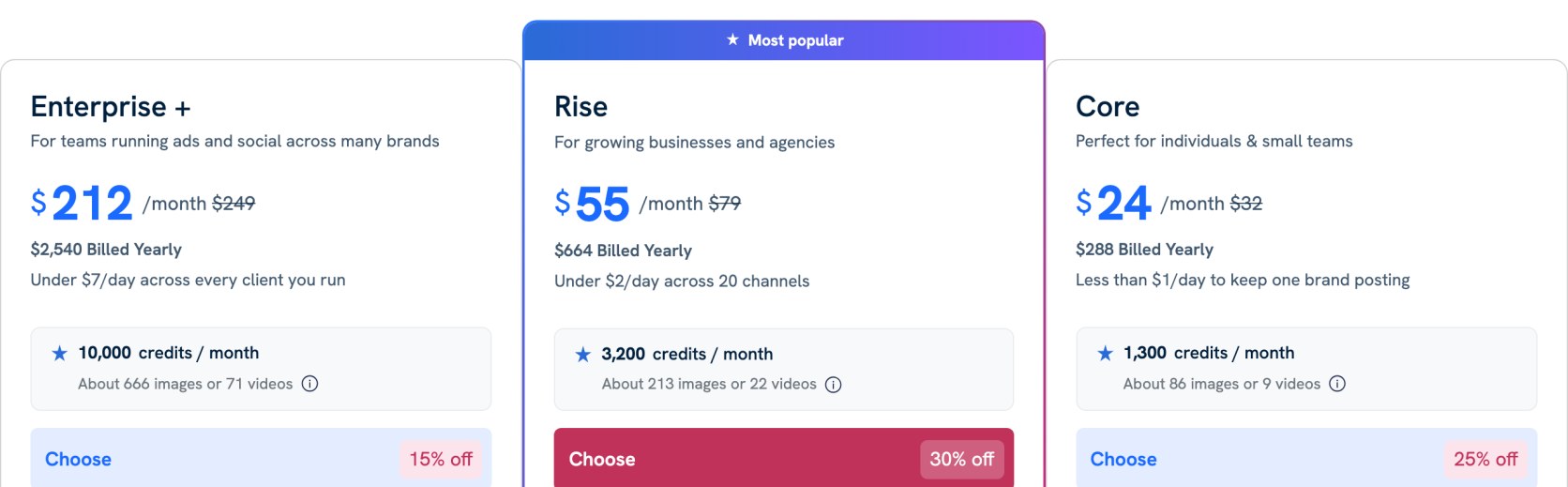
Predis.ai pricing cards showing Enterprise+ at $212 a month, Rise at $55 and Core at $24, each with a higher month-to-month figure struck through, and a monthly credit allowance on each
Screenshot: predis.ai/pricing

Predis.ai

The cheapest stable paid price here

Core at $24, Rise at $55, Enterprise+ at $212, and unlike the row above it these do not double on renewal. Read the small print in the shot: those are the annual-billing rates, with higher month-to-month figures struck through beside them. The plans differ by credits rather than by capability.

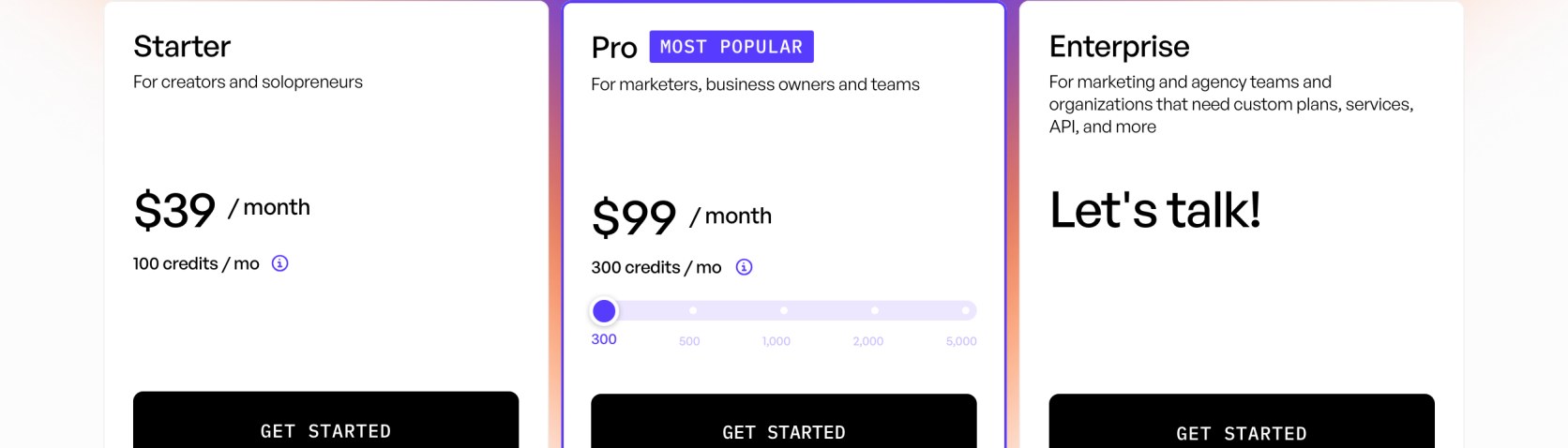
Creatify pricing cards showing Starter at $39 a month with 100 credits, Pro at $99 a month with 300 credits, and an Enterprise plan with no published price
Screenshot: creatify.ai/pricing

Creatify

The specialist, priced like one

Starter at $39 for 100 credits a month and Pro at $99 for 300, with watermark removal listed as a paid feature, which is what the free tier costs you. Worth pricing against Pomelli only if avatar video is the output you actually wanted, because that is the narrow thing Creatify does better than anything else on this page.

Canva is missing here on purpose: its pricing page serves a Cloudflare challenge to an automated browser, and a screenshot of a challenge page is not a price. Its figures in the table above come from the same page, read by hand.

What Each Pomelli Alternative Is Actually For

1

Canva

The comparison people reach for first, and the two tools want different things from you. Canva hands you a canvas, templates and a Brand Kit you fill in yourself. Pomelli reads your website and hands you finished assets you then edit. If you have a designer, or taste and an hour, Canva has the higher ceiling. If what you are short of is the first draft, Pomelli gets there faster and gives you less to argue with. Neither costs anything to find out.

2

Predis.ai

The cheapest row that closes the gap Pomelli leaves open. It generates social posts and ad creative from a product catalogue and schedules them, so the asset does not stop at your downloads folder. Its Core tier is the cheapest stable paid price on this page. The free trial takes a card up front and charges on day seven.

3

Zeely

Aimed at the same buyer as Pomelli and priced to look cheap. The published first cycle starts at $29.95 and renews at close to double, with up to 12% of ad spend on top once campaigns run through it. Worth knowing before you compare a headline number against a tool that charges nothing.

4

AdCreative.ai

The paid answer to the half of Pomelli that makes static ad sets, from $39 a month. What you buy over the free option is volume and consistency rather than a different idea. The recurring complaint is credits: one brand at the entry tier, and a normal month of testing runs it down.

5

Creatify

Narrower and better at the narrow thing. It turns a product URL into avatar video ads from $39 a month, with a free watermarked tier to judge the output on. Pomelli animates in 9:16, so if short-form video is the channel you actually post to, price the two side by side before paying.

6

Native

The row that removes the manual step. It writes posts from your website and publishes them to 12 or more channels, from $79 a month for one brand. If the reason Pomelli assets stopped going out was that somebody had to upload them, this is the category to shop in and another generator will not close it.

7

Buffer

The pure scheduler, and the one most Pomelli users actually need. It publishes and writes nothing, which is exactly the half Pomelli leaves open. Free plan for three channels and a handful of scheduled posts, which is enough to find out whether distribution was the whole problem before paying anybody.

8

Hootsuite

The enterprise end of the same job: scheduling plus approvals, inbox and reporting. Worth it when more than one person has to sign off before a post goes out, and heavy for a one-person shop that just wants the downloads folder emptied.

9

Ocoya

Sits between the two halves: it writes and it schedules, so it overlaps Pomelli rather than completing it. Pick it if you would rather run one tool badly than two tools well, and price it against Predis.ai, which does the same shape of job.

10

SocialBee

Category-based scheduling, which is the feature nobody shops for and everybody ends up wanting: you file posts by theme and it recycles them on a rota. The right answer when the problem is a calendar with gaps rather than a shortage of assets.

11

Publer

The cheapest credible scheduler on this list and the one with the widest free tier. If the plan is keep Pomelli for generation and add something under it, this is where that arithmetic works out best.

Pomelli vs Canva

The two most common free answers in this category, and they are not the same purchase. Canva is a canvas: templates, sizes, stock and a Brand Kit you set up yourself by uploading a logo and picking colours and fonts. Pomelli skips that step and reads your website instead, then hands back finished campaign assets in your palette and voice. The trade is control for speed. Canva gives you more room to change your mind and asks you to know what you want; Pomelli gives you a draft and less to argue with. The honest test is which shortage you actually have. If you have someone who can lay an ad out and the queue is full anyway, Pomelli removes the blank page. If your problem is that the output all looks the same after a month, neither tool fixes it, because both are reading the same website. One difference sits outside both price columns: Canva is a company selling a product, on Free plan, then $144/year for Pro and $250/year per person for Business, and Pomelli is an experiment that costs nothing until it stops existing.

The Cheapest Pomelli Alternative

Nothing on this page undercuts free, so every paid row has to justify itself on what Pomelli withholds. Canva is the other genuinely free option and buys you control rather than a draft. Above that the ordering is less obvious than the table looks. Predis.ai at $24 is the cheapest stable paid price here and the cheapest row that also schedules, which is the gap most people are trying to close. Zeely advertises the lowest paid number at $29.95, renews at $49.95 and adds up to 12% of ad spend once campaigns run through it, so by month three it is not the cheapest thing here. Creatify has a free watermarked tier, which makes it the cheapest honest way to find out whether avatar video was the output you wanted. For most small teams the cheapest answer is to keep Pomelli for generation and add a scheduler under it.

How to Choose a Pomelli Alternative

  1. 1

    Work out whether you are replacing Pomelli or completing it

    Pomelli does one half of the job well and does not do the other half at all. If the assets were fine and they just never went out, you are shopping for a scheduler and a generator will waste the budget. If the assets kept coming back generic, you are shopping for a different starting point. The two shortlists barely overlap.

  2. 2

    Check whether your own site is readable

    Pomelli builds its Business DNA by reading your website, and Google says some websites will not work with it if there are bot blocking mechanisms such as captchas. If that is why you are here, the same wall blocks most of this page, because almost every tool in the category starts from a URL. Fix the crawl before buying anything.

  3. 3

    Price the second month, not the first

    One tool on this page costs roughly double in month two, and one costs nothing until Google decides otherwise. Write down the renewal figure and any ad-spend percentage before you compare headline prices. That is the comparison that survives contact with the invoice.

  4. 4

    Decide how much a free experiment is allowed to carry

    Pomelli is a Google Labs experiment, and Labs retires experiments. Write down what breaks in your month if it disappears on a Tuesday. If the answer is one afternoon of work, take the free tool. If it is the campaign calendar, buy something with a contract behind it.

  5. 5

    Ask what each tool reads before it writes

    Pomelli reads your website. So do most of the paid rows above, which is why switching between them changes the invoice more often than the results. The tools that produce a different argument are the ones reading something else: your reviews, your comment threads, the competitor ads that have been running long enough to have earned it.

Five Mistakes When Replacing a Free Tool

  • Replacing a free tool with a paid copy of it

    Fix: name the thing Pomelli would not do before you shop. If a paid tool does the same job from the same input, you have bought consistency and a support contract, not a different outcome.

  • Comparing a first-cycle price against free

    Fix: put the renewal figure in the spreadsheet. Zeely advertises a discounted first cycle and renews at close to double, which reads very differently next to a tool that charges nothing.

  • Treating a Labs experiment as infrastructure

    Fix: keep the brand assets you care about somewhere you own. Export the Brand Book and the creative rather than leaving your only copy inside an experiment.

  • Shipping generated assets without checking the product

    Fix: Google warns that generation can alter colours, logos and textures. Check the product shot against the real product before it goes out, every time, and not only on the first batch.

  • Counting assets produced instead of assets shipped

    Fix: go back through last quarter and count what actually went live. If the ratio is poor, the bottleneck is review or publishing, and a faster generator makes the queue longer.

How to Take Your Brand Work With You

1

Generate the Brand Book and export it

The one artefact here that keeps its value outside the tool. It is what you hand a freelancer, an agency or the next piece of software, and it takes one click today and none at all once the product is gone.

2

Keep the source photos, not just the styled shots

Download the campaign creatives you actually used rather than everything you made, and file the original product photography separately. A styled shot is worth less than the original the moment you want it restyled.

3

Write the Business DNA down somewhere plain

The fonts, the hex codes, and the two or three sentences describing the voice. Ten minutes, and it is the first thing every tool in this category asks for, so it is ten minutes you never spend again.

4

Save the corrected Catalog

If fixing what Pomelli read off your site took real work, that work is yours and it does not transfer. Keep the corrected product list, because you will be re-entering it wherever you go next.

What Selzee Does Instead

Selzee is an AI content team with its own interface, and it runs a loop rather than a generator: research, concepts, create, then learning from what the results did. Research is the part that separates it from everything above. It reads your reviews and comment threads, the competitor ads that have been running long enough to have earned their place, trends in your category, and what your own campaigns returned. Concepts turns that into an argument worth making. Create produces the ads. It does not publish and it does not schedule, exactly like Pomelli, so if that was the gap you came here to close then Native or Predis.ai is your answer and not this one.

  • $75 a month for one brand and 50 ready-to-launch ads, 150 on the plan above it.
  • Sized for TikTok, Instagram, Facebook and the rest, with analytics on what is working feeding the next round.
  • 2,000 free credits on signup and no card, so the comparison costs nothing to run.
Selzy, the Selzee mascot, at a desk reading an analytics dashboard

The Argument a Website Cannot Make

Creative is where paid performance is decided: Nielsen credits creative, not targeting or media spend, with up to 89% of a digital ad's in-market success, and marketing teams activate only 33% of their martech stack's capabilities, down from 42% in 2022, per Gartner. Reviews are the clearest case of an asset already paid for and never read, and a homepage is the one input every tool on this page already has.

The same argument with a different subject is on the Predis.ai alternatives comparison, the renewal arithmetic is on the Zeely review, and the publishing half is covered on Selzee vs Native.

Who Stops Shopping for Another Generator

Small teams and store owners who tried the free tool, liked the first batch, and found the fourth week looked like the first. Nothing was broken and nothing was expensive. The assets were on brand and said the same thing every time, because the website they were built from says the same thing every time. The pattern after switching the starting point is consistent: the argument comes from the brand's own buyers, the creative carries the sentence that supports it, and the asset count stops being the measure. We are gathering named customer stories and will publish figures once those results are verified.

  • A shortlist of two, because the half of the job you are replacing gets named before the tools do.

  • A monthly figure that includes renewals and ad-spend fees, so the cheapest row is actually the cheapest.

  • Creative that argues something your buyers already said.

Pomelli Alternatives: FAQ

01 What is the best Pomelli alternative? +

It depends which half you are replacing. To also get posts scheduled, Predis.ai from $24 a month, or Native if you want them published for you. For avatar video specifically, Creatify. For full design control at no cost, Canva. If the assets were fine and the results did not move, the answer is not another generator, it is a different starting point.

02 Is Pomelli free? +

Yes. Google says Pomelli can currently be used at no charge, with several hundred image and video generations included, while it is an experiment. There is no published rate card and no paid tier. The cost is that Google Labs retires experiments, so what is free today can be gone rather than expensive tomorrow.

03 Is there a free alternative to Pomelli? +

Canva's free plan is the closest one: sizes, templates and basic generation, with a Brand Kit you set up yourself. Creatify runs a free tier with watermarked exports, which is enough to judge avatar video output. Both ask more of you than Pomelli does, because neither reads your website for you.

04 Pomelli vs Canva: which is better? +

Different purchases. Canva hands you a canvas and a Brand Kit you fill in, and has the higher ceiling if you can lay an ad out. Pomelli reads your website and hands you finished assets, and is faster if what you lack is the first draft. Both are free to start, so the useful test is which shortage you have rather than which tool wins.

05 Does Pomelli publish or schedule posts? +

No. It shares assets to connected apps, and Google states that sharing images and videos with Google Ads does not launch ad campaigns, while Instagram sharing needs a connected professional account. For scheduling you still need something under it, which is why Predis.ai, Native, Buffer and Hootsuite show up on most Pomelli shortlists.

06 What is Pomelli Business DNA? +

The brand profile Pomelli builds by reading your website: tone of voice, custom fonts, images and colour palette, plus a Catalog of your products. Everything else it generates is built from that profile, so correcting the Catalog is the highest-value thing you can do inside the product. You can also export it as a Brand Book, which is worth doing on day one.

07 Why is Pomelli not working with my website? +

Bot blocking is the documented cause. Google says some websites will not work with Pomelli if there are bot blocking mechanisms such as captchas, because the Business DNA profile is built by reading the site. Almost every tool on this page starts from a URL the same way, so fixing the crawl helps more than switching tools.

08 Which countries is Pomelli available in? +

Google lists more than 170 countries and territories, up from the United States, Canada, Australia and New Zealand at launch in October 2025. The interface runs in English only and the product is for users aged 18 and over. Feature availability can differ by country.

09 Is Pomelli going to be shut down? +

Google has announced nothing, and the product has been expanding rather than winding down. It is a Labs experiment, though, and Labs exists to retire things. Export your Brand Book and the creative you actually use, and do not put anything on it that your quarter depends on.

10 Why does Pomelli output start looking the same? +

Because it reads your website and your website says one thing. Every tool on this page that reads a URL has that same ceiling, which is why switching between them changes the invoice more often than the results. Output varies again when the input does: reviews, comment threads, competitor ads and your own campaign results all say things your homepage does not.

11 Is Selzee a Pomelli alternative? +

For one half of it, yes, and it is not free. Both read something and produce on-brand creative, and neither publishes or schedules. Pomelli reads your website and decides how the asset should look. Selzee reads your reviews, comments, competitor ads and campaign results and decides what the next ad should argue, then makes it, 50 ready-to-launch ads a month per brand on the entry plan. Teams pick it when production stopped being the bottleneck and sameness started being one.

12 How much does Selzee cost? +

Credit-based and simple: $75/mo for individuals, $300/mo for SMBs, and $1,500/mo for bigger teams, with the same features on every plan. New signups get 2,000 free credits, no card required.
See What Your Reviews Say Your Next Ad Should Argue

If a free generator gave you a month of on-brand assets that all said the same thing, bring a real product to a live demo. We will show you the angles and briefs Selzee pulls out of your existing reviews, comments and campaign results, so you can judge it against what you already have.

Request a Demo

Keep exploring: Predis.ai alternatives compared, Selzee vs Native, the Zeely review, how AI ad generation works.

ask ai about selzee

© 2026 Selzee. All rights reserved.