Market sophistication
Market Sophistication: Eugene Schwartz's Five Stages, and What to Say at Each One
Market sophistication is how many times your market has already heard the claim you are about to make. Eugene Schwartz named five stages of it in 1966, and the stage your category sits in decides whether a plain promise, a bigger promise, a mechanism, a better mechanism or no argument at all is the thing that works. This page gives you the five stages in order, the move that belongs to each one, an example headline, and a way to work out which stage your own category is in before you brief anything.
Key takeaways
- Market sophistication measures the market, not the buyer. Awareness asks what your prospect knows about their problem, sophistication asks how tired they are of hearing your claim.
- The five stages run first to market, the claim copied, the claims disbelieved, the mechanism copied, and the market dead to argument. Each one retires the move that worked in the stage before it.
- Most crowded ecommerce categories sit at stage three, which is why mechanism-led creative beats benefit-led creative in them, and why a bigger promise reads as the least trustworthy ad in the feed.
- You diagnose the stage by reading the competition rather than your own product: count how many brands are already making your exact claim, and how many have named a mechanism for it.
What Is Market Sophistication?
Market sophistication is the number of times a market has already heard a claim, and there are five stages of it. Stage one is a market that has never heard the claim, where naming it plainly is enough. Stage two is a market that has heard it from a competitor, where the claim has to be enlarged. Stage three is a market that no longer believes any version of the claim, where a new mechanism has to explain why this one works. Stage four is a market that has heard the mechanism too, where the mechanism has to be elaborated. Stage five is a market that has discounted argument altogether, where the ad works by identification rather than by persuasion. Eugene Schwartz set the five stages out in his 1966 book Breakthrough Advertising, alongside the five levels of awareness, and the two are meant to be read together: awareness tells you what your prospect knows, sophistication tells you what your market is sick of hearing.
The Five Stages of Market Sophistication at a Glance
One row per stage: what the market has already heard, the move that has just stopped working, the move that replaces it, and a headline written to it. Brief from the row rather than from the stage number, because the number is the diagnosis and the row is the instruction.
| Stage | What the market has heard | What stops working | The move that works | Example headline |
|---|---|---|---|---|
| Stage 1: First to market | Nothing. No one has made this claim to them before. | Nothing has stopped working yet. This stage is short and most brands never get it. | Name the claim flat, with no decoration. The news is the product. | “A shampoo that stops dandruff coming back” |
| Stage 2: The claim has been copied | Your claim, from at least one competitor. | The plain claim. It now reads as a category description rather than as news. | Outbid the claim. Take the same promise further, faster, cheaper or bigger. | “Stops dandruff coming back for a full 72 hours” |
| Stage 3: The claims stop being believed | Every version of the claim, from everyone, including the exaggerated ones. | Enlarging the claim. Going bigger now reads as the least trustworthy ad in the feed. | Introduce a new mechanism. Explain how it works, and why the other approaches did not. | “Zinc pyrithione reaches the scalp, not just the hair” |
| Stage 4: The mechanism has been copied | Your mechanism, now named by competitors too. | Naming the mechanism. It has become another ingredient claim in a feed full of them. | Elaborate the mechanism. Make it easier, faster, more complete or more provable than theirs. | “The same zinc pyrithione, in a serum that does not have to be rinsed out” |
| Stage 5: The market is dead to all of it | Claims, mechanisms, elaborations, and every reason to disbelieve them. | Argument of any kind. There is no sentence about the product that this reader has not discounted in advance. | Stop arguing and start identifying. Sell who the buyer is, not what the product does. | “For people who stopped reading shampoo labels years ago” |
The stages only run forwards. A market cannot become less sophisticated, and a new entrant does not reset it: you arrive at whatever stage the category has already reached, however new your own brand is.
The Five Moves, in Ads That Are Running Right Now
Every creative below is live on Meta and was harvested from the Meta Ad Library for this page. Read them in order and the ladder is visible in the copy: a claim named flat, the same claim outbid, a mechanism spelled out, that mechanism extended, and finally an ad that argues nothing at all.
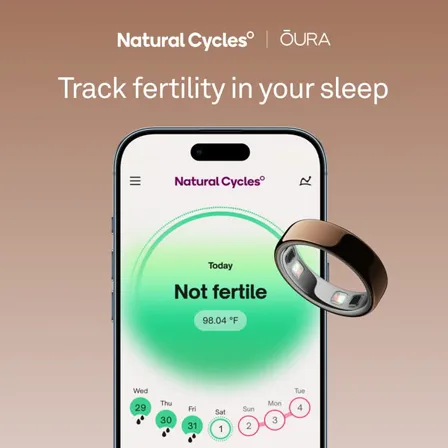
Stage 1, First to market
Track fertility in your sleep
Headline: Non-hormonal birth control, powered by Oura temperature trends
The claim is stated flat, with no mechanism argued and nobody compared, because almost nobody has heard it before. Birth control read from a ring you wear overnight is close to the only place left where naming what the product does is still news on its own.
See it in the Meta Ad Library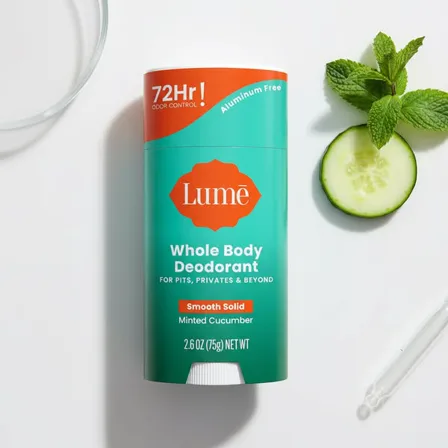
Stage 2, The claim has been copied
72Hr odor control, aluminum free, for pits, privates and beyond
Headline: Whole Body Deodorant, Minted Cucumber
Every deodorant claims to stop odour, so the plain version separates nobody. This outbids it twice on one pack: a number on the hours, and a wider area of the body than the category was arguing about. Same promise, pushed further, which is the stage two move.
See it in the Meta Ad Library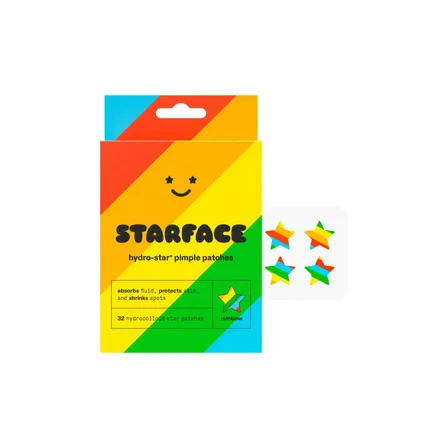
Stage 3, The claims stop being believed
Absorbs fluid, protects skin, shrinks spots. 32 hydrocolloid star patches
Headline: Hydro-Star pimple patches
Nobody in skincare believes "clearer skin" any more, so the pack does not ask them to. It names the material and what the material does, in that order. The promise arrives as a consequence of the mechanism rather than as a claim the reader has to take on faith.
See it in the Meta Ad Library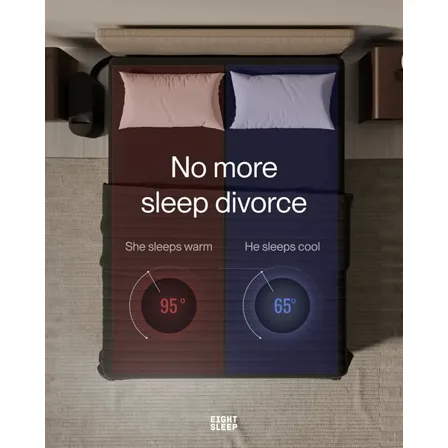
Stage 4, The mechanism has been copied
No more sleep divorce. She sleeps warm, 95 degrees. He sleeps cool, 65 degrees
Headline: Pod 5 adjusts each side of the bed independently
A cooling mattress is the mechanism the whole category now names, so naming it again separates nobody. This extends it: two temperatures in one bed, shown as a split image with both numbers on screen, and a named relationship problem it solves. Stage four is elaborating the mechanism, not finding a second one.
See it in the Meta Ad Library
Stage 5, The market is dead to all of it
No line at all
Headline: Made to move, with maximum versatility
No claim, no mechanism, no offer on the image. Performance apparel has heard every fabric argument there is, so the ad stops making one and shows a man dressed for the whole day. Run this from a brand nobody recognises and it reads as a catalogue photo.
See it in the Meta Ad LibraryCheck Which Stage Your Own Category Is In
Paste the claim your ads lead with. You get the stage the market is at, the words that place it there, what breaks if the claim keeps running, and the same offer rewritten with all five moves. Free, no account, nothing stored.
Paste the claim you make
The promise your ads lead with, in one line. Nothing is stored and no account is needed.
This is the field that decides the answer. Two minutes in your competitors' ad libraries beats any guess the model makes without it.
This market is at
- Why
- What breaks if it keeps running
The same offer, written for each stage
That is one claim against one category. Selzee reads every ad your competitors are running and every review your buyers wrote, then proposes the angles the category has not used up yet.
Find my unused angles freeThe verdict appears here
Paste a claim and you get the stage your category is at, why, what breaks if the claim keeps running, and the same offer rewritten with all five moves.
Why Every Stage Retires the Move Before It
Read down the ladder and the pattern is the same each time. Whatever separated the winners in one stage gets copied, stops separating anybody, and forces the argument one level deeper: claim, bigger claim, mechanism, better mechanism, and finally no argument at all.
The market has heard everything
-
Stage 1: First to market
A new category, rare
Nothing. No one has made this claim to them before.
-
Stage 2: The claim has been copied
Competitors arrive
Your claim, from at least one competitor.
-
Stage 3: The claims stop being believed
Most ecommerce categories
Every version of the claim, from everyone, including the exaggerated ones.
-
Stage 4: The mechanism has been copied
Mature categories
Your mechanism, now named by competitors too.
-
Stage 5: The market is dead to all of it
Commodity and legacy categories
Claims, mechanisms, elaborations, and every reason to disbelieve them.
Nobody has heard the claim
This is also why copying the ads that are winning in your category is such a reliable way to produce average creative. Those ads are answers to the stage the category was in when they were written, and the act of copying them is what moves the category on.
Why the Same Ad Stops Working Without Anybody Changing It
Sophistication is the reason a creative that worked in March is flat by August while nothing about the product, the audience or the media buy has changed. The market moved. Meta treats the symptom as an account-level problem and surfaces creative fatigue as a formal recommendation in Ads Manager, which is useful as an alarm and useless as a diagnosis: it tells you the ad has stopped working, not that your category has moved from stage two to stage three and that your claim is now the one nobody believes.
The reason this is worth diagnosing rather than out-spending is that the creative is doing most of the work in the first place. Nielsen credits creative, not targeting or media spend, with up to 89% of a digital ad's in-market success. A sophistication mismatch is a creative problem that reads as a media problem, which is why the usual response, more budget and a fresh audience, changes the cost per result for a week and then lands back where it started.
Schwartz wrote the framework for direct response mail in 1966. Brian Kurtz, who holds the rights and publishes the current edition, calls states of awareness and levels of market sophistication the two most quoted ideas in the book, and the reason both survived the move to paid social is that neither one is about a channel. They are about what the reader already carries into the moment they see your ad.
The Five Stages of Market Sophistication in Order, With an Example for Each
-
1
Stage 1: First to market
The market has never heard your promise, so the promise is enough on its own. Say what the product does in the plainest words available and get out of the way. Dressing a stage one claim up in a mechanism or a clever line buries the only advantage you have, which is that nobody has heard this yet. Almost no ecommerce brand is genuinely here, and reading yourself into stage one when the market is at stage three is the most expensive misdiagnosis on this page. The move: name the claim flat, with no decoration. The news is the product. Example headline: "A shampoo that stops dandruff coming back"
-
2
Stage 2: The claim has been copied
Somebody else is now making your promise, so the promise alone no longer separates you. Schwartz's answer at this stage is to enlarge the claim rather than replace it: the same outcome, pushed to a degree nobody else has committed to. This is where specificity does the work. "Faster" loses to "in 72 hours", and "more effective" loses to a number the reader can hold in their head. The move: outbid the claim. Take the same promise further, faster, cheaper or bigger. Example headline: "Stops dandruff coming back for a full 72 hours"
-
3
Stage 3: The claims stop being believed
The market is tired. It has heard the promise so often that the promise itself is now evidence of nothing, and the loudest ad is read as the least honest one. The way back in is the mechanism: the specific reason your product produces the outcome when the ones they already tried did not. Most crowded DTC categories sit here, which is why mechanism-led creative outperforms benefit-led creative in them and why the same benefit-led ad reads as generic the moment a competitor runs something close to it. The move: introduce a new mechanism. Explain how it works, and why the other approaches did not. Example headline: "Zinc pyrithione reaches the scalp, not just the hair"
-
4
Stage 4: The mechanism has been copied
The mechanism that separated you has been adopted, so the how is now shared vocabulary. The move is the same one as stage two, applied a level down: take the mechanism and extend it. Fewer steps, a shorter treatment, a version that works on the case everyone else excludes, or proof of the mechanism that nobody else has bothered to produce. This is the stage where a demonstration beats a description, because the elaboration has to be seen to be believed. The move: elaborate the mechanism. Make it easier, faster, more complete or more provable than theirs. Example headline: "The same zinc pyrithione, in a serum that does not have to be rinsed out"
-
5
Stage 5: The market is dead to all of it
Nothing you say about the product lands, because every version of it has been said. Schwartz moves the whole appeal to identification at this stage: the ad works by showing the reader a version of themselves they want to be associated with, and the product arrives as part of that identity rather than as an argument. This is where brand, casting, art direction and tone carry the ad, and where a spreadsheet of feature claims does the least work it will ever do. The move: stop arguing and start identifying. Sell who the buyer is, not what the product does. Example headline: "For people who stopped reading shampoo labels years ago"
How to Work Out Which Stage Your Category Is In
-
1
Write your claim in one sentence, with no brand name in it
Strip the ad down to the promise: what changes for the buyer. If you cannot write it without naming the product, you are describing a feature rather than a claim, and the diagnosis will come out wrong.
-
2
Count how many competitors are already making it
Pull the live ads in your category and read the first line of each one. None making your claim points at stage one. A handful points at stage two. Everybody, including brands you have never heard of, points at stage three or later.
-
3
Count how many of them have named a mechanism
A mechanism is the how: the ingredient, the process, the design decision that produces the outcome. If competitors are still selling the promise, you are at stage two or three. If most of them name a mechanism, the category is at stage four and yours has to go further than theirs.
-
4
Read the comments, not the ads, for stage five
Stage five shows up in the audience rather than in the creative. When the replies under category ads are sarcastic about the whole category, and reviews open with a line about having tried everything, argument has stopped working and identification is the only way in.
-
5
Brief the move, not the stage
Give the writer the row from the table, not the number. "Stage three" is a diagnosis nobody can act on. "Everyone is claiming this, so lead with the mechanism and explain why the other approaches fail" is an instruction that produces a different ad.
Four Ways the Framework Gets Misread
-
Confusing sophistication with awareness
They are different axes and Schwartz wrote both. Awareness is a property of your prospect: what they know about their problem. Sophistication is a property of your market: how many times it has heard your claim. A problem-aware prospect in a stage five category needs a different ad from a problem-aware prospect in a stage two one.
-
Assuming a new brand starts at stage one
You inherit the stage the category has reached, not the stage your brand is at. Launching into a mature category with a plain claim makes the one argument the market stopped listening to years ago.
-
Treating the mechanism as a feature list
A mechanism explains why the outcome happens and why other approaches do not produce it. An ingredient deck with no causal claim is a longer version of the promise, and stage three markets read it as one.
-
Jumping to identification too early
Stage five creative is the most fun to make and the easiest to justify internally, which is why brands reach for it in stage three categories where a mechanism would have worked. Identification with no argument underneath it needs the brand recognition to carry it, and a challenger does not have that yet.
Where the Stage Evidence Comes From
The diagnosis is an outside job, so the evidence sits outside your account. The live ads in your category are the primary source: the ad libraries show you every claim currently running, and competitor ads analysis turns that wall of creative into the count that matters, which is how many brands are already saying your sentence.
Then pair it with the other axis. Sophistication tells you how tired the market is of the claim, and the five stages of awareness tell you what the individual reader already knows. The pair is what makes a brief specific: a stage three category and a problem aware audience means lead with the mechanism but name the pain first, and that is a sentence a writer can work from. When the answer is a new angle rather than a new claim, the ad angle generator is the fastest way to get options on the table, and the hook generator writes the first line for whichever one you pick.
How Selzee Reads Your Category for You
Diagnosing sophistication by hand means reading every live ad in your category, then reading enough of your own reviews and comments to know what buyers are sick of hearing. Selzee does that reading. It pulls the ads competitors are running, your own reviews, your comment threads and your campaign results, then proposes angles and concepts with the customer sentence each one came from, so you can see whether the claim is fresh, copied or spent before you brief anything. The research half of the job is what it takes off your desk, and the research half is what decides which of the five moves above is the right one.
Market Sophistication: FAQ
01 What is market sophistication? +
Market sophistication is how many times a market has already heard the claim you are making, measured in five stages. Stage one has never heard it, stage two has heard it from a competitor, stage three no longer believes any version of it, stage four has heard the mechanism behind it too, and stage five has stopped listening to argument altogether. Eugene Schwartz set out the five stages in Breakthrough Advertising in 1966.
02 What are the five stages of market sophistication? +
They are: first to market, where you name the claim plainly; the claim copied, where you enlarge it; the claims disbelieved, where you introduce a mechanism; the mechanism copied, where you elaborate it; and the market dead to argument, where you stop arguing and sell identification instead. Each stage retires the move that worked in the one before it.
03 What is the difference between market sophistication and the stages of awareness? +
Awareness describes the prospect and sophistication describes the market. The five stages of awareness ask what this reader knows about their problem, from not knowing they have one to being ready to buy. Market sophistication asks how many times the market as a whole has heard your claim. Schwartz wrote both in the same book and intended them to be used together, because the same awareness stage needs different copy in a fresh category and in an exhausted one.
04 How do I know which stage of market sophistication my product is in? +
Read the competition rather than your own product. Write your claim in one sentence with no brand name, then count how many competitors are already making it and how many have named a mechanism for it. Nobody making it points at stage one, a few at stage two, everybody at stage three, and everybody naming a mechanism at stage four. Sarcasm in the comments under category ads is the clearest stage five signal.
05 Can a market move backwards through the stages? +
No. Sophistication only increases, because it is a record of what the market has already been told. A new brand entering a mature category inherits stage four or five, and a genuinely new mechanism does not reset the category, it gives you a stronger move inside the stage the category has reached.
06 Why does my ad stop working even though nothing changed? +
Usually because the market moved and the ad did not. A claim that was fresh when the campaign launched becomes the claim everyone is making a few months later, so the same creative now reads as the generic option. That is a sophistication problem rather than a frequency problem, which is why a new audience or more budget only moves the numbers for a week.
07 Does market sophistication apply to organic social as well as paid ads? +
Yes, and it moves faster there. A hook that a category has seen a thousand times scrolls past whether you paid for the impression or not. The practical difference is that organic gives you a cheaper way to test which stage the audience is in, because the comments tell you directly what the audience is tired of hearing.
See which claims your category has already used up
Selzee reads the ads your competitors are running and the reviews your buyers are writing, then proposes angles with the evidence attached. Start free, no card required.
Start free with SelzeeKeep exploring: the 5 stages of awareness, the problem aware to solution aware jump, competitor ads analysis, the free ad angle generator.