Awareness stages
The 5 Stages of Awareness: Eugene Schwartz's Five Levels, With an Example Hook for Each
The 5 stages of awareness are the five positions a buyer can occupy between not knowing they have a problem and being ready to buy. Eugene Schwartz named them in 1966, and where your customer sits decides every hook, headline, and offer you write. This guide gives you the five stages in order, an example headline written for each one, the table you can brief from, and a way to work out which stage your current ads are actually written for.

Key takeaways
- The five stages, also called the five levels of awareness or the Schwartz pyramid, run Unaware, Problem Aware, Solution Aware, Product Aware, Most Aware, and each one needs a different hook and a different opening line.
- Writing product-aware copy for a cold, unaware audience is the single biggest reason ads fail, and it is why CPAs spike on cold traffic while retargeting feels flat.
- Diagnose the stage before you brief by reading reviews, comments, DMs, post-purchase surveys, and support tickets, then match the hook, the landing page, and the email to where the customer actually sits.
- Most brands over-invest in the last two stages because those convert best on the warm traffic they get tested against, while the biggest part of the market is still sitting in stage two.
What Are the 5 Stages of Awareness?
The 5 stages of awareness are Unaware, Problem Aware, Solution Aware, Product Aware, and Most Aware. They describe how close a prospect is to buying: Unaware means they do not know they have a problem, Problem Aware means they feel the pain but do not know solutions exist, Solution Aware means they know the category but have not chosen a brand, Product Aware means they know your product but have not committed, and Most Aware means they are ready and only need the right offer. Eugene Schwartz introduced the model in his 1966 book Breakthrough Advertising, and it is also called the 5 levels of awareness, the awareness spectrum, or the Schwartz pyramid. The practical rule is that each stage needs a completely different opening line, because a message written for one stage reads as noise to a prospect in any other.
The 5 Stages of Awareness at a Glance
One row per stage: what the prospect already believes, the hook that lands on that belief, a headline written to it, and where that message belongs. Brief from this table rather than from the stage name alone, because the stage name is the diagnosis and the row is the instruction.
| Stage | What they already believe | Hook that works | Example headline | Where it runs |
|---|---|---|---|---|
| Stage 1: Unaware | Nothing is wrong. They are not looking for anything. | Surface the problem through a story or a counterintuitive claim. Never name the product. | “Your gym shoes are the reason your knees hurt” | Cold prospecting, broad reach video, top of feed |
| Stage 2: Problem Aware | I have this problem, and I assume I am stuck with it. | Name the pain in the exact words the customer uses, then hint that it is solvable. | “Still icing your knees after every run? It is not the mileage” | Cold and lookalike prospecting, problem-led landing pages |
| Stage 3: Solution Aware | I know this category exists. I do not know which one to pick. | Introduce your mechanism and explain why the other approaches did not work. | “Why zero-drop soles fix what cushioned trainers cannot” | Mid-funnel prospecting, comparison content, search |
| Stage 4: Product Aware | I know your brand. I am not sure it is right for me. | Answer the objection out loud. Proof does the work, not the promise. | “4,000 runners switched. Here is what the first two weeks feel like” | Retargeting, reviews and comparison pages, email nurture |
| Stage 5: Most Aware | I want this. Give me a reason to buy it today. | Lead with the offer. The hook is close to irrelevant at this point. | “Your size is back in stock. Free returns for 60 days” | Cart abandonment, SMS, loyalty and win-back email |
The stages are a spectrum, not a funnel with gates. A single buyer can arrive at stage four through a friend's recommendation without ever passing through stages one and two, which is why the diagnosis has to be per audience segment rather than per customer journey.
Check Which Stage Your Own Headline Is Written For
Paste one live ad headline. You get the stage it assumes, the words that place it there, what breaks if it runs against colder traffic, and the same offer rewritten for all five stages. Free, no account, nothing stored.
Paste one ad headline
One live headline, primary text opener, or subject line. Nothing is stored and no account is needed.
This headline is written for
- Why
- What breaks on colder traffic
The same offer, written for each stage
That is one headline. Selzee runs the same read across every live ad and every review you have, then writes the briefs for the stage you are missing.
Audit my whole account freeThe verdict appears here
Paste a headline and you get the stage it assumes, why, what breaks if it runs colder, and the same offer rewritten for all five stages.
The Schwartz Pyramid: Why the Base Is So Much Wider Than the Top
Drawn as a pyramid, the model shows the thing that trips brands up. Almost everyone who could eventually buy from you is sitting near the base, and almost all the copy that gets written and tested lives near the top.
Ready to buy, smallest group
-
Stage 1: Unaware
Most of the market
Nothing is wrong. They are not looking for anything.
-
Stage 2: Problem Aware
The largest addressable group
I have this problem, and I assume I am stuck with it.
-
Stage 3: Solution Aware
Actively researching
I know this category exists. I do not know which one to pick.
-
Stage 4: Product Aware
Weighing you up
I know your brand. I am not sure it is right for me.
-
Stage 5: Most Aware
Ready to buy
I want this. Give me a reason to buy it today.
Not looking yet, largest group
This is also why late-stage creative looks like the thing that works. Product-aware and most-aware messaging is easier to write and converts best on the warm traffic it gets tested against, so it wins every test it is entered into, while the audience that would grow the business never sees a message built for it.
Why Most Ecommerce Ads Get the Awareness Stage Wrong
The most common mistake is writing product-aware copy for a cold, unaware audience. You lead with features, pricing, or a discount, but the prospect has no context for why any of it matters, so they scroll past. The reverse wastes the moment just as badly: vague, problem-focused copy shown to a warm retargeting audience that had already decided. Mismatched awareness is why your CPAs spike on cold traffic and your retargeting feels flat.
The size of the mismatch is the part worth sitting with. Ruler Analytics puts roughly 5% of potential buyers in the solution-aware stage actively researching, with the large remainder still problem aware. An ad written for that 5% and shown to the other 95% will not look like a creative failure, because the ad is well made. It is simply answering a question nobody in the audience has asked yet. The fix is not a better creative tool. It is a clearer read on where your customer actually sits before you brief anything.
The 5 Stages of Awareness in Order, With an Example for Each
-
1
Stage 1: Unaware
The prospect does not know they have a problem, so there is nothing yet for your product to solve. Open with a bold, counterintuitive statement or a story that surfaces the problem without naming it. These audiences need to feel something before they can be sold anything, which is why cold video and editorial-style creative carry this stage and a product shot does not. Example hook: "Your gym shoes are the reason your knees hurt" Where it runs: cold prospecting, broad reach video, top of feed.
-
2
Stage 2: Problem Aware
They feel the pain but do not know solutions exist. Name the pain precisely, using the exact language your customer uses to describe their frustration, then open the door to the idea that something can be done about it. Customer reviews and comment sections are your best source for that language, because the phrasing you find there is already proven to resonate with the people who wrote it. Example hook: "Still icing your knees after every run? It is not the mileage" Where it runs: cold and lookalike prospecting, problem-led landing pages.
-
3
Stage 3: Solution Aware
They know solutions exist but have not chosen one. Introduce your category and differentiate your mechanism: explain why your approach works when the ones they already tried have not. This is the stage where the specific how matters more than the promise, because the promise is now table stakes for everything they are looking at. Example hook: "Why zero-drop soles fix what cushioned trainers cannot" Where it runs: mid-funnel prospecting, comparison content, search.
-
4
Stage 4: Product Aware
They know your product but have not committed. Address objections directly: testimonials, side-by-side comparisons, and proof points do the heavy lifting here. The objection is usually specific and usually already written down somewhere in your support tickets, so this is the stage where reading your own inbox beats writing new copy. Example hook: "4,000 runners switched. Here is what the first two weeks feel like" Where it runs: retargeting, reviews and comparison pages, email nurture.
-
5
Stage 5: Most Aware
They know your product well and just need the right nudge. Make the offer clear and compelling: price, urgency, and guarantee language close the gap. Re-explaining what the product does at this stage actively costs you the sale, because it reads as though you have not noticed they already decided. Example hook: "Your size is back in stock. Free returns for 60 days" Where it runs: cart abandonment, SMS, loyalty and win-back email.
The Five Stages as Five Ads That Are Actually Running
Every creative below is live on Meta or Instagram and was harvested from the Meta Ad Library. Read the hook set inside each frame, not the brand: one line surfaces a problem, one names it, one argues a mechanism, one answers an objection, and one just makes an offer. The stage is doing the work, not the budget.
Stage 1, Unaware
Who knew scalp care could smell THIS good?
Headline: Native Scalp Detox
The question assumes the reader is not shopping for scalp care and has never thought about it, which is what stage one has to assume. It opens a category rather than arguing inside one, and it spends its whole surface on a reason to be curious instead of a reason to buy.
See it in the Meta Ad Library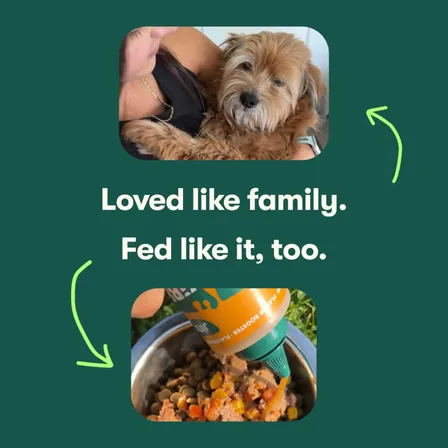
Stage 2, Problem Aware
Loved like family. Fed like it, too.
Headline: High quality protein, no fillers, no mystery meat
The gap between how the owner feels about the dog and what goes in the bowl is a tension they already carry. The ad names it in six words and shows both halves, the dog and the bowl, without arguing an ingredient. The pain has to be recognised before the mechanism matters.
See it in the Meta Ad Library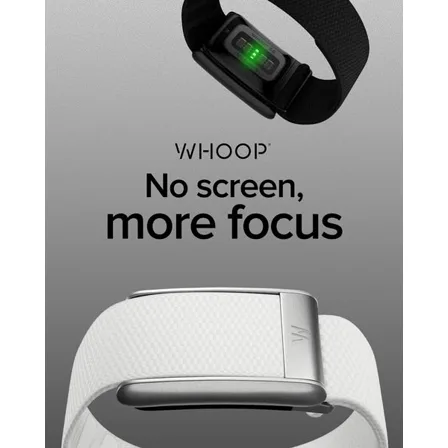
Stage 3, Solution Aware
No screen, more focus
Headline: The distraction-free wearable
The reader already knows wearables exist and is choosing between them, so the ad argues the mechanism rather than the outcome: the absent screen is the reason the promise follows. Four words that only land on somebody who has already considered a watch.
See it in the Meta Ad Library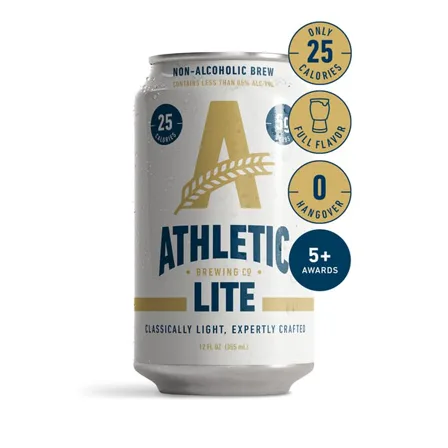
Stage 4, Product Aware
Only 25 calories, full flavor, 0 hangover, 5+ awards
Headline: Athletic Lite, non-alcoholic brew
The brand is named and every badge answers an objection a reader who already knows the brand would raise: the calories, whether it tastes of anything, what it costs you the next day, and who else says so. Proof, not promise, which is the stage four job.
See it in the Meta Ad Library
Stage 5, Most Aware
Up to 30% off the Ultimate Starter Kit
Headline: Shop now
No argument at all, because none is needed. A discount, the kit it applies to and a button, over a kitchen the buyer can already picture. Run this on a cold audience and it reads as spam, which is the whole point of diagnosing the stage first.
See it in the Meta Ad LibraryHow to Diagnose Your Audience's Awareness Stage Before You Brief Creative
The fastest way to identify awareness stage is to read what your customers write before they buy, and what they say after. Reviews, comment threads, DMs, post-purchase surveys, and support tickets all contain language that signals exactly where a prospect sits. A review that says "I had no idea this was even possible" signals stage one or two. A review that says "I tried three other brands before this one" signals stage three. A support ticket asking whether the product works with something they already own signals stage four. Most ecommerce teams have this data sitting in Shopify, review platforms, and Meta comment sections, but nobody has time to read through thousands of entries and extract the pattern. That gap between having the data and knowing what to do with it is where most creative research stalls.
How to Audit the Awareness Stage Your Current Ads Are Written For
-
1
Pull your live ad headlines into one list
Export the headline and primary text of every active ad. Strip the targeting, the spend, and the results out of the list, so you are reading the copy on its own terms rather than through what it happens to be earning right now. The checker above does steps two and three for one headline at a time if you would rather see it work before doing the whole account by hand.
-
2
Score each headline against the belief column
For every headline, ask which of the five beliefs in the table above the reader has to already hold for that line to make sense. A headline naming a product feature needs a stage four reader. A headline naming a feeling needs a stage two reader. Write the stage number next to each one.
-
3
Compare that spread against where the audience sits
Set the stage numbers you just assigned next to the audience each ad actually reaches. Cold prospecting reaching stage four copy is the classic mismatch, and it usually accounts for most of the wasted spend in the account.
-
4
Rewrite the mismatches, do not pause them
A stage four headline on cold traffic is not a bad ad, it is a misfiled one. Take the same offer and rewrite the opening line to the belief the cold audience actually holds, then run it against the original. That test tells you something. Pausing the ad does not.
-
5
Fix the landing page to match the ad, not the brand
The stage has to hold all the way through. A landing page built for cold traffic should not open with your product name, and an email to a cart abandoner should not re-explain what the product does. Mapping the stage to every touchpoint is what separates teams that iterate with direction from teams that keep testing random angles.
Where the Stage Evidence Comes From
Two sources answer the stage question faster than a workshop will. The first is your own numbers: ad performance analytics read by stage rather than by campaign will show you whether the cold half of the account has any early-stage creative in it at all, and usually it does not. The second is the market: competitor ads analysis tells you which stage your category is already crowding, which is the fastest read on where the unclaimed attention is.
Pair those with the language in your reviews and you have the diagnosis from three directions: what your buyers say, what your ads earn, and what everyone else is already shouting.
There is a fourth reading, and it is the one that settles arguments. A stage mismatch does not usually show up as a bad click-through rate, because a stage-four headline can still be interesting to a cold reader. It shows up after the click, as traffic that arrives and does not convert. Work the conversion rate for each ad separately rather than for the account, and the mismatched ones separate themselves: same cost per click as everything else, a third of the conversions.
The stage-five end of the ladder is easy to see in search behaviour, and it is worth looking at because it is where your own buying happens too. Somebody typing a brand name plus "alternative" is fully aware: they know the category, they know the product, they are comparing on price and fit and nothing else will move them. That is why pages like AdSpy alternatives, Viktor alternatives, Motion AI competitors and Adcreative.ai alternatives open with a price table rather than an explanation. Writing a stage-one headline at that reader wastes the click, and the same mistake in your account is what a cold audience meeting product-name copy costs you.
The Four Mistakes That Break the Framework in Practice
-
Treating the stages as a funnel with gates
The five stages describe positions, not a mandatory sequence. A buyer can land at stage four straight from a friend's recommendation. Diagnose per audience segment, not per imagined journey.
-
Assigning one stage to the whole brand
Different products, different geographies, and different acquisition channels sit at different stages at the same time. A brand that is most-aware to its email list is unaware to a new market, and the same creative cannot serve both.
-
Guessing the stage instead of reading for it
The stage is an empirical question with the answer already written down in your reviews and support tickets. Teams that guess it converge on stage three or four, because that is the stage marketers naturally think in.
-
Optimising every stage against the same metric
Stage one and two creative earns attention and cheap reach, not immediate conversions. Judging it on last-click ROAS kills it in week one, which is why so many accounts end up with nothing but retargeting.
How Selzee Helps Ecommerce Teams Apply Awareness-Based Messaging Faster
Selzee is built for ecommerce marketing teams who understand frameworks like the 5 stages of awareness but do not have time to manually mine the customer data needed to apply them. Selzee reads your customer reviews, Meta ad comments, and campaign performance data and surfaces the exact language, objections, and desires that map to each stage, with the customer sentence each one came from, so the diagnosis is checkable rather than a claim. Instead of spending hours reading reviews to find the right hook for a cold prospecting campaign, you get ready-to-use hooks, briefs, and messaging angles matched to the stage the audience is actually in. It connects with Shopify, Meta Ads, Klaviyo, and the major review platforms, so the research and the creative work live in the same place.
5 Stages of Awareness: FAQ
01 What are the 5 stages of awareness? +
The 5 stages of awareness are Unaware, Problem Aware, Solution Aware, Product Aware, and Most Aware. Unaware means the prospect does not know they have a problem. Problem Aware means they feel the pain but do not know solutions exist. Solution Aware means they know the category but have not chosen a brand. Product Aware means they know your product but have not committed. Most Aware means they are ready to buy and only need the right offer or nudge.
02 Is there a difference between the 5 stages of awareness and the 5 levels of awareness? +
No. They are two names for the same model. Eugene Schwartz wrote about levels of awareness in Breakthrough Advertising in 1966, and marketers now use stages, levels, and the awareness spectrum interchangeably. Drawn as a triangle with the unaware majority at the base, the same model is often called the Schwartz pyramid.
03 Who created the 5 stages of awareness? +
Eugene Schwartz, a direct response copywriter, introduced the awareness spectrum in his 1966 book Breakthrough Advertising. The book pairs it with a second idea, market sophistication, which describes how many similar claims the market has already heard. The two are meant to be used together: awareness tells you what the prospect knows, sophistication tells you how tired they are of hearing about it.
04 Which awareness stage should I target first? +
Start with stage two, Problem Aware, if you need growth, and stage four and five if you need revenue this month. Stage two is where the largest addressable group sits and where cold prospecting can still be won on a hook rather than a discount. Stages four and five convert fastest but are capped by how many people already know you, which is why an account that only runs late-stage creative plateaus.
05 How do I know which awareness stage my ad is written for? +
Read the headline and ask what the reader has to already believe for the line to make sense. If it names a product feature, it needs a product-aware reader. If it names a mechanism or compares approaches, it needs a solution-aware reader. If it names a feeling or a frustration with no product in sight, it is written for a problem-aware reader. Then compare that against the audience the ad actually reaches.
06 Why do most ecommerce ads get the awareness stage wrong? +
The most common mistake is writing product-aware copy for a cold, unaware audience: you lead with features, pricing, or a discount, but the prospect has no context for why any of it matters, so they scroll past. The reverse also wastes the moment, writing vague problem-focused copy to a warm retargeting audience that is ready to buy. Mismatched awareness is why CPAs spike on cold traffic and retargeting feels flat.
07 How does the awareness framework change my landing pages and emails? +
The stage has to hold across the whole path, not just the ad. A landing page built for cold traffic should not open with your product name, because a stage one or two visitor has no reason to care about it yet. An email to a cart abandoner should not re-explain what the product does, because that reads as though you missed the fact they already decided. Match every touchpoint to the stage the ad set it up for.
Find out which stage your ads are actually written for
Selzee reads your reviews, comments, and campaign data and returns awareness-matched hooks and briefs, each one carrying the customer sentence it came from. Start free, no card required.
Start free with SelzeeKeep exploring: the problem aware to solution aware jump, creative strategy, discovering winning ad angles, the free ad analysis tool.