Creative concepts
Creative Concept Development: How an Insight Becomes an Ad You Can Actually Shoot
Creative concept development is the step between the brief and the storyboard: turning research into one idea that can be shot several different ways and still be recognisably the same thing. This page defines a creative concept, separates it from the insight underneath it and the execution on top of it, walks the five steps from source material to a concept line, and shows how to test the concept rather than the ad so you know which of the two actually failed.
Key takeaways
- A creative concept is one idea stated in a single line that can be executed several different ways. If it only describes one ad, it is an execution wearing the word concept.
- The concept sits between the insight, which is about the buyer, and the execution, which is about the craft. Confusing the three is why creative reviews turn into arguments about taste.
- Develop concepts from source material the buyer wrote, not from a brainstorm. Reviews, comment threads and support tickets carry the tension a concept needs.
- Test the concept with three deliberately different executions. One ad failing tells you nothing about the idea behind it, and killing concepts on a single execution is the most common waste in creative testing.
What Is a Creative Concept?
A creative concept is the single organising idea behind a piece of advertising, written as one line that several different executions can all express. It is not the headline, the script or the campaign plan. A useful test is whether you can name three genuinely different ads that would all be the same concept: if you can, it is a concept, and if the idea collapses the moment you change the format, it was an execution. Creative concept development is the process of getting there: reading the source material, naming the insight about the buyer, writing the concept line, producing several executions from it, and testing the idea rather than any one ad.
Insight, Concept, Execution, Campaign
All four get called "the idea" in a review, and they fail in different ways. This is the table to point at when a discussion about one of them is actually a discussion about another.
| Layer | The question it answers | Who owns it | What it looks like | How it goes wrong |
|---|---|---|---|---|
| The insight | Why will this audience accept anything we say? | Whoever did the research, usually a strategist | One sentence about the buyer, with no product in it“People do not distrust the category, they distrust themselves for having fallen for it twice already” | It is a fact rather than a tension, so nothing follows from it |
| The concept | What is the one idea every ad in this run expresses? | The creative lead, signed off by whoever owns the number | One line that could be shot ten different ways“We show the third attempt, not the first” | It only describes one execution, so the second ad has nowhere to go |
| The execution | What does this specific ad look and sound like? | The writer, designer, editor or creator making it | A script, a storyboard, a static layout“A 20 second creator video opening on an unopened third box” | It is judged as a verdict on the concept when it is one reading of it |
| The campaign | Where does this run, for how long, against which audience? | The media or growth owner | A plan: budgets, placements, flighting, measurement“Three concepts, four executions each, cold prospecting for three weeks” | It is treated as the creative decision, so the concept is never separately tested |
Most creative disagreements are layer confusion. Somebody objecting to the casting is objecting to an execution, and answering them by defending the concept means neither person is talking about the same object.
Three Live Ads, and the Concept Behind Each One
Every creative below is live on Meta and was harvested from the Meta Ad Library for this page. The test for a concept is whether it survives more than one execution, so each card names the idea and then two other ads the same idea could have produced. If you cannot name the other two, what you are looking at is an execution.
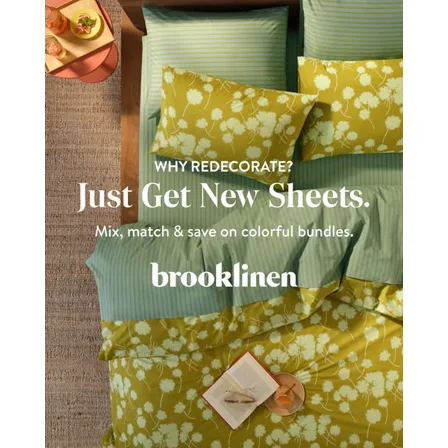
Concept: the cheapest way to redecorate
Why redecorate? Just get new sheets
Headline: Mix, match and save on colorful bundles
The idea is that bedding is a decorating decision rather than a bedding one, which moves the purchase into a budget the buyer thinks about more often. Two other ads from the same concept: the same room shot twice with only the sheets changed, and a paint chart where every swatch turns out to be a sheet colour.
See it in the Meta Ad Library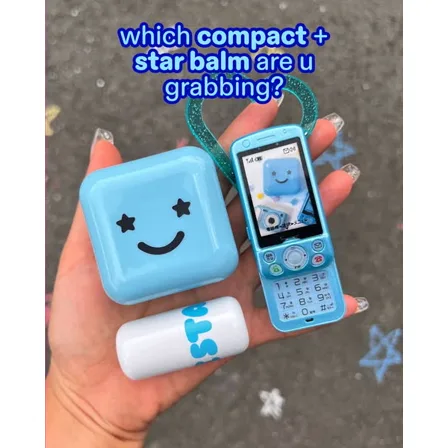
Concept: skincare you carry because you like it
Which compact and star balm are u grabbing?
Headline: Patches, compacts, lip balms and more
The idea is that spot treatment can be an object you want in your hand, so the ad asks which one you are taking rather than what it does for your skin. Two other ads from the same concept: a pocket-dump flat lay of what somebody carries all day, and two friends comparing compacts with no product claim anywhere.
See it in the Meta Ad Library
Concept: a pan gets a launch
Out now. 5.5QT hybrid deep saute pan
Headline: The love child of a pan and a pot
The idea is to treat a new size of pan the way a phone brand treats a new handset: a drop, lit like hardware, with the spec as the headline. Two other ads from the same concept: a spec sheet comparing it to the pan it replaces, and a countdown post shot in the same lighting.
See it in the Meta Ad LibraryThe Five Steps From Source Material to a Concept You Can Brief
-
1
Read the source material before you write anything
Start in the buyer own words: reviews, comment threads, DMs, support tickets, post-purchase surveys, and the ads competitors are already running. Concepts developed from a blank page and a brainstorm end up describing the product, because that is the only material in the room. Concepts developed from what buyers wrote start from a tension, which is what the next step works from.
-
2
Write the insight as one sentence with no product in it
An insight is a tension the buyer holds, not a statistic about them. "Buyers are price sensitive" is a fact and nothing follows from it. "They are not comparing our price to a competitor, they are comparing it to the two they already wasted money on" is a tension, and it already suggests what an ad would have to do. If a product feature can be dropped into the sentence, it is a benefit statement rather than an insight.
-
3
State the concept in one line that could be shot several ways
The concept line is the idea, not the treatment. Keep it short enough to repeat in a meeting without reading it, and check it by naming three different ads it could produce: a creator video, a static, a demonstration. If two of the three feel impossible, you have written an execution and the second ad in the run will have nowhere to go.
-
4
Produce three deliberately different executions from it
Different formats, different openings, different casting, same idea. Three executions exist to separate the idea from the craft. A concept that only works when read by one particular creator in one particular format is a fragile one, and you want to find that out before it is the only thing in the account.
-
5
Test the concept, then the execution, in that order
Run the three executions against each other and read the result at the concept level first. If all three underperform, the idea is wrong and a fourth execution will not save it. If one clearly wins, the idea is fine and the variance is craft, which is a completely different next brief. Most teams skip this distinction and rewrite briefs to fix editing problems.
Why the Concept Layer Is Worth Protecting
The reason to spend time here rather than going straight to production is that this layer carries most of the result. Nielsen credits creative, not targeting or media spend, with up to 89% of a digital ad's in-market success. Concept work is the cheapest part of creative to change and the most expensive part to get wrong, because every execution downstream inherits it.
The handover from concept to execution is what a creative brief is for, and the industry template says the same thing this page does. The American Marketing Association's own brief toolkit asks for the single-minded proposition before it asks for anything about format, because a brief that leads with deliverables produces work that is on spec and about nothing.
Concepts also differ in how well they survive the move to a format that has to prove something. Kantar's research on product demos finds ads demonstrating product benefits score around 17 points higher on communicating new information and 15 points higher on relevance. If a concept cannot be demonstrated at all, that is worth knowing at the concept stage rather than in the edit.
Four Ways Concept Development Goes Wrong
-
Brainstorming instead of reading
A room full of people who work at the company generates ideas about the company. Without source material written by buyers, the output is a list of product descriptions in different tones of voice, and the tension that makes a concept work is never in the room to begin with.
-
Killing a concept on one execution
A single ad carries the idea, the format, the casting, the edit and the first three seconds all at once. When it underperforms, any of those could be the cause. Judging the concept on that one result is the most common way good ideas get discarded and mediocre ones get repeated.
-
Writing a concept that is really a headline
If the concept only works when those exact words appear on screen, it is a line rather than an idea. You will find out when the second execution has to say the same sentence again, and the run starts to look like the same ad shot four times.
-
Skipping the layer entirely under volume pressure
Accounts that need dozens of assets a month tend to drop concept work and produce variations of whatever last worked. That fills the calendar and flattens the account, because variations inherit the ceiling of the idea they came from and no new idea ever gets tested.
Where Concept Development Sits in the Rest of the Work
Upstream of the concept is the research and the plan: creative strategy decides what the work is for, and market sophistication decides how much of the argument your category will still listen to, which is usually the difference between a concept that feels fresh and one that has been made four times already.
Downstream is the handover and the test. The creative brief generator turns the concept line into the document the maker actually works from, the ad angle generator gives you the angle options to concept against, and ad testing is where the three executions settle the question. If the vocabulary is the part that is unclear, what ad creative is covers the ground underneath all of it.
How Selzee Does the Reading Half of Concept Development
The expensive part of concept development is step one, and it is the step that gets skipped: reading enough reviews, comments, support tickets and competitor ads to find a tension worth building on. Selzee reads that material for you. It pulls your reviews, your comment threads, the ads your competitors are running and the results of the ads you ran, then proposes angles and concepts with the customer sentence each one came from, so you can see the evidence behind an idea before you commit a shoot to it. The concept call stays yours. The reading does not have to be.
Creative Concept Development: FAQ
01 What is creative concept development? +
Creative concept development is the process of turning research into one organising idea that several different ads can express. It runs from reading the source material, to naming the insight about the buyer, to writing the concept line, to producing several executions from it, to testing the idea rather than any single ad.
02 What is the difference between a creative concept and an execution? +
The concept is the idea, the execution is one version of it. A concept can be shot several genuinely different ways and still be recognisable. An execution is a specific script, layout or edit. The practical test is whether you can name three different ads that would all be the same concept: if you cannot, what you have is an execution.
03 What makes a good creative concept? +
It comes from a tension the buyer actually holds, it states one idea rather than a list, it fits in a line somebody can repeat from memory, and it survives at least three different executions. A concept that needs one particular format, creator or headline to work will not last past the second ad in the run.
04 How many concepts should we test at once? +
Two or three, each with two to four deliberately different executions. Fewer than that and you learn nothing about the ideas, only about the ads. Many more and the spend per execution drops so low that nothing reaches a readable result, which is the usual reason a large test produces no decision.
05 Where do creative concepts come from? +
From material the buyer wrote: reviews, comment threads, DMs, support tickets, post-purchase surveys, and the ads competitors are running. Concepts produced in a brainstorm with no source material tend to describe the product, because that is the only information in the room. Reading first is what puts a tension on the table.
06 Is a creative concept the same as a creative brief? +
No. The concept is the idea, the brief is the document that hands it over. A brief contains the concept plus everything the maker needs around it: the audience, the proposition, the mandatories, the deliverables and the deadline. A brief with no concept in it produces work that meets the spec and says nothing.
07 How do you test a creative concept rather than the ad? +
Run three deliberately different executions of the same concept against each other and read the result at the concept level first. If all three underperform, the idea is the problem and a fourth execution will not rescue it. If one wins clearly, the idea works and the difference is craft, which is a separate brief with a separate fix.
Get concepts with the customer sentence attached
Selzee reads your reviews, comments, competitor ads and post results, then proposes angles and concepts you can brief from. Start free, no card required.
Start free with SelzeeKeep exploring: creative strategy, the free creative brief generator, the five stages of market sophistication, what ad creative is.