The 12 Brand Archetypes: What Each One Wants, What It Makes Your Copy Do, and How to Choose One
A brand archetype is a character your brand plays consistently, chosen on purpose so that every piece of copy sounds like the same organisation wrote it. There are twelve in the model marketers use, and the useful part is not the name you land on. It is that the archetype decides what you are allowed to say: the desire it runs on, the promise it can make honestly, and the register that promise has to be delivered in. This page gives you all twelve with those three things attached, the trap each one falls into, and a way to choose between them that does not come down to taste.
 Marián Cabadaj
15 min read
Marián Cabadaj
15 min read

Key takeaways
- A brand archetype is a character you commit to, and its value is the constraint: it tells you what you cannot say, which is the part that makes a voice recognisable.
- There are twelve, grouped into four families by the desire they run on. Pick one primary archetype, and at most one secondary to soften it.
- The twelve are a marketing adaptation, not Jung. Jung wrote about archetypes in the psyche; Margaret Mark and Carol S. Pearson set out these twelve for brands in The Hero and the Outlaw in 2001.
- Choose from evidence. The archetype your customers already describe you as beats the one the founder would like to be.
- An archetype is the input and the voice is the output. If the two disagree, the copy is the thing that is wrong, not the archetype.
Our articles are still written by HUMANS! Get human written articles in your Google feed.
Add as preferred sourceWhat Are Brand Archetypes?
Brand archetypes are twelve recognisable characters a brand can play, each one built on a single human desire, used to keep everything a brand says sounding like it came from the same place. The twelve are the Innocent, the Sage, the Explorer, the Hero, the Outlaw, the Magician, the Lover, the Jester, the Everyman, the Caregiver, the Creator and the Ruler. Each one carries a desire it runs on, a promise it can make without straining, and a register that promise has to be spoken in: the Sage can say "it depends" and keep its authority, while the Hero cannot. The point of choosing one is the restriction it puts on you. A brand with no archetype writes whatever suits the campaign in front of it and ends up sounding like a different company every quarter, and a brand with one has a reason to reject a good line for being out of character.
The 12 Brand Archetypes at a Glance
The twelve are usually drawn as a brand archetype wheel, a circle of twelve segments grouped into four quadrants. The wheel is good at showing which archetypes sit next to each other and useless for deciding anything, so here they are as a table instead: one row per archetype, the desire it runs on, the promise it can make honestly, the register that promise has to be delivered in, and the way it fails. Brief from the row, because the name is the label and the row is the instruction.
| Archetype | The desire it runs on | What it promises | The register it produces | How it fails |
|---|---|---|---|---|
| Innocent | To be happy, and for things to be simple | “This will not complicate your life” | Plain, warm, short sentences, no jargon and no irony | Reads naive the moment the category gets technical |
| Sage | To understand how things really work | “You will know more after this than before it” | Measured, evidence-led, comfortable saying that it depends | Lectures, and buries the recommendation under the reasoning |
| Explorer | Freedom, and the next thing over the hill | “This takes you somewhere you have not been” | Restless, first person, concrete places and distances | Never commits, so nothing it says is a reason to buy today |
| Hero | To prove worth through difficult work | “This is how you win” | Direct, active verbs, numbers, before and after | Shouts, and treats a customer with a small problem as a slacker |
| Outlaw | To break what is not working | “The way everyone does this is wrong” | Blunt, names the enemy, happy to be disliked | Runs out of things to be against and has nothing left to say |
| Magician | To transform something | “This changes what is possible for you” | Vivid, mechanism-forward, before and after with a reveal | Overpromises, then the product has to survive the claim |
| Lover | Intimacy, beauty, being chosen | “This will feel good and look right” | Sensory, unhurried, adjectives that earn their place | Says nothing checkable, so it cannot answer an objection |
| Jester | To enjoy the moment and puncture the mood | “This will not be boring” | Fast, self-aware, the joke lands in the first six words | Cannot be trusted with anything serious, like a refund policy |
| Everyman | To belong, and not to be sold to | “This is for people like you” | Conversational, second person, no performance | Sands off every edge and becomes indistinguishable |
| Caregiver | To protect and look after | “You are safe here, and someone is paying attention” | Reassuring, specific about what happens next | Sounds like it is doing you a favour rather than a job |
| Creator | To make something that did not exist | “This gives you the means to make it yourself” | Precise, craft vocabulary, shows the work | Talks about the tool to people who wanted the outcome |
| Ruler | Order, control, and standards that hold | “Nothing here will embarrass you” | Formal, unhurried, declarative, no exclamation marks | Reads cold, and cannot admit a mistake without losing face |
Read the last column before the others. Most brands can tell which archetype they like; far fewer have decided which failure they are prepared to live with, and that is the choice that actually holds under pressure.
The Four Families, and What Each One Sells
Margaret Mark and Carol S. Pearson grouped the twelve into four families in The Hero and the Outlaw in 2001, by the human motivation underneath each one. The families are more useful than the individual names when you are starting out, because narrowing to three candidates is a decision you can actually defend.
Longing for paradise
Three archetypes that sell a better state of mind: understanding, simplicity, or escape. They are the easiest to write and the easiest to make forgettable, because none of them names an enemy.
Leaving a mark
Three that sell change, and the only family comfortable with conflict. They convert quickly and age badly, because the energy has to be renewed every campaign.
No one is an island
Three that sell belonging. The warmest family and the hardest to keep distinct, since every brand in a category tends to reach for the same friendliness.
Providing structure
Three that sell control and standards. The most credible family in a considered purchase, and the stiffest when the reader wanted a human being.
Carl Jung, and What He Did Not Write
Carl Jung's archetypes are patterns he argued run through the collective unconscious, and he wrote about them as features of the psyche rather than as a branding tool. He never published a list of twelve for marketers, and he never connected them to brands, because the field did not exist in the form we mean.
The twelve that marketers use come from The Hero and the Outlaw, published in 2001 by Margaret Mark and Carol S. Pearson, which took the Jungian idea and turned it into a system for positioning a brand. That is why the model feels psychological and behaves commercially: the roots are Jung, the twelve boxes and the four families are theirs.
This matters more than a footnote. If you go looking for Jung's twelve brand archetypes you will find pages confidently attributing the whole framework to him, and the reason to get it right is that the adaptation is the part you are actually using. Jung's interest was what an archetype reveals about a person. Mark and Pearson's was what it lets a brand say, and say consistently, which is the only question a marketer needs answered.
How to Choose Your Brand Archetype
-
1
Read what customers already call you
Before anybody in the room offers an opinion, go through reviews, support tickets, sales calls and the comments under your posts, and collect the adjectives that come back more than twice. Customers describe brands in archetype language without being asked: straightforward, no nonsense, a bit mad, safe pair of hands. You are looking for the character you are already playing.
-
2
Narrow to a family, not a name
Ask which of the four motivations your best customers actually buy on: a better state of mind, change, belonging, or control. Three candidates is a workable shortlist and twelve is a workshop that ends in a vote. If two families feel equally true, you are probably describing two different segments and should say so out loud.
-
3
Pick the failure you can live with
Every archetype fails in a specific direction, and that is the column to argue about. A Ruler reads cold. An Everyman disappears. A Jester cannot be trusted with a refund policy. The archetype you can hold is the one whose failure mode you would rather manage than the alternatives.
-
4
Write the three sentences it forbids
This is the test that separates a decision from a moodboard. Write three lines your brand can no longer publish now the archetype is chosen, and make them lines somebody on the team would genuinely have written. If nothing is ruled out, you have not chosen anything.
-
5
Add a secondary only to soften the primary
One archetype can read relentless: pure Hero exhausts a reader and pure Sage bores one. A secondary is a modifier, not a co-equal, and it should show up in perhaps one line in five. Two primaries is not a brand with range, it is a brand nobody can predict.
-
6
Turn it into voice rules, then check the copy against them
An archetype that never becomes a rule stays a slide. Convert it into the specifics a writer can apply, sentence length, whether you use humour, whether you are allowed to say sorry, which words are banned, and then audit the copy you published last month against those rules.
Brand Archetype Quiz: Eight Questions About Your Evidence
Not a personality test. Every question asks what your customers already say or what you already refuse to do, because the archetype has to describe the brand people actually meet. Answer at least five. Free, no account, nothing stored, and nothing leaves your browser.
Your result
Answer at least five and the result appears here. Nothing is sent anywhere and nothing is stored.
Primary
—
Runner-up
—
Family
—
A quiz cannot see your reviews, so treat the result as a starting point. Take it to the table above, read the row, and check the register against copy your customers have actually responded to.
If it comes back too close to call, that is a usable result: two archetypes scoring level usually means you are describing two different segments, and the useful next step is deciding which one your best customers belong to.
Where the Archetype Stops Being a Slide
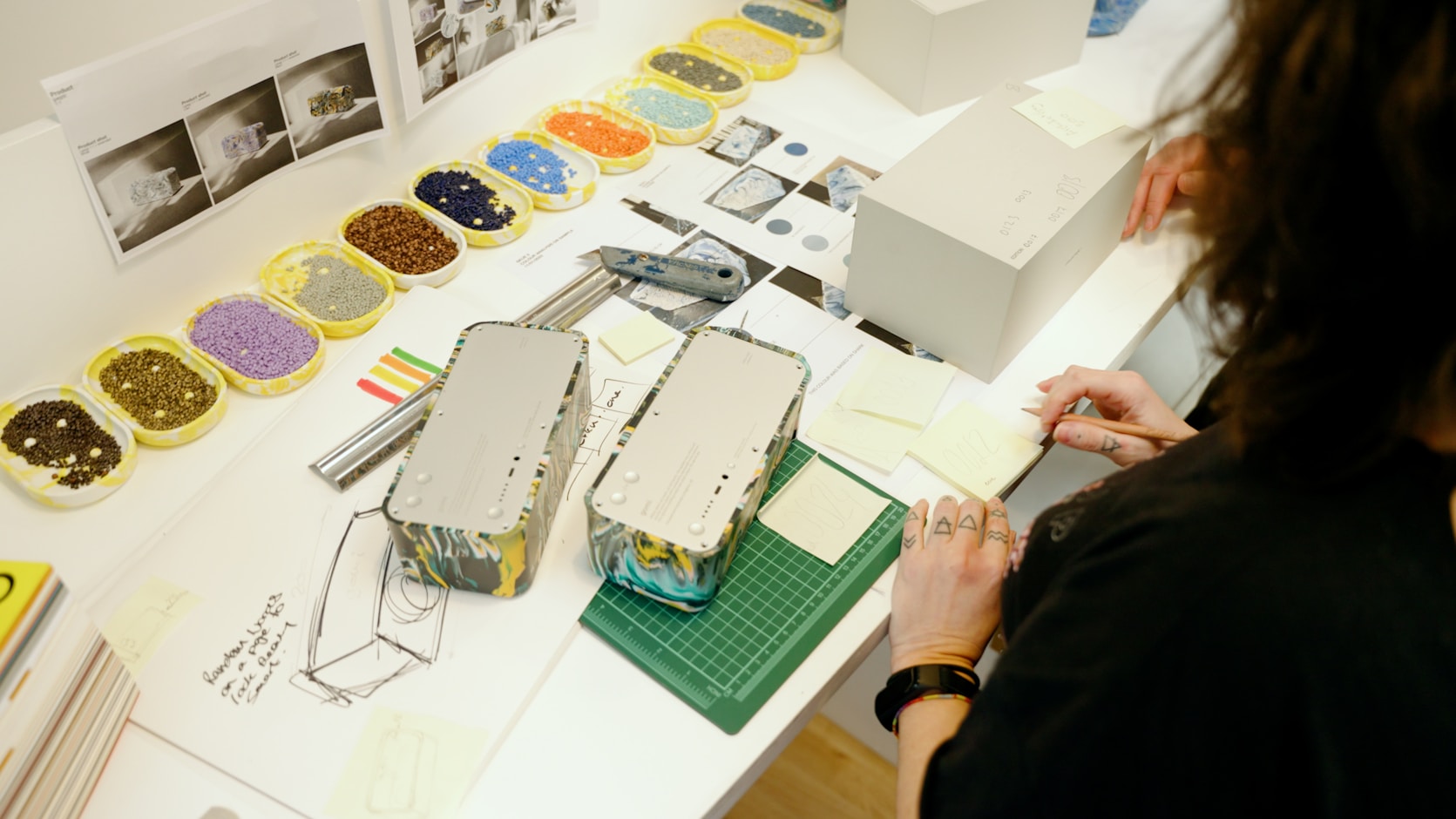
The decision, made physical
It has to survive contact with a real choice
An archetype earns its keep at the moment somebody has to reject something good. A colour that is objectively lovely and too soft for a Ruler. A joke that lands and cannot come from a Caregiver. If the character never costs you a decision you liked, it is not doing any work, and nobody downstream will be able to tell what it was for.

From character to rules
The output is a list of things you no longer say
The deliverable is not a name and a wheel. It is the register written down as rules a new writer can follow on their first day: how long a sentence runs, whether irony is allowed, what you call the customer, which three words are banned. That is the artefact the archetype exists to produce, and the reason a brand voice stays recognisable after the person who chose it leaves.
Brand Archetype vs Brand Personality vs Brand Voice
These three get used interchangeably and they sit in an order. The archetype is the character you choose: one of twelve, decided once, and rarely changed. The brand personality is the set of traits that character implies, the adjectives you would use if somebody asked what your brand is like. The brand voice is what a reader actually meets: sentence length, vocabulary, whether you make jokes, whether you say sorry. Archetype is the decision, personality is the description, voice is the output, and the test of whether you got the first one right is that the third stays consistent when three different people are writing. If the copy and the archetype disagree, the copy is what is wrong. If the copy is good and the archetype keeps getting in its way, you chose the wrong character, and the honest fix is to change the character.
Four Ways an Archetype Stops Working
-
Choosing the one the founder wants to be
Aspiration picks Hero and Magician almost every time, because those are the flattering ones. The archetype has to describe what customers already experience, or every piece of copy is a small argument with reality that readers can feel without being able to name.
-
Picking two primaries so nobody loses the meeting
Two primary archetypes is the most common outcome of a workshop and the least useful. It reintroduces exactly the freedom the archetype existed to remove, and the copy goes back to being whatever suits the campaign in front of it.
-
Stopping at the name
A brand that has chosen Sage and written nothing down has a slide, not a voice. The archetype only reaches the reader through concrete rules, and until those exist a new writer has no way to be in character.
-
Applying it to the marketing and not the rest
Archetypes break first in the unglamorous copy: the shipping delay email, the error message, the refund policy. Those are the moments a reader is paying most attention, and a brand that is only in character in its ads is not in character at all.
How Selzee Turns an Archetype Into Content That Stays in Character
The hard part of an archetype is holding it across everything you publish every week. Selzee is your AI content team, and it works from your own material: it researches what your customers already say and how they already describe you, turns that into concepts you approve or reject, creates the content, and learns from what performed. Because the research step reads your real customer language, the character it writes in is the one your buyers already recognise. It runs in its own interface, so the evidence, the concepts and the finished copy sit in one place, and a line that is out of character is visible next to the customer sentence that shows why.
Brand Archetypes: FAQ
01 What are the 12 brand archetypes? +
The twelve brand archetypes are the Innocent, the Sage, the Explorer, the Hero, the Outlaw, the Magician, the Lover, the Jester, the Everyman, the Caregiver, the Creator and the Ruler. Each one is built on a single human desire and produces a different register: the Sage is measured and evidence-led, the Outlaw is blunt and names an enemy, the Everyman is conversational and refuses to perform.
02 What are the four brand archetype families? +
Longing for paradise, which holds the Innocent, the Sage and the Explorer. Leaving a mark, which holds the Hero, the Outlaw and the Magician. No one is an island, which holds the Lover, the Jester and the Everyman. Providing structure, which holds the Caregiver, the Creator and the Ruler. The grouping is by the motivation underneath each archetype, and it comes from The Hero and the Outlaw by Margaret Mark and Carol S. Pearson.
03 Did Carl Jung create the 12 brand archetypes? +
No. Jung wrote about archetypes as patterns in the psyche, not as a branding tool, and he never published a list of twelve for brands. The twelve that marketers use were set out by Margaret Mark and Carol S. Pearson in The Hero and the Outlaw in 2001, adapting the Jungian idea into a positioning system. Pages that credit the whole framework to Jung are skipping the part you are actually using.
04 How do I know which brand archetype I am? +
Read what customers already call you before anyone in the room gives an opinion. Collect the adjectives that appear more than twice across reviews, support tickets, sales calls and comments, then narrow to one of the four families by asking what your best customers buy on: a better state of mind, change, belonging, or control. Finally choose between the remaining three by which failure mode you can live with, because every archetype has one.
05 Can a brand have two archetypes? +
One primary, and at most one secondary used as a modifier in roughly one line in five. Two primaries is the usual result of a workshop where nobody wanted to lose, and it undoes the point of choosing: the archetype exists to remove options, so a brand with two has the same freedom it had before and goes back to sounding different every quarter.
06 What is the difference between a brand archetype and a brand voice? +
The archetype is the character you choose and it changes rarely. The voice is what a reader meets on the page: sentence length, vocabulary, whether you use humour, whether you say sorry. Archetype is the decision and voice is the output, so a voice that keeps drifting is usually a sign the archetype was never written down as rules a writer can follow.
07 Do brand archetypes still matter for a small brand? +
They matter more, because a small brand has fewer touchpoints and each one carries more weight. The practical value is speed: an archetype settles arguments about copy before they start, and it lets somebody new write in character without a long handover. It also stops a founder-written voice from becoming impossible to hand over.
Hold your character across everything you publish
Selzee reads how your customers already describe you, turns it into concepts you approve, and writes in the character they recognise. Start free, no card required.
Start free with SelzeeKeep exploring: twelve real brand voices, with their own copy quoted, the marketing funnel stages, the five stages of awareness, the free brand kit generator.