Value equation
Alex Hormozi's Value Equation: The Four Variables, and the Ad Line That Moves Each One
The value equation is Alex Hormozi's way of quantifying what makes an offer feel worth the price: dream outcome multiplied by perceived likelihood of achievement, divided by time delay multiplied by effort and sacrifice. Two variables you raise, two you cut. This page explains all four, shows the ad line that moves each one, and gives you a way to score an offer before you brief creative against it.

Key takeaways
- The value equation is (dream outcome x perceived likelihood of achievement) divided by (time delay x effort and sacrifice). Raise the top, cut the bottom.
- Every variable is a perception. The buyer decides how likely, how long and how hard your offer looks from the ad alone, which makes all four of them creative problems before they are product problems.
- The bottom half is where the advantage is. Anybody can promise a bigger outcome, so time delay and effort are the two variables competitors find hardest to copy.
- Most underperforming ads move one variable and ignore three. Score the offer across all four before you decide whether you need a new hook or a different offer.
What Is the Value Equation?
The value equation is a formula for how valuable an offer feels to a buyer: dream outcome multiplied by perceived likelihood of achievement, divided by time delay multiplied by effort and sacrifice. Alex Hormozi set it out in $100M Offers. The two variables on top are the ones you increase: the result the buyer wants, and how confident they are that they will personally get it. The two on the bottom are the ones you decrease: how long it takes, and how much work, risk or inconvenience it costs them. The equation is written as a division rather than a sum to make one point, which is that driving the bottom towards zero matters more than inflating the top: an outcome that arrives instantly and costs the buyer nothing is worth more than a bigger promise that takes months and hard work to reach.
The Four Variables, and the Ad Line That Moves Each One
One row per variable: the question the buyer is silently asking, which way the variable has to move, the job the creative has to do, and a line written to it. Brief from the row, because "increase perceived value" is not an instruction anybody can act on.
| Variable | What the buyer is asking | Which way it moves | What the creative has to do | Example line |
|---|---|---|---|---|
| Dream outcome | What do I actually get? | Raise it. Top of the equation. | Name the result in the buyer own words, not the product category. | “Never scrape a windscreen again” |
| Perceived likelihood of achievement | How do I know it will work for me? | Raise it. Top of the equation. | Show proof from somebody the buyer recognises as themselves. | “4,000 drivers in the Midwest switched last winter” |
| Time delay | How long until it works? | Cut it. Bottom of the equation. | Name the first moment something changes, not the end state. | “Clear glass in about ninety seconds on the first morning” |
| Effort and sacrifice | What is it going to cost me beyond money? | Cut it. Bottom of the equation. | Remove a step out loud, and say what the buyer does not have to do. | “No scraping, no spray, nothing to plug in” |
Price is not one of the four variables. It sits outside the equation on purpose: the equation describes what the offer is worth to the buyer, and the price is the number you can defend once that is settled.
Each Variable, in an Ad That Is Running Right Now
Every creative below is live on Meta and was harvested from the Meta Ad Library for this page. Three of them work a variable on purpose. The fourth is here for what it reveals: across the 54 creatives harvested, exactly one attaches a number to time, and it is the wrong clock.
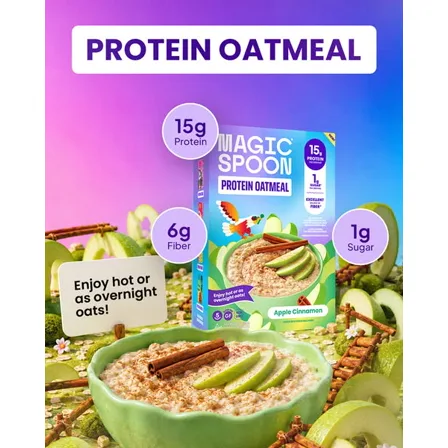
Dream outcome, raised
15g protein, 6g fiber, 1g sugar
Headline: Protein Oatmeal, apple cinnamon
The outcome is written in the three numbers this buyer already shops by, not in a sentence about feeling good. Nothing on the creative argues why the numbers are true, which is the bet: in this category the promise is still worth stating plainly.
See it in the Meta Ad Library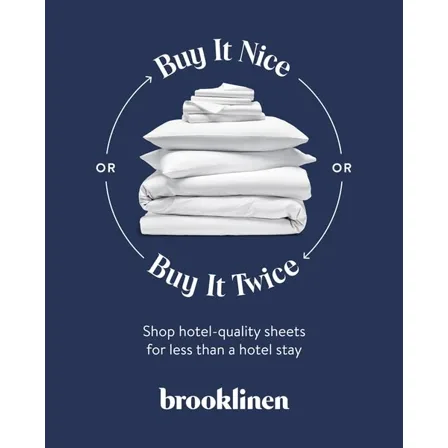
Perceived likelihood, raised
Buy it nice or buy it twice
Headline: Hotel-quality sheets for less than a hotel stay
The doubt this buyer holds is not whether nice sheets are nice, it is whether these ones will last. The line answers that by naming what happens if they do not, and the price comparison gives the reader a yardstick they have already used themselves.
See it in the Meta Ad Library
Time delay, and the wrong clock
72Hr odor and sweat control, doctor developed
Headline: Whole Body Deodorant plus Sweat Control, back in stock
This is the only creative in the harvested set with a number attached to time, and the number is how long the effect lasts rather than how long until it starts. Duration is worth claiming. It is not the variable, and the gap is the point: a buyer deciding tonight wants to know when they would notice.
See it in the Meta Ad Library
Effort and sacrifice, cut
Cool your bed, not your house
Headline: Sleep cool with the Pod
The sacrifice being removed is not the price, it is everything the buyer currently does to sleep cool: the thermostat argument, the running cost, waking the rest of the house. Naming the thing they no longer have to do is the denominator move, and it is the half of the equation competitors cannot copy with copy.
See it in the Meta Ad LibraryWhy the Bottom Half Is Where the Advantage Is
The top of the equation is cheap to move and cheap to copy. Any competitor can promise a bigger outcome tomorrow morning at no cost, which is why categories full of ambitious promises end up sounding identical. The bottom is different: cutting real time delay or real effort usually means changing the product, the packaging or the onboarding, and that is work a competitor has to actually do rather than simply claim. Hormozi publishes the framework and a walkthrough of it on the value equation page at acquisition.com, and the emphasis there is the same: the denominator is the hard half, and the hard half is the defensible one.
Ecommerce has a standing measurement of what unexamined effort costs. The Baymard Institute puts the average documented cart abandonment rate at 70.22%, drawn from 50 studies. Those are buyers who had already accepted the dream outcome, had enough belief to add to cart, and then met enough friction to leave. Nothing about the promise moved them out. The bottom of the equation did.
Perceived likelihood is what the buyer believes will happen to them. Evidence from somebody they recognise moves it, and a better product on its own does not. An independent Forrester Total Economic Impact study found user-generated content delivers 400% ROI, a $4 return for every $1 invested, and the mechanism behind that number is this variable rather than reach. It also explains why creative carries so much of the result: Nielsen credits creative, not targeting or media spend, with up to 89% of a digital ad's in-market success. All four variables reach the buyer through the creative or they do not reach them at all.
The Four Variables in Detail
-
1
Dream outcome, raise it
The dream outcome is the state the buyer wants to reach, described the way they would describe it rather than the way your product page does. It is the easiest of the four to state and the least defensible, because any competitor can promise the same thing at no cost. Treat a strong dream outcome as the entry ticket rather than the differentiator, and take the words from your reviews: buyers write the outcome better than marketers do, and they write it in the phrasing that other buyers search and scroll for. In an ad: name the result in the buyer own words, not the product category. Example line: "Never scrape a windscreen again"
-
2
Perceived likelihood of achievement, raise it
Perceived likelihood is belief, not truth. The product can work perfectly and still fail here if the buyer cannot see why it will work in their case, which is why proof beats promise in every ad written for a sceptical audience. The proof that moves it is specific and recognisable: a review from somebody with the same problem, a demonstration filmed in an ordinary setting, a number with a date on it. Testimonials from people the buyer cannot picture being do nothing for this variable. In an ad: show proof from somebody the buyer recognises as themselves. Example line: "4,000 drivers in the Midwest switched last winter"
-
3
Time delay, cut it
Time delay is the gap between paying and getting the outcome, and it is measured in perception rather than in calendar days. A product that takes eight weeks to work fully but shows something in week one has a far shorter perceived delay than one that only reports at the end. In creative terms this is the difference between the promise and the first proof point, and naming the first visible change is usually the single cheapest edit available to an ad that is not converting. In an ad: name the first moment something changes, not the end state. Example line: "Clear glass in about ninety seconds on the first morning"
-
4
Effort and sacrifice, cut it
Effort and sacrifice is everything the buyer has to do, learn, give up or risk looking foolish over. It is the variable most ads never mention, which is why so many of them read as though the purchase is the end of the work rather than the start of it. Stating the steps you removed is stronger than stating the benefit again, and it is the half of the equation that competitors find hardest to copy, because cutting real effort means changing the product rather than the copy. In an ad: remove a step out loud, and say what the buyer does not have to do. Example line: "No scraping, no spray, nothing to plug in"
How to Score Your Own Offer With the Value Equation
-
1
Write the offer as the buyer would repeat it to a friend
One sentence, no feature list, no brand voice. If the sentence needs your product name to make sense, you are describing a product rather than an offer, and the four scores that follow will be scores of the wrong thing.
-
2
Score each variable out of ten from the ad alone
Read your live creative and score what a stranger could conclude from it: how big the outcome looks, how likely it looks, how long it looks, how hard it looks. Score what the ad shows, not what you know to be true. The gap between those two is usually the whole problem.
-
3
Find the variable the ad never mentions
Most ads address one variable and leave three unanswered. In practice the missing one is almost always effort and sacrifice, because it is the only variable that requires admitting the buyer has to do something. Naming it is usually the fastest improvement available.
-
4
Take the language from your reviews rather than inventing it
Your reviews answer all four questions in the buyer own words: what they got, whether they believed it first, how long it took, and what they had to put up with. Lift the phrasing. Copy written in the buyer vocabulary scores higher on perceived likelihood than the same claim written in yours.
-
5
Change one variable per test, not the whole offer
Run a version that cuts time delay against a version that cuts effort, with the same product and the same offer behind both. That tells you which variable your market is actually stuck on. Rewriting everything at once tells you only that the new ad is different.
Four Ways the Value Equation Gets Misused
-
Inflating the dream outcome and calling it value
A bigger promise is the easiest variable to move and the first one buyers discount. In a category where everyone is promising the same transformation, raising the numerator adds nothing and costs you credibility on the other three variables.
-
Treating perceived likelihood as a product-quality question
It is a belief held by the buyer, measured in whether they act on it. A product with a 95% success rate and no visible proof scores lower here than a good product with a review from somebody the buyer recognises as themselves.
-
Forgetting that every variable is a perception
Shortening a real process by two days moves nothing if the ad never mentions it. The variables move when the buyer perceives the change, which makes communicating the improvement as important as making it.
-
Using it to justify a price rather than to build an offer
The equation is a design tool for what you sell, not a debating tool for what you charge. Scoring an unchanged offer more generously does not make it more valuable, and buyers do the scoring anyway.
Where This Sits Next to the Other Frameworks
The value equation tells you what to say. It does not tell you how much of it the reader is ready to hear, and that is the job of the other two frameworks on this site. The five stages of awareness decide how much of the argument the reader already carries, and market sophistication decides whether your claim is still news or something the category has heard a hundred times. A perfectly scored offer written at the wrong awareness stage still reads as noise.
Turning the score into creative is the short part. Once you know which variable the offer is losing on, the ad angle generator gives you angles aimed at it, the ad copy generator writes the versions to test, and the hook generator handles the first line, which is where perceived likelihood is usually won or lost.
How Selzee Scores the Four Variables From Your Own Data
Every variable in the equation is answered somewhere in text your buyers have already written. Reviews say what they got and how long it took. Comment threads say what they did not believe. Support tickets say what the effort actually was. Selzee reads all of it, along with the ads your competitors are running and the results of the ads you ran, then proposes angles and concepts with the customer sentence behind each one attached. You get the language for the top of the equation and the friction sitting at the bottom of it without reading ten thousand reviews to find either.
The Value Equation: FAQ
01 What is the value equation? +
The value equation is dream outcome multiplied by perceived likelihood of achievement, divided by time delay multiplied by effort and sacrifice. It describes how valuable an offer feels to a buyer. You raise the two variables on top and cut the two on the bottom. Alex Hormozi set it out in $100M Offers and publishes a walkthrough of it on acquisition.com.
02 What are the four variables in the value equation? +
Dream outcome, the result the buyer wants. Perceived likelihood of achievement, how confident they are that they personally will get it. Time delay, how long it takes between paying and getting it. Effort and sacrifice, everything they have to do, learn or give up along the way. The first two are increased, the last two are decreased.
03 Why is the value equation written as a division? +
To make the bottom half matter more than the top. Because the two costs are divisors, driving them towards zero raises value faster than inflating the promise does. An outcome that arrives immediately and asks nothing of the buyer is worth more than a larger outcome that takes months of work, which is why so much competitive advantage sits in removing delay and effort rather than in promising more.
04 How do I use the value equation in an ad? +
Pick the variable your offer is weakest on and write the ad to that one. Name the outcome in the buyer own words for dream outcome, show proof from somebody they recognise for perceived likelihood, name the first visible change for time delay, and say what they no longer have to do for effort and sacrifice. One ad that moves one variable clearly beats one that gestures at all four.
05 Is the value equation the same as a value proposition? +
No. A value proposition is a statement of what you offer and who it is for. The value equation is a scoring model for how attractive that offer feels, broken into four variables you can move independently. You can have a clear value proposition that scores badly, usually because the time delay or the effort involved has never been addressed anywhere in the funnel.
06 Does the value equation work for ecommerce products, or only for services? +
It works for both, and the variables that decide it differ. Services usually lose on time delay and perceived likelihood. Physical products usually lose on effort and sacrifice: setup, maintenance, returns, the habit the buyer has to build. That is also why so much ecommerce creative converts better after it names what the buyer does not have to do.
07 What is the fastest way to raise perceived likelihood of achievement? +
Show evidence from somebody the buyer can see themselves in, in a setting that looks like theirs. Specific beats polished: a dated number, an unedited review, a demonstration filmed somewhere ordinary. Generic praise from a stranger with no shared context moves this variable very little, however positive it is.
Find out which variable your offer is losing on
Selzee reads your reviews, comments and campaign results, then proposes angles and concepts with the customer sentence each one came from. Start free, no card required.
Start free with SelzeeKeep exploring: the five stages of market sophistication, the 5 stages of awareness, the free ad copy generator, what ad creative is.