Rule of 7
The Rule of 7 in Marketing, and What the Research Actually Says
The marketing rule of 7 says a buyer has to encounter your message about seven times before they act. It is repeated everywhere and sourced nowhere. This page traces the number, sets it beside the research that was actually done on effective frequency, shows what repetition looks like in a live ad account today, and gives you the two questions worth asking instead.

Key takeaways
- The rule of 7 has no published study behind it. The origin story changes with every retelling, and the pages that repeat it cite each other.
- The research that does exist says three. Krugman argued in 1972 that three exposures may be enough, and that became the media planning default through the 1979 Effective Frequency review.
- A frequency number without a time window is not a target. Seven exposures in a weekend and seven across a year are different campaigns with the same figure on the report.
- What repetition looks like now is several different creatives from one advertiser running at once, which is visible in any public ad library.
What Is the Rule of 7 in Marketing?
The rule of 7 is the idea that somebody needs to encounter a brand or a message roughly seven times before they act on it. It is used to argue that a single ad, email or post is not a test of anything, and that campaigns should plan for repeated contact. The number itself has no published research behind it: the origin story usually credits film studios in the 1930s, no primary source for that study is findable, and the marketing articles repeating it cite one another. The measured work on the same question came later and landed on a smaller number. Herbert Krugman argued in 1972 that three exposures may be enough, and Michael Naples assembled the surrounding evidence for the Association of National Advertisers in 1979, and three exposures inside a purchase cycle became the planning default. So the principle holds and the figure does not: repetition matters, seven is decoration, and the useful questions are how many different things your campaign is saying and over what window one person sees them.
Four Claims About Frequency, and What Is Behind Each
The rule of 7 is one of four positions people cite on this question, and it is the only one with nothing under it. Read the source column before you quote any of them in a plan.
| The claim | Where it comes from | What it actually says |
|---|---|---|
| Seven exposures before a buyer acts | No primary source. The number travels from one marketing page to the next, and the pages cite each other. | Treat seven as a slogan for "more than once". Nothing was counted to produce it. |
| Three exposures are enough | Herbert Krugman, Why Three Exposures May Be Enough, Journal of Advertising Research, 1972. | Krugman argued the first exposure asks what is it, the second asks what of it, and the third is where a response happens or the viewer disengages. |
| Three per purchase cycle is the planning default | Michael Naples, Effective Frequency, published for the Association of National Advertisers in 1979. | Naples gathered the evidence behind minimum effective frequency, and three exposures inside a purchase cycle became the number media plans were built on. |
| Reach beats frequency | Erwin Ephron, recency planning, argued in the same journal in 1997. | Since you cannot know when somebody is about to buy, continuous presence in front of more people beats stacking exposures on the same few. |
The three sourced positions disagree with each other, which is the honest state of this question. None of them produces a single number you can carry into a media plan without naming your own purchase cycle first.
What Repetition Looks Like in a Live Ad Account
Four ads from one advertiser, all active on Meta in the same week and harvested for this page. Crocs is not showing one image seven times. It is running four different arguments at once, and the Ad Library shows several of them carrying more than one ad ID on the same creative and text. That is how exposures accumulate in 2026.
Started 27 Jul 2026, a launch
LET THEM TALK
Headline: Echo's next chapter sharpens the silhouette with a multicolor mold and lighter comfort. Bold. Sculpted. New.
Two legs kicked up against a blue sky with the orange soles turned to camera. No price, no offer, no product detail. A launch ad gets the boldest frame in the rotation because it is the one that has to be recognised again three weeks later.
See it in the Meta Ad Library
Started 4 Sep 2026, a second product story
crocs AXLE MULE
Headline: A new take on the mule that adds a touch of effortlessness to every look. Feel the Coast.
The same week, a different product, and a completely different mood: styled on a person, on a painted wooden floor, shot from above. Somebody who saw the launch ad and then this one has met the brand twice and the argument once each.
See it in the Meta Ad Library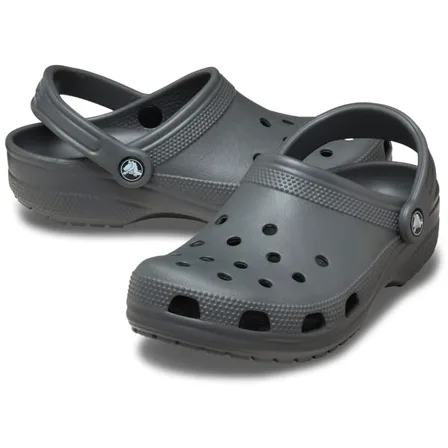
Started 24 Jul 2026, shopping feed
No line on the image at all
Headline: Classic Clog. Get our iconic Crocs comfort with free shipping on qualified orders.
A catalogue cut-out on white, the shape of ad a product feed generates by the thousand. The Ad Library notes that this creative and text run under more than one ad, which is the first reason a raw exposure count says less than it looks like it does.
See it in the Meta Ad Library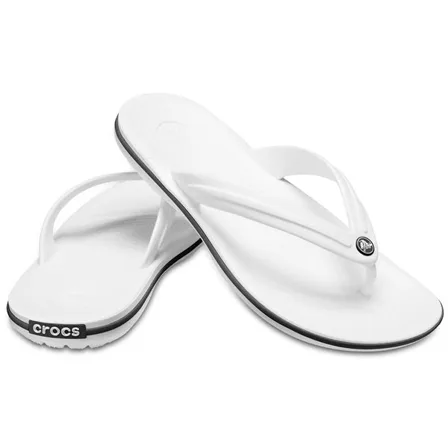
Started 28 May 2026, still running
No line on the image at all
Headline: It can be sandal season all year long. Enjoy free shipping on qualified orders. Crocband Flip.
Four months old and still live, which is the part a frequency figure hides: your seven exposures are not seven equal moments, they are one launch, two product stories and an evergreen offer that has been running since spring.
See it in the Meta Ad LibraryThe Four Positions, in Order of How Much Evidence They Carry
-
1
Seven exposures before a buyer acts
Every retelling names a different decade, a different industry and sometimes a different number. Nobody publishes the study, the sample or the measure, because as far as we can find there was never one to publish. That does not make repetition wrong. It makes the figure decoration.
-
2
Three exposures are enough
This is the closest thing to a real origin the idea has, and it says three, not seven. It is also a psychological argument about how a viewer processes a message rather than a media-buying rule, which is exactly how it then got used.
-
3
Three per purchase cycle is the planning default
Note what the phrase adds: inside a purchase cycle. A frequency figure with no window attached is not a target, because seven exposures over a year and seven over a weekend are different campaigns with the same number on the report.
-
4
Reach beats frequency
This is the position most modern planning takes, and it is the one that holds up inside an auction. On paid social you are not buying a frequency, you are buying an outcome, and frequency is a diagnostic the platform hands back afterwards.
What the Research Actually Found
The serious work on this question starts with Herbert Krugman, then at General Electric, who published Why Three Exposures May Be Enough in the Journal of Advertising Research in 1972. His argument was psychological rather than arithmetic: the first exposure asks what is it, the second asks what of it, and by the third a viewer either responds or disengages. Michael Naples gathered the surrounding evidence in Effective Frequency for the Association of National Advertisers in 1979, and three exposures per purchase cycle became the planning default. Erwin Ephron then inverted the logic in 1997 with recency planning: since you cannot predict the week somebody becomes a buyer, continuous reach beats accumulated exposures.
None of that produces a seven. What it produces is a question about windows, which is the part the rule of 7 drops. On paid social the practical version is visible in your own account rather than in any of these papers: Meta publishes creative fatigue recommendations in Ads Manager, and the point where cost per result starts climbing while frequency keeps rising is your number, for that audience, with that creative, this month.
Keep this much from the rule: one ad is not a campaign. What replaces the number is variety, several arguments, recognisably from one brand, inside a window that matches how often people buy what you sell. That is a creative problem rather than a budget one, and Nielsen's creative-effectiveness research credits creative, not targeting or media spend, with up to 89% of a digital ad's in-market success. If you are working out what those different arguments should be, market sophistication decides what the market will still listen to, the AIDA model orders the parts of each ad, and the free ad tools turns your own customer language into the next few.
What to Do Instead of Counting to Seven
-
1
Read frequency with a window attached
A frequency of 7 over 30 days and a frequency of 7 over 3 days are not the same experience for the person seeing it. Pick the window that matches how often somebody buys your product, and report frequency inside it.
-
2
Count creatives, not just impressions
Seven impressions of one image is one argument seen seven times. Seven impressions across four creatives that say different things is a different campaign, and it is what the brands running the most volume actually do.
-
3
Watch the shape of the curve, not the number
The useful signal is the point where cost per result starts climbing while frequency keeps rising. That point is specific to your audience size and your creative, and it moves every time you change either one. Meta publishes creative fatigue recommendations in Ads Manager for exactly this reading.
-
4
Fix fatigue with new arguments, not new budget
When the rate falls and frequency climbs, more spend buys more of the thing that stopped working. A new angle resets it. A recoloured version of the same ad usually does not, because the audience is tired of the claim rather than the colour.
-
5
Give the message somewhere to accumulate
Exposures only add up if they are recognisably from the same brand. Consistent framing, colour and voice are what make the fourth ad land as the fourth rather than as a first one from a stranger.
The Hard Part Is Having Four Things to Say
Once you stop buying a number and start buying variety, the constraint moves to the studio: four arguments a month, from one brand, that are actually different from each other. Selzee reads your reviews, comments and past results, finds the questions and objections customers keep raising, and turns them into the next set of concepts your team can make this week. Research, concepts, create, then learning from what ran.
The Rule of 7: FAQ
01 What is the rule of 7 in marketing? +
The claim that somebody has to encounter your brand around seven times before they act on it. It is used as a planning rule of thumb, mostly to argue against expecting a single ad to work. There is no published study behind the number seven.
02 Where did the rule of 7 come from? +
The usual story credits film studios in the 1930s, who supposedly found that a filmgoer needed seven looks at a poster before buying a ticket. We could not find a primary source for it, and the marketing pages that repeat it cite each other rather than a study. The measured research that does exist put the number at three, not seven.
03 Is the rule of 7 true? +
The principle is sound and the number is decoration. Repetition does build recognition, and recognition does affect choice. Seven spread because it sounds specific, nothing was ever measured to produce it, and teams that treat it as a target buy frequency they did not need.
04 How many times should someone see my ad? +
Enough times inside the window in which they might buy, and across enough different creatives that the argument is not one line repeated. On paid social the honest answer is that you find your own number by watching the point where cost per result climbs as frequency rises, because it depends on your audience size and your creative.
05 What is effective frequency? +
The minimum number of exposures inside a purchase cycle needed for an ad to work. Krugman argued in 1972 that three exposures may be enough, and Michael Naples gathered the surrounding evidence for the Association of National Advertisers in 1979, which is how three per cycle became the default assumption in media planning.
06 Does the rule of 7 apply to social media? +
Not as a number. Feeds are auction-driven, so you do not buy a frequency, you buy outcomes and read frequency afterwards as a diagnostic. What carries across is the underlying idea: one ad shown once to a cold audience is not a test of anything.
07 What should I use instead of the rule of 7? +
Two questions. How many different things is this campaign saying, and over how long is one person seeing them. Those answer what the rule was reaching for, and both are visible in your own ad manager rather than in a number from the 1930s.
Stop Buying Frequency, Start Buying Arguments
The number was never the lever. Having four things worth saying to the same buyer is, and that is what Selzee builds out of the material your customers have already written.
Get started for freeKeep exploring: the AIDA model, the 5 stages of market sophistication, ad testing tools, how to test ad creative.