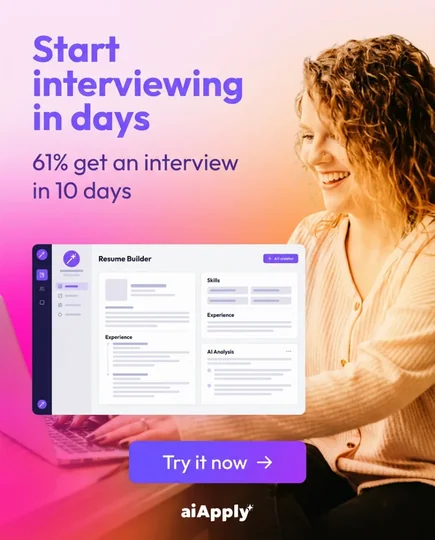
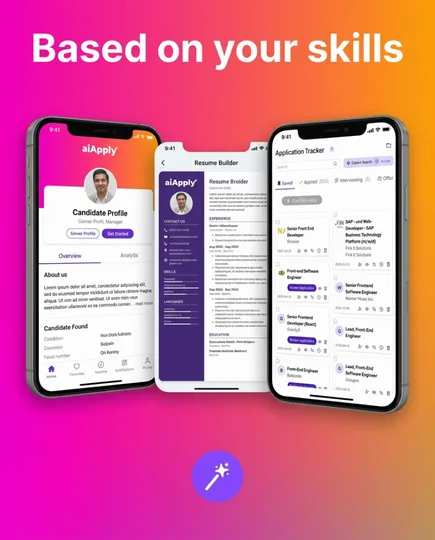
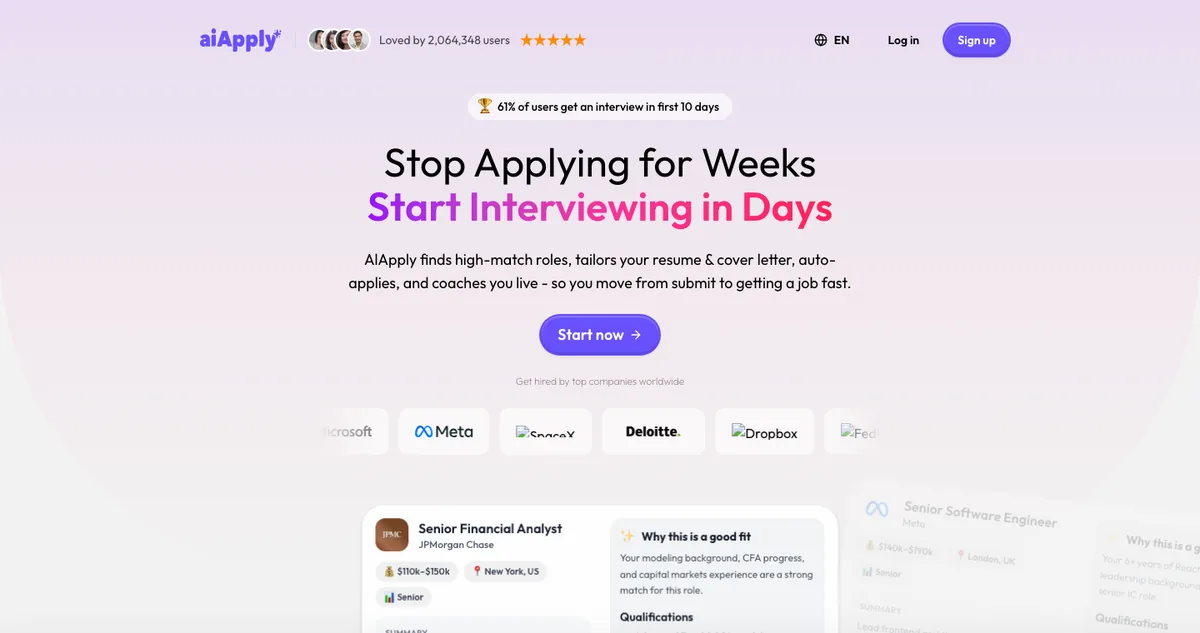
AIApply is a job-search app. It finds roles that match a candidate, tailors the resume and cover letter to each one, applies on their behalf and coaches them through the interview. More than 2 million people have used it, it has applied to over 372,000 roles, and it reports that 61% of its users get an interview inside their first ten days. The growth team buys most of that attention on Meta: around $500,000 a month in ad spend, with roughly $50,000 a month more going into the creative that spend runs on.
Yoann Pavy leads growth. His problem was never budget. It was that he could not ship a static ad on his own.
“Most ‘AI marketing’ tools are off my list in a week. I open this one every morning, pick a couple of statics and put them to testing in around 30 minutes.”
Before Selzee: every static waited on the agency
Before Selzee, AIApply's creative came from two places. The founders shot video ads themselves. Every static went through an outside agency. The agency did good work, and it worked at agency pace: a brief, a round of drafts, feedback, another round, then a handful of finished ads. Yoann, the person reading the Meta account every day, could see which angles were starting to move and could not act on it until the next batch came back.
The agency's statics won at about 5%. One finished ad in twenty earned a place in the always-on account. On half a million a month of spend that is a respectable rate. It just meant that finding one new winner cost twenty ads and the weeks it takes an agency to make them.
Yoann had tried the obvious shortcuts. Creatify and Zeely each got about a week.
“They were Canva with a chatbot on top. I still had to bring the angle, the copy and the layout. I did not need a faster way to make an ad I had already thought of. I needed something that had done the thinking before I opened it.”
With Selzee: 35 statics a week, and a 9% win rate
An affiliate mentioned Selzee. Yoann typed in aiapply.co, and the first batch arrived built from material AIApply already owned: the reviews and comments its users leave, the hooks that already perform on its own TikTok and Instagram, and the ads its competitors in the job-search category are paying to run right now.
Today the routine is fixed. Yoann opens Selzee each morning. From the batch waiting for him he picks around ten ads and pushes them straight into a Meta test. The rest he does not delete: he leaves feedback on each one, and that feedback is what tunes the next morning's batch. The whole pass takes about 30 minutes.
Across a week that is about 35 Selzee statics going into testing. Of those, 9% become winners, ads that earn a place in the always-on account. The agency's benchmark on the same account is 5%.
Against the agency pipeline, AIApply reports the following.
- Win rate on statics up from 5% to 9%
- Ads shipped in-house up 80%
- Live ads in the account up 8% overall
- Around 35 new statics into testing every week
- About 30 minutes a morning to review, approve and ship
What the 9% is made of
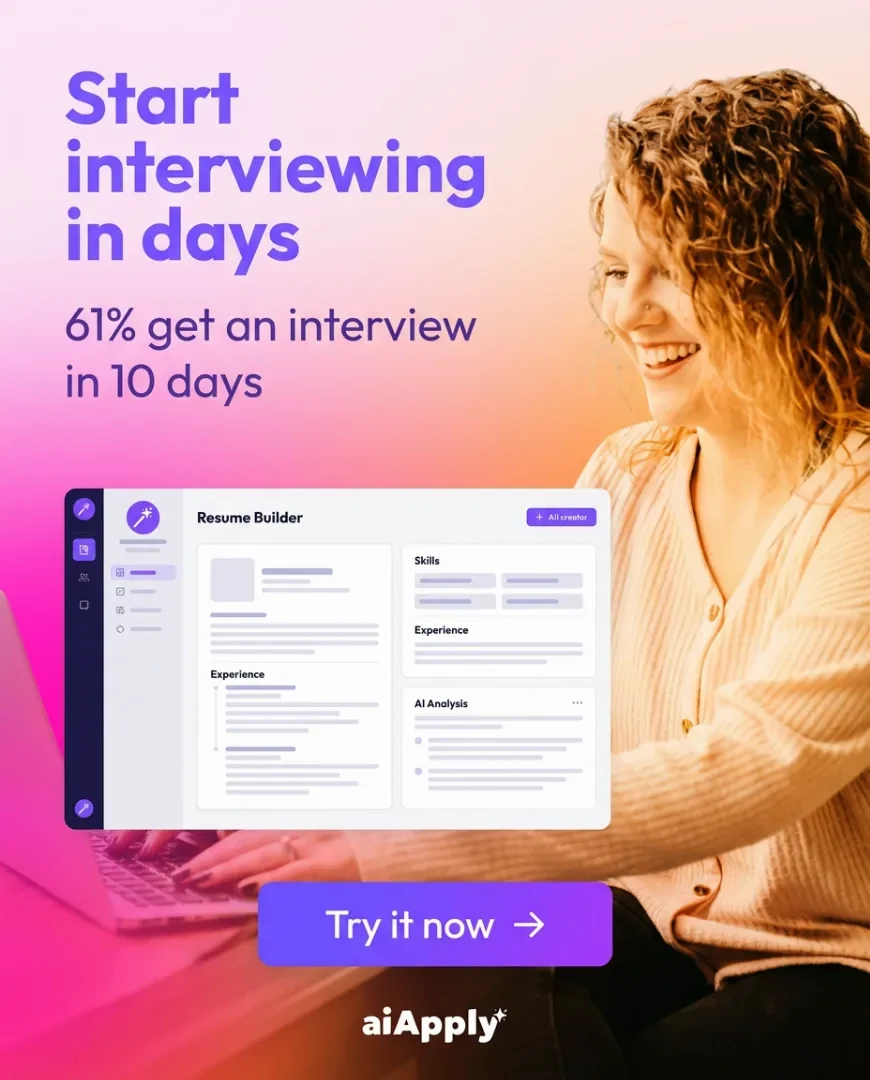
Ask Yoann what makes the difference and he does not name the generator. He names the research underneath it. Every Selzee batch starts from three things AIApply already has: the reviews and comments its users write, the posts that already perform on its own social, and the ads its competitors are running this week. Selzee reads all three before it writes a headline, which is why the proof in the ad above is AIApply's real 61% figure and not a stock claim.
“The angle is the part an agency charges for and a template tool can't do. Selzee shows up with the angle already picked and the proof already in the headline. I'm judging, not briefing.”
The other half is the feedback. When an ad is not right, Yoann says why, or asks for a different format, and the next batch reflects it. Over weeks that compounds. The batch he opens today favours the formats he keeps shipping and has dropped the ones he kept passing on.
Where Selzee sits in the pipeline
Selzee is the start of the static pipeline, not the whole of it. Yoann approves inside Selzee, then ships the picks into Meta Ads Manager himself and tracks them in Notion. Nothing was switched off to make room. The agency still produces, the founders still shoot video, and Selzee added a lane that runs every day without waiting on either.
That is the number behind the +80%: it is the ads Yoann ships himself, which used to be close to none, because every static had to go out through someone else.
The change nobody predicted
“I stopped writing briefs. The feedback is the brief now.”
Yoann expected a faster way to get ads. What he got was a system that improved. Because every rejected ad carries a reason and every kept ad is a signal, the batch he opens in September is not the batch he opened in the first week. Being able to say “more of this format” and see it the next morning was not something he had asked for. It is now the part he says he would miss most.
What hasn't changed
No ad goes live without Yoann. Every static, Selzee's or the agency's, is approved by a person before it spends a dollar. Selzee researches, produces, ranks and learns. It does not publish. On an account spending half a million a month, Yoann is clear that this is the right line, and that the value is being able to hold it in 30 minutes a morning instead of a week of back-and-forth.
“Nothing goes live because a model liked it. I still approve every ad. The difference is that approving now takes half an hour, and I'm not waiting on anyone to get there.”
AIApply's pitch to job seekers is that the busywork of applying should not be theirs to do. Its growth team now runs its statics the same way: the research and the first draft are done before anyone sits down, and the person's time goes on the decision.