If your Shopify store feels clunky or confusing, you're not just annoying visitors—you're losing money. An optimized customer experience isn't a fluffy marketing goal. It's a measurable strategy to stop bleeding sales, boost your average order value (AOV), and build a brand people trust and return to.
Why a Lousy Customer Experience Is a Silent Sales Killer
Every second a potential buyer spends confused, waiting for a page to load, or hunting for a simple answer is another second they're inching closer to the "back" button. And they're going straight to your competitor.
In competitive markets, shoppers have zero tolerance for friction. They expect instant answers, recommendations that feel personal, and a checkout so seamless they barely think about it. Anything less feels broken.
This isn't just about feelings; it's about your bottom line.
Slow Support Is the Same as No Support
Today's shoppers live in a world of right now. If they have a question about sizing, shipping times, or product compatibility, they won't email you and wait. They'll just leave.
This is a guarantee backed by data. An incredible 38% of customers demand immediate support, and 32% expect a response within an hour. On top of that, 72% expect their problem to be solved in that very first interaction. You can check out more of these powerful ecommerce customer service stats for yourself.
When your support is slow, you’re not just providing a subpar service. You’re turning away paying customers.
The new gold standard for support isn't just being helpful—it's being instant. The moment a customer has to wait, you’ve introduced friction. Friction costs you the sale.
Irrelevance Is a Profit-Killer
Another massive mistake is showing customers things they don't care about. When someone adds a new camera to their cart, are you showing them a generic "bestseller" T-shirt? Or are you intelligently recommending the exact memory card they need and a compatible lens cleaner?
That's the difference between a static product list and a dynamic selling machine.
An unoptimized site completely misses these buying signals, leaving easy money on the table. Common mistakes include:
- Beauty Stores: Not suggesting the matching conditioner when someone buys a specialty shampoo.
- Fashion Brands: Failing to show the complete outfit that the model is wearing in the product photo.
- Electronics Retailers: Missing the no-brainer opportunity to bundle essential accessories like a fast charger or a protective case.
Each missed connection shrinks your AOV. It forces you to spend more on acquiring new customers instead of delighting the ones already on your site. A truly optimized experience transforms every click into a revenue opportunity.
The High Cost of a Poor Customer Experience
This table breaks down the direct financial hit you take from common CX failures on your Shopify store.
| Common CX Failure | What It Costs You | The Fix |
|---|---|---|
| Delayed Chat/Support Response | Cart Abandonment. Shoppers with unanswered questions about shipping, returns, or product specs simply leave. | AI-Powered Instant Answers. A chatbot can instantly resolve 80% of common queries, 24/7. |
| No Product Recommendations | Lower AOV. You miss out on easy upsells and cross-sells, leaving potential revenue untapped with every order. | Smart Personalization. AI analyzes browsing behavior to offer relevant suggestions that increase basket size. |
| Confusing Navigation | High Bounce Rate. Visitors can't find what they're looking for and exit your site within seconds, frustrated. | Proactive AI Chat. A chatbot can pop up to ask, "Having trouble finding something?" and guide them directly. |
| Generic Marketing | Low Conversion Rates. One-size-fits-all pop-ups and offers feel like spam and get ignored, tanking engagement. | Personalized Offers. AI can trigger unique discounts based on user behavior, like offering free shipping to a hesitant shopper. |
These aren't just minor inconveniences; they are significant, quantifiable losses. The good news is, they are all fixable.
Deploy Proactive Support That Actually Converts
Waiting for customers to ask for help is a losing strategy. A fantastic customer experience anticipates needs and helps high-intent shoppers before they get frustrated and bounce. Your on-site chat shouldn't just be an FAQ page—it must be your most effective sales tool.
Think about the best salesperson in a physical store. They don't just stand there. They spot someone looking lost, offer genuine advice, and make the process feel smooth and personal. Your website can, and should, deliver that same experience.
From Passive to Proactive Engagement
The key is using AI-driven chat to engage at pivotal moments in the customer journey. This isn't about being annoying; it's about setting up smart, proven triggers that don't just solve problems but actively create sales.
Here are three high-impact plays that turn hesitant browsers into buyers:
- The "Product Comparison Paralysis" Breaker: A visitor is bouncing between two or three product pages. They're stuck. An AI assistant can pop up with, "Having trouble deciding? I can pull up a quick comparison for you." Problem solved.
- The Checkout Saver: Someone's been on the checkout page for more than 60 seconds. This often means sticker shock from shipping costs or confusion about delivery times. A timely message offering a small shipping discount can be the nudge they need to complete the purchase.
- The "Smart Search" Guide: A customer searches for "skincare for sensitive, dry skin." Instead of just showing a results page, an AI guide can start a conversation, asking questions to recommend the perfect product bundle. We saw this in action with an AI fragrance concierge that helped one brand nail this exact strategy.
This process prevents the common breakdown that happens when customers can't get instant, intelligent help.
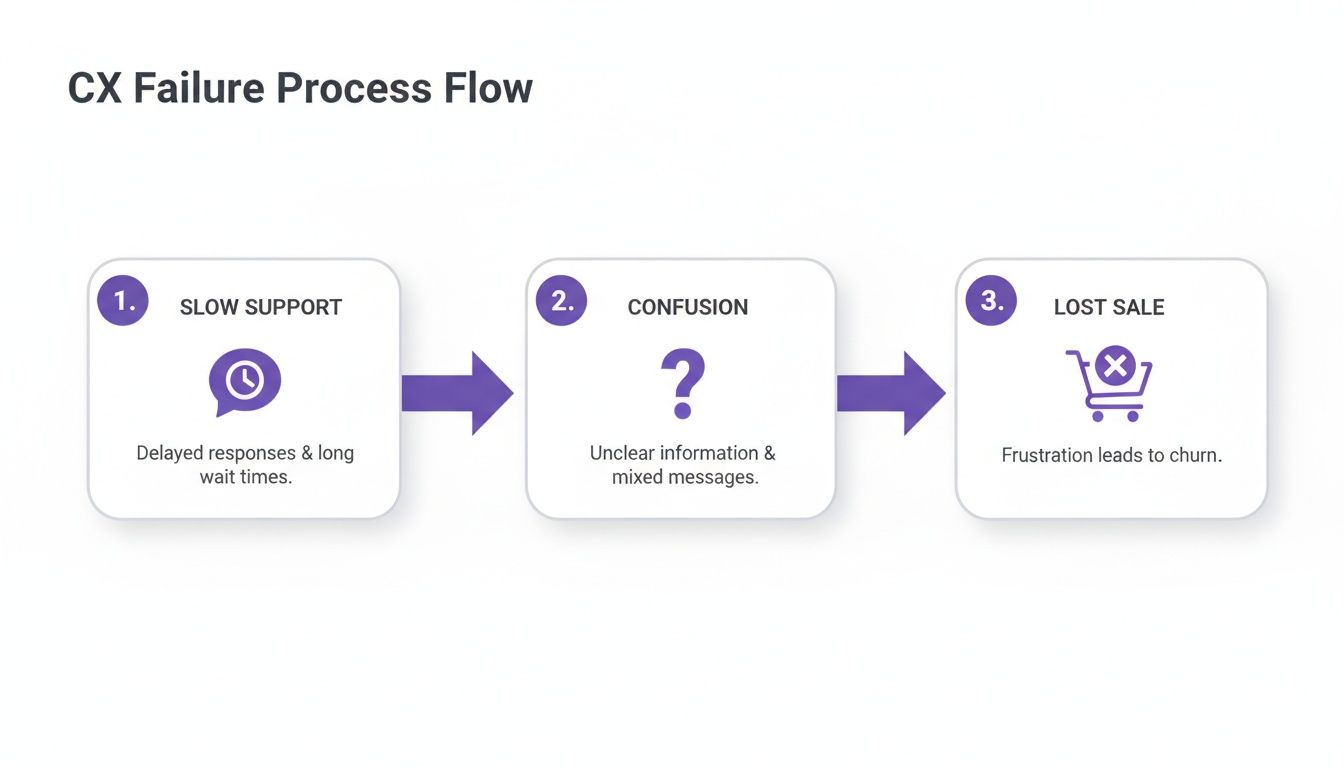
As you can see, the path from slow support to customer confusion and a lost sale is frighteningly short. It’s a costly, and completely avoidable, failure.
Smart Triggers That Drive Revenue
The goal is to automate the helpful nudges that top salespeople do instinctively. An AI assistant can see a customer looking at two products that go together and offer a bundle deal. Or it can provide instant, accurate shipping info to someone lingering on a product page.
Many merchants view chat as just a cost center for customer support. That’s a huge mistake. When you set it up to be proactive, it becomes your highest-converting salesperson—one that works 24/7 and gets smarter with every conversation.
Of course, the human touch is irreplaceable. A smooth, one-click handoff to your support team for complex issues is non-negotiable. But for the 80% of routine questions and clear buying signals, a proactive AI gives customers the immediate, personalized guidance that makes them feel seen.
2. Make Your Store a Personal Shopper with AI
Generic product grids are obsolete. If you're showing every visitor the same homepage and the same "related items," you are leaving a mountain of cash on the table. It’s time to move beyond Shopify’s basic features and let real AI do the heavy lifting.
The goal is to make your store feel less like a static catalog and more like a dedicated personal shopper for every visitor. We're talking about dynamic, real-time recommendations that understand each user's browsing history, past purchases, and what they're looking for right now.
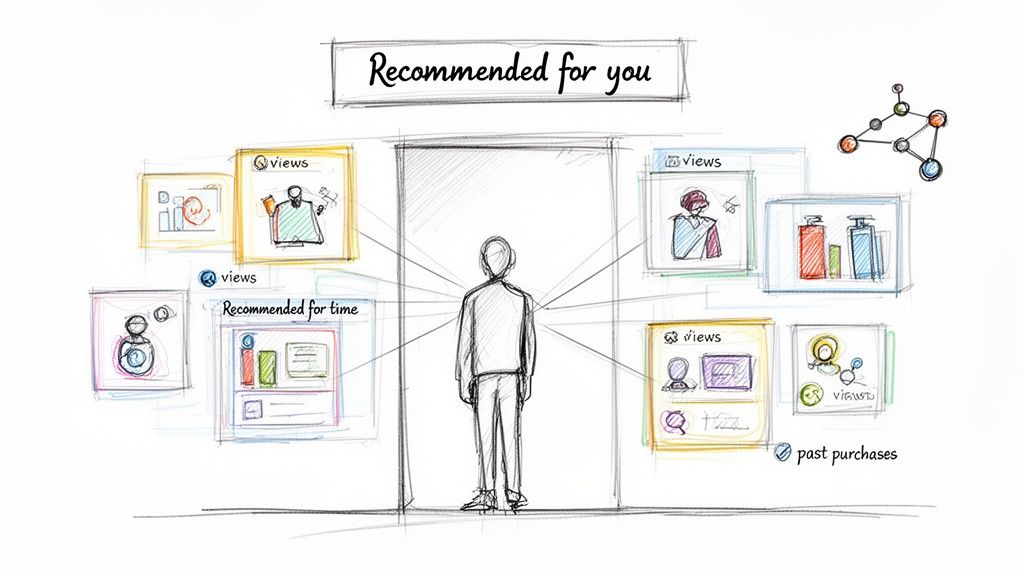
Go Way Beyond "Related Items"
True personalization isn't just showing more of the same. It's predicting what a customer needs next, driving up Average Order Value (AOV), and building loyalty.
The data is staggering. 70% of retailers who invest in personalization see an ROI of at least 400%. Better yet, 49% of US shoppers want stores to give them tailored recommendations. They are asking for it.
Here is how this plays out in practice:
- Skincare & Beauty: Someone is looking at a serum for sensitive skin. Instead of showing five other serums, a smart system recommends a full, compatible routine—the gentle cleanser, the soothing moisturizer, and the SPF that works with those products. This is how brands build a dedicated AI beauty assistant to guide shoppers.
- Electronics & Accessories: A customer just bought the latest smartphone. The AI instantly suggests the fast-charging block they'll need, a screen protector that fits perfectly, and a case designed for that specific model.
- Fashion & Apparel: A shopper adds a blazer to their cart. The personalization engine immediately shows them the matching pants and the exact shirt the model was wearing in the photo. You've sold a whole outfit, not just one piece.
Put Dynamic Content to Work
Swap out static, one-size-fits-all sections of your store with dynamic, AI-powered blocks. This is where you'll see the biggest wins in engagement and conversion.
Key Insight: Your product page is the final hurdle before a customer clicks "Add to Cart." Stop treating it like a brochure. Every recommendation on that page should be custom-built for the person looking at it.
Here are high-impact spots to start with:
- Homepage: A "Picked Just For You" section that changes based on their last visit.
- Product Page: "Complete the Look" or "Frequently Bought Together" carousels that are actually smart.
- Cart Page: A "Don't Forget These!" section for perfect, low-cost impulse buys.
When you use customer data this way, your website stops being a passive storefront and becomes an active, intelligent selling partner. It’s about making every click count and putting the perfect product in front of the right person at the right moment.
Optimize Your Product Pages for Clarity and Conversion
Your product page is the make-or-break moment where a curious browser either becomes a customer or clicks away forever. To win them over, you have to squash every bit of doubt and friction.
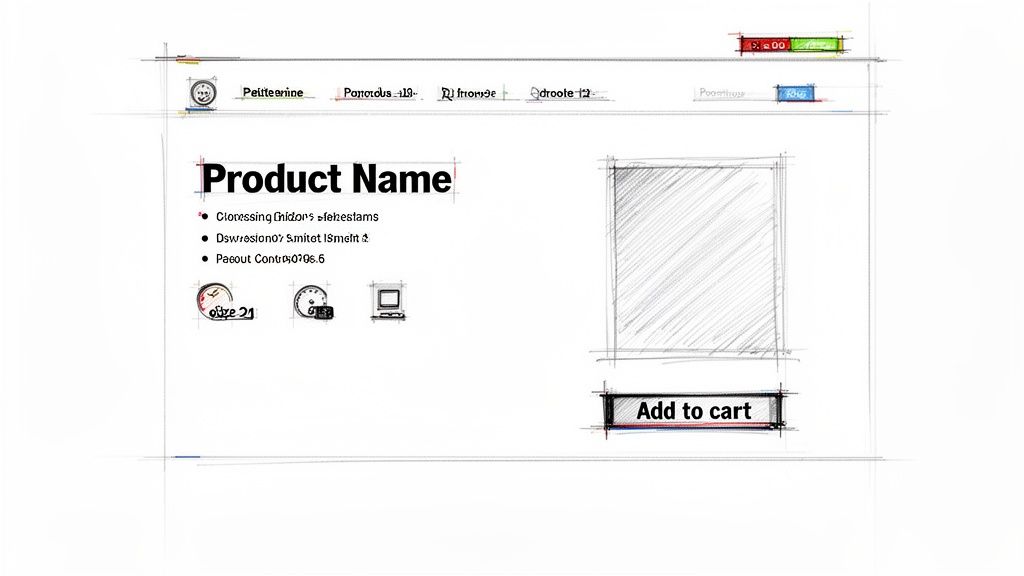
This goes beyond nice photos. It's about building absolute confidence in the purchase through product names that are optimized for discovery, descriptions that sell benefits, and bullet points that cut to the chase.
Write Copy That Sells Confidence
Nothing tanks conversions faster than sloppy copy. Vague descriptions force shoppers to guess about sizing, materials, or what your product even does. That uncertainty is the #1 reason they’ll bounce and buy from a competitor who gives them the answers they need.
Your copy must get ahead of their questions.
- Sizing & Fit: Don't just show a chart. Describe the fit. "Fits true to size" is okay, but "Perfect for petite frames, but we recommend sizing up for a relaxed fit" is a game-changer.
- Materials & Use: "100% Cotton" is a start. What does that mean for them? Is it breathable? Durable? Machine-washable? Describe the feel and the experience.
- Compatibility: If you sell electronics or accessories, list every compatible model and answer "Will this work with my...?" questions directly in the description.
Getting this right is a huge part of boosting your store's performance. For a deeper dive, check out these 10 Proven Ecommerce Conversion Rate Optimization Tips for more practical strategies.
Structure Your Page for Scanners
Most people don't read word-for-word online. They scan. A giant wall of text is an instant turn-off. You must design your page so they can grab the most important info in a glance.
Pro Tip: Think of your page like an inverted pyramid. The most important info—like the product name and a killer one-sentence benefit—goes at the top. Follow that with easy-to-scan bullet points, and save longer paragraphs for the bottom.
If you have a large catalog, writing unique, benefit-packed copy for every SKU is a massive time-drain. This is a perfect place to use smart automation. For instance, a free product description tool can help you draft better copy in a fraction of the time. Got weak bullet points? You can generate bullet points that are clear, punchy, and persuasive. And if you're struggling with discoverability, a product name optimizer can ensure your titles are working for you.
A great product page leaves zero room for doubt. It gives every visitor the information and excitement they need to confidently click "buy."
Find the Numbers That Actually Move the Needle
You can’t fix what you don’t measure. Stop obsessing over vanity metrics like page views and start tracking the numbers that show if your customer experience is actually making you money. A killer CX isn't about looking busy; it's about making smart changes that grow your bottom line.
Build a simple dashboard that gives you a clear view of what’s working and what’s not. Don't drown in data. Start with the few key numbers that tell the real story of your store's health.
Your "Core Four" CX Metrics
For most Shopify stores, the story of your customer experience can be told through four essential metrics. Monitor these weekly to know where to focus your energy.
AI-Only Resolution Rate: What percentage of customer chats does your AI handle from start to finish without a human agent stepping in? A high rate—above 80%—is fantastic. It means your bot is handling common questions, freeing up your team for complex, high-touch conversations. If that number is low, your AI needs better training on your products or policies.
Conversion Rate by Traffic Source: Your overall conversion rate is just a headline. The real story is in the details. Are visitors from Instagram ads converting better than your email subscribers? This tells you which channels deliver ready-to-buy shoppers and where your marketing message connects. To see how your improvements stack up, use a conversion rate calculator to quickly assess the impact of your changes.
Average Order Value (AOV): This is a direct report card on your personalization and upselling. When AOV is climbing, your product recommendations are hitting the mark. A flat or falling AOV is a red flag that your cross-selling and bundling efforts aren't working.
Cart Abandonment Rate: This classic is still one of the most powerful KPIs. Don't just look at the overall percentage. Use your analytics to pinpoint where in the checkout process they’re leaving. If 70% of your abandoned carts happen after the shipping page loads, you don’t have a product problem—you have a shipping cost or delivery time problem. That’s a specific issue you can solve.
When you zero in on these four metrics, you stop guessing and start knowing. Each number tells a story and points you toward a specific action you can take to make your store better. This is how you make data-backed decisions that grow your business.
Frequently Asked Questions
You have the game plan, but diving into AI for your Shopify store always brings up questions. Here are the most common ones.
How Quickly Will I Actually See Results?
While every store is different, you can expect to see some wins within the first 30 days. The most immediate changes are operational. You'll see your support team’s first-response time plummet as the AI starts resolving a solid chunk of tickets on its own.
Revenue-focused metrics, like a noticeable lift in conversion rates or AOV, usually take a bit longer—think 60-90 days. The AI needs time to learn from thousands of customer interactions to nail its recommendations and move the needle.
Won't an AI Bot Sound... Like a Robot?
Nobody wants their brand voice replaced by a clunky, robotic chat window. That’s old-school thinking. Modern AI is conversational and, more importantly, trainable.
A great AI assistant should feel like an extension of your team, adopting your brand's unique personality—whether you're quirky and fun or straight-to-the-point and professional.
The goal isn't to replace your team. It's to let the AI instantly handle the 80% of simple, repetitive questions. This frees up your human experts to jump in on the complex, high-value conversations that build real loyalty.
Any good system has a seamless human handoff. If a customer has a tricky issue, they can get to a real person with a single click.
What’s the Biggest Mistake People Make When Improving CX?
Trying to do everything at once. Enthusiastic merchants often decide to change their theme, install five new apps, and rewrite all their support macros in the same week. It’s a recipe for chaos because you have no idea what’s actually working.
Pick one major pain point and attack it.
- Is slow support your biggest complaint? Start there.
- Is your AOV flat? Focus on personalization and upselling.
- Are people getting lost on product pages? Tweak your copy and layout first.
Implement a single, focused solution. Give it a month. Then, look at the data and decide on your next move. This methodical approach gets sustainable, measurable wins.
Can This AI Actually Connect With My Shopify Data?
It absolutely has to. A siloed AI is a dumb AI. True CX optimization relies on deep integration.
Platforms like Selzee.com are built for this. They offer native integrations that pull directly from your Shopify product catalog, inventory levels, and even a customer's specific order history. This is what allows the AI to give hyper-relevant, personalized answers based on real-time information, creating the seamless experience you're after.
Ready to stop leaving sales on the table? Selzee's AI shopping assistant can help you deploy proactive support, deliver powerful personalization, and turn more browsers into buyers. Discover how Selzee can transform your store's customer experience today.