Let’s be direct. That one-size-fits-all Shopify experience you're running? It's not just underperforming; it's actively costing you money. The hard truth is that a generic storefront is a direct path to higher cart abandonment, smaller order sizes, and conversion rates that hurt your bottom line.
Personalizing the customer experience isn't some trendy add-on anymore. For Shopify merchants looking to scale, it’s a core growth strategy.
The High Cost Of A Generic Storefront
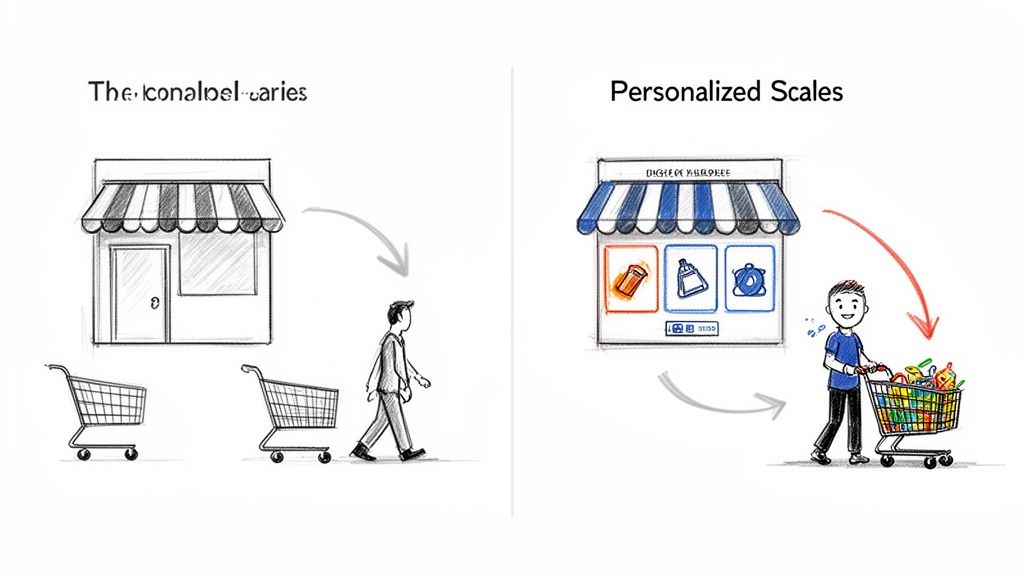
If your store greets every visitor with the exact same homepage, you are leaving cash on the table. A first-time browser who clicked through from an Instagram ad has completely different needs than a loyal customer returning to restock their favorite product. Showing them both the same static page is a masterclass in missed opportunities.
This isn't just a hunch; the data tells the story. Companies that nail personalization generate 40% more revenue from it than their competitors. A massive 80% of consumers say they are more likely to buy from brands that offer personalized experiences. The link between relevance and revenue is direct.
A generic experience creates friction. It forces your shoppers to do all the heavy lifting—they have to hunt for what they need, guess which products are right for them, and often just give up. That frustration is where the tangible costs start piling up.
Where Generic Stores Bleed Money
The financial drain from a non-personalized site isn't a theory; you can see it in your Shopify analytics. It's a compounding problem that eats away at your profitability.
You're seeing the damage in a few key areas:
- Sky-High Cart Abandonment: Shoppers add items to their cart but bail at checkout. Why? Often it's because of unexpected costs, confusion, or a lack of trust-building guidance at that crucial moment.
- Low Average Order Value (AOV): Without smart, relevant upsells, customers only buy the one thing they came for. They miss complementary products they would have loved.
- Anemic Conversion Rates: Visitors come, browse, and then leave. The product discovery process feels overwhelming and irrelevant to what they actually want.
The issue is a failure to connect. A generic storefront is like shouting one message into a diverse crowd, hoping something sticks. A personalized store starts a one-on-one conversation with each visitor.
To show how stark the difference is, let's look at the numbers.
The ROI Of Personalization vs Generic Experiences
The financial impact of shifting from a generic to a personalized approach is dramatic. Here's a snapshot of what that change can mean for your bottom line.
| Metric | Generic Experience | Personalized Experience |
|---|---|---|
| Conversion Rate | A standard 1-2% is common. | Jumps to 3-5% or higher. |
| Average Order Value (AOV) | Stagnant; customers buy only what they need. | Increases by 10-30% with relevant recommendations. |
| Cart Abandonment Rate | Often high, around 70%. | Can be reduced by 15-25% with timely offers. |
| Customer Lifetime Value (CLV) | Lower; struggles to build loyalty. | Significantly higher due to repeat, happy customers. |
The takeaway is simple: personalization isn't just about making your site feel friendlier. It’s a direct investment in your store’s profitability.
If you want to dive deeper into the "why" behind this, it's worth exploring what personalization in ecommerce truly means and how it fuels sales.
Now, let's get tactical. This guide will show you how to use AI to turn your existing traffic into a growth engine.
Ditch the Static Site: Turn Browsing Into a Guided Shopping Spree
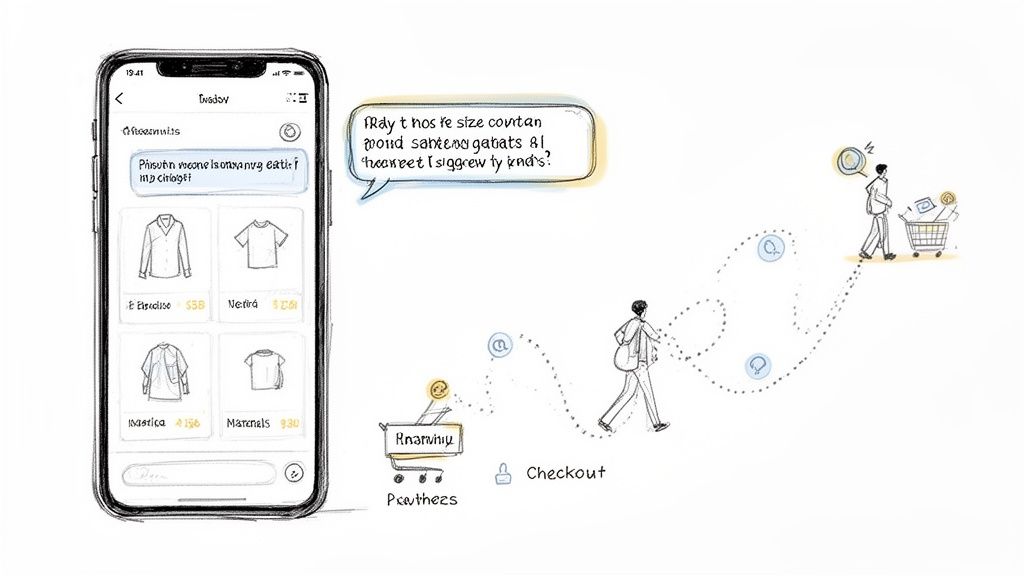
Here's a hard truth: most online stores make customers do all the work. We expect them to hunt, click, and figure it out on their own. But what if you could flip that script?
Imagine an AI shopping assistant that works like your best in-store salesperson—the one who knows just what to ask. It could turn a visitor’s aimless browsing into an active, guided journey from "just looking" to "yes, I'm buying this!"
This isn't a clunky FAQ bot. I'm talking about a conversational AI that transforms passive scrolling into a consultation. It's the difference between a customer getting lost in product grids and an expert popping up to ask, "Hey, I see you're checking out our linen shirts. Want to know how they fit compared to our cotton ones?"
From Window Shopper to Eager Buyer
A smart AI shopping assistant doesn't wait for questions; it anticipates them. It's your 24/7 expert, ready to jump in the second a customer hesitates.
The results speak for themselves. The data is clear: AI-powered chat is a massive win. A mind-blowing 12.3% of shoppers who engage with an AI chat convert, compared to a mere 3.1% who don't. That's a 4X increase.
What's even wilder is that 64% of those AI-driven sales are from first-time shoppers. It shows how powerful this is for building immediate trust with new customers.
Here’s what this looks like in practice:
- The Overwhelmed Visitor: Instead of bouncing, they get a few simple questions from the AI that guides them straight to the perfect product category.
- The Detail-Oriented Shopper: They get instant answers about materials or sizing without having to dig for an FAQ page.
- The Hesitant Buyer: Someone's lingering on a product page? The AI can proactively pop up a size chart or a glowing customer review about the fit.
The real magic is answering the unasked question. By offering instant clarity, you obliterate the friction that leads to cart abandonment. It makes the experience feel easy, personal, and builds confidence.
Turning Conversations into Conversions
This isn't just theory; it’s a proven model. When you deploy a smart assistant, you're creating a guided path to purchase.
Think about a beauty brand. An AI assistant can ask a customer about their skin type and concerns. Then, it can recommend a complete routine—from cleanser to serum—tailored just for them. This not only skyrockets conversion rates but also bumps up the average order value.
This is how you clone your best employee and put them on your website, delivering a top-tier experience for every visitor.
If you want to see this in action, check out this case study on how an AI beauty assistant drives sales by giving genuinely helpful, personalized advice.
Get Serious About Product Recommendations
Let’s be honest, the classic “customers also bought” widget is showing its age. It’s a blunt instrument. We can do much better. This is where AI shines—moving beyond generic suggestions to deliver surgically precise recommendations that feel like a personal shopper is on call.
True personalization dives deep. An AI can look at what a shopper is doing right now, connect it to what they've bought before, and pull insights from their chat history to serve up relevant products. This is how you directly personalize the customer experience and see a real lift in your average order value (AOV).
Forget the basic grid of similar products. Deploy recommendation models that genuinely solve a customer's problem.
Moving Past The Basics
The real money is in contextual upselling and cross-selling. You're not just showing products; you're building solutions.
Here are a few models that work wonders for Shopify brands:
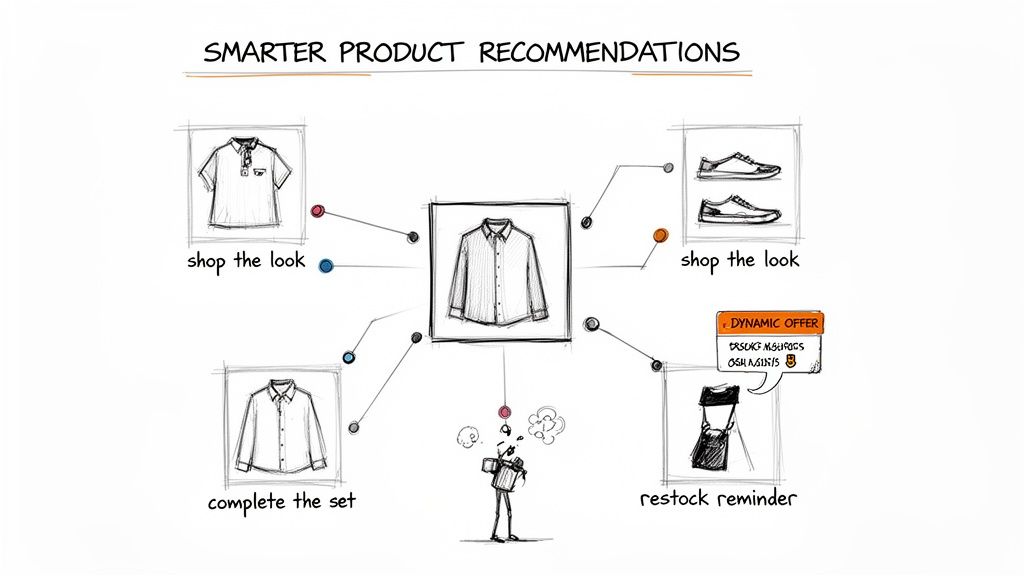
- "Shop the Look" for Apparel: Someone is looking at a blouse? Don't just show more blouses. AI can instantly pull together the exact skirt, shoes, and accessories the model is wearing. You've turned a single item view into a potential full-outfit sale.
- "Complete the Set" for Home Goods: A customer adding a can of paint to their cart is starting a project. Smart recommendations will offer the brushes, rollers, and tape they will need. It’s convenient for them and a bigger cart for you.
- "Restock Reminders" for Consumables: For products people buy regularly—coffee, supplements, skincare—AI can track purchase cycles. Prompting a customer to reorder right before they run out secures the repeat purchase and builds loyalty.
The best recommendations never feel like a sales pitch. They feel like a helpful shortcut. You're saving the customer time and effort by showing them exactly what they need next.
Using Dynamic Offers To Seal The Deal
Personalization isn’t just about what you show; it's also about when and how. This is where dynamic, real-time offers come in.
Picture this: a shopper has been on your site for several minutes and added an item to their cart. But now they’re hesitating at checkout. Instead of letting them become another abandonment statistic, an AI can trigger a pop-up with a unique, time-sensitive 5% discount to nudge them across the finish line.
This isn’t about plastering coupon codes everywhere. It’s about being strategic—giving a small incentive to shoppers on the verge of converting who just need one final push.
Personalization Tactics And Their Impact
This table breaks down effective strategies and the impact you can realistically expect.
| Tactic | Primary Goal | Typical Metric Lift |
|---|---|---|
| "Shop the Look" / "Complete the Set" | Increase Average Order Value (AOV) | 5-15% lift in AOV |
| Cart Abandonment Dynamic Offer | Increase Conversion Rate (CVR) | 3-7% reduction in abandonment |
| Restock Reminders | Improve Customer Lifetime Value (CLV) | 10-20% increase in repeat purchases |
| AI-Powered Search | Boost CVR & AOV | 2-5% lift in site-wide CVR |
| Conversational Chat Assistant | Increase CVR & Reduce Support Load | 8-12% lift in CVR for engaged users |
As you can see, the right strategy can lead to significant, measurable growth. These aren't vanity metrics; they represent real revenue.
Of course, even the smartest recommendations need great copy. Make sure your product benefits are crystal clear. You can use a free product description tool to craft copy that sells, making every suggestion more compelling. Combining intelligent product matching with persuasive copy creates a system that consistently drives bigger orders.
Build Customer Segments That Actually Convert
Alright, let's take personalization beyond your website. Your strategy can't stop when they leave your homepage; it has to follow them across every channel. The real magic happens when you stop thinking in broad strokes like "new vs. returning visitors" and start building razor-sharp customer segments.
This is where your customer data becomes pure gold. Instead of letting it sit in your Shopify analytics, you can put it to work creating dynamic, high-intent groups. This is the secret to making your marketing budget work smarter.
Beyond Basic Lists
Forget generic segments. The power to boost conversions comes from grouping customers based on their behavior and interests. Your goal is to create lists so specific that you can talk to each group about exactly what they care about.
Here are a few powerhouse segments you can build today:
- High-Value Cart Abandoners: Shoppers who loaded their cart with over $150 worth of products but then vanished. These people are on the verge of buying and are begging for a targeted follow-up.
- VIPs Who Love New Drops: Your most loyal customers—the ones who buy from a new collection within the first 48 hours of launch. They trust you and want to be the first to know what's next.
- The Ingredient-Conscious Shopper: Anyone who used your chat to ask about specific ingredients (like, "Is this product vegan?") or spent time filtering your catalog for certain attributes.
When you get this granular, you stop shouting one generic message at a crowd. Instead, you're having quiet, persuasive conversations with small groups who are already listening. That precision turns browsers into buyers.
Put Your Segments to Work Everywhere
Once you've defined these lists, unleash them. These segments should power your entire marketing machine. By syncing these audiences to all your tools, you can create a seamless and personal journey for every shopper.
A great way to do this is with targeted on-site pop-ups. For a customer in your "VIP" segment, greet them with a pop-up offering exclusive early access to a new product. For someone in the "High-Value Cart Abandoners" group, a pop-up with a free shipping offer could be the perfect nudge to click "Buy Now."
You can apply the same logic to your paid ads. Imagine running a retargeting ad on Instagram that speaks directly to a customer who asked your chatbot a specific question about a product. It's incredibly effective because it feels like a helpful, personal reminder, not a random ad. The goal is to make every touchpoint feel consistent and uniquely relevant.
Measure The Real Impact Of Your Personalization Efforts
You can't improve what you don't measure. Kicking off a personalization strategy without knowing what success looks like is like driving blind. It's time to stop guessing and start focusing on the numbers that move your business forward.
Putting in the effort to personalize the customer experience isn't just about creating warm feelings. It's about getting a real, measurable return on investment. To prove your strategy is working, you need a simple way to track what matters.
Focus On Bottom-Line Metrics
Forget vague metrics like "engagement." Let's talk about the hard data that shows your personalization tech is paying for itself. This means zeroing in on the specific lifts in performance that directly impact revenue.
Build your measurement plan around three core pillars:
Conversion Rate Lift: You have to know if your personalized chats and recommendations are turning more browsers into buyers. Is the AI closing sales that would have otherwise walked away?
Average Order Value (AOV) Growth: Are smart recommendations convincing customers to add more to their cart? A rising AOV is proof that your upselling and cross-selling tactics are working.
AI Support Resolution Rate: How many customer problems is your AI assistant solving on its own, without a human getting involved? A high resolution rate means lower support costs and happier customers who get instant answers.
The goal is to shift from, "I think this is working," to, "I know this is working because our AOV is up 12%." Data separates hope from strategy and is the only way to scale what you're doing.
This framework gives you the clarity to see what you're getting for your money.
Tracking Performance And Making Adjustments
Once your core metrics are locked in, the real fun begins. It's not enough to just look at the numbers; you have to understand the why behind them.
If you see a spike in AOV, dig into your analytics and find out which specific product recommendations are causing that lift.
If a dynamic offer isn't reducing cart abandonment, maybe the discount isn't right, or the trigger is off. The data will tell you the truth, letting you double down on your winners and cut your losses fast. This continuous cycle of measure, analyze, and optimize is what separates top-tier stores from everyone else.
Need a hand with the numbers? You can learn more about calculating conversion rates to get a solid picture of your starting point. This will make it easier to see the real lift you get from every personalization tactic you roll out.
Integrate AI Personalization Without The Headache
The last thing you need is another complicated tool that requires a team of developers and a month of headaches to get running. The best technology should feel like it was always there, working quietly in the background.
That’s the idea behind a smooth setup. You want to get in, get it working, and start seeing the payoff right away.
This is why platforms like Selzee were built. They're designed to plug directly into major e-commerce platforms like Shopify, Shoptet, or Upgates with almost zero friction. We're talking about a single line of code—that's it. You can get powerful AI personalization up and running without derailing your operations.
Unify Your Customer Data
Here's where the magic happens. The next step is connecting your new AI tool with the customer data you already have, like in your CRM. This is a game-changer.
Suddenly, you have a complete, 360-degree view of every shopper. You’re combining their real-time on-site behavior and chat conversations with their past purchase history. This rich, unified profile is what fuels truly intelligent personalization.
The real power isn't just in having the data; it's in connecting it. A seamless integration turns isolated data points into a coherent customer story, allowing you to anticipate needs and act on them instantly.
Once you’re set up, you need a way to know if it's working. This isn't guesswork; it's about tracking the right things.
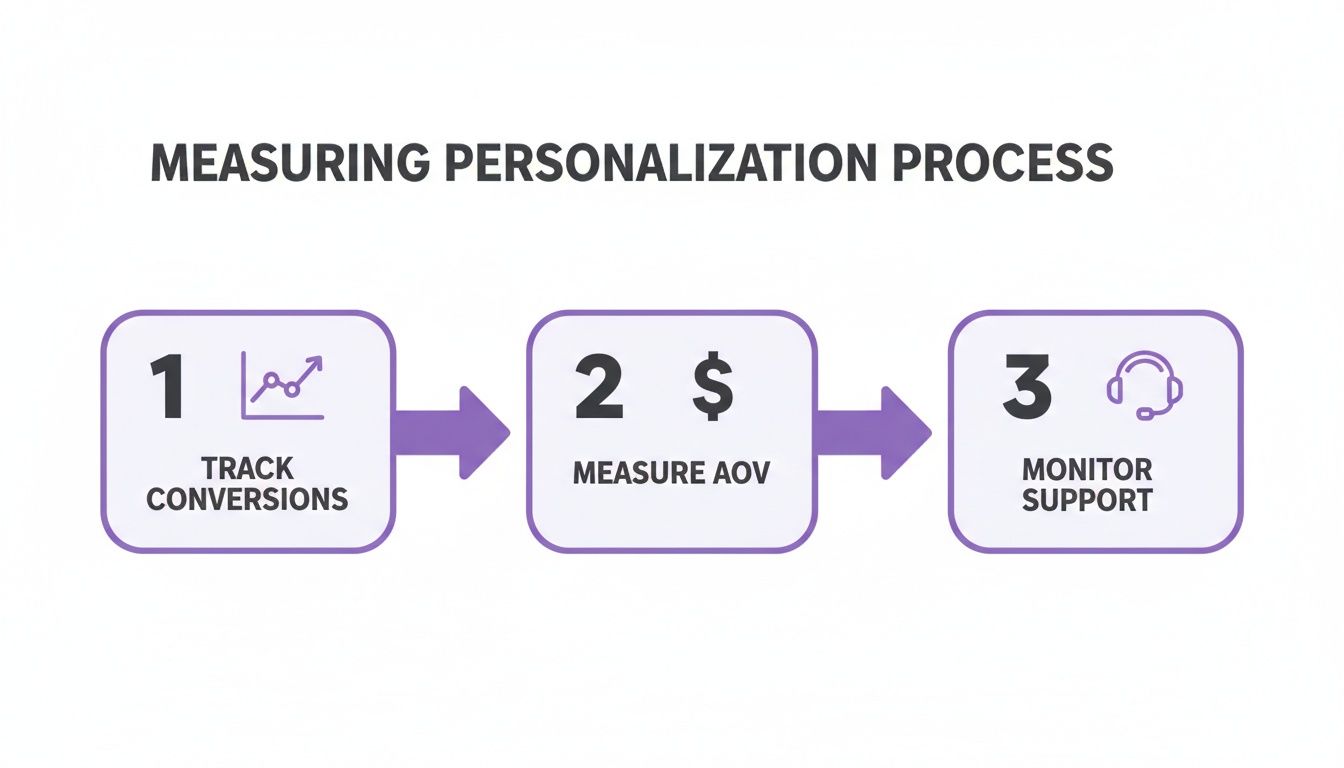
This simple flow shows that a successful rollout isn't just flipping a switch. It’s about creating a clear framework to measure the impact on your key business goals, from sales to customer happiness.
Integration shouldn't be a roadblock. With the right platform, you can get all the benefits of AI without the technical nightmares. If you’re curious to see just how easy this could be for your store, schedule a demo to see the integration process live.
Your Questions, Answered
What About First-Time Visitors? Can I Personalize Their Experience?
Absolutely. This is where modern AI shines. Even if someone's new to your site and you have zero purchase history, the system is already learning.
It watches their real-time behavior—what pages they click, how long they linger on a product, and what they type into the chat. This becomes instant fuel for personalization. You can serve up helpful recommendations and support from their first interaction, making them feel like you "get" them right away.
How Quickly Will I See Results?
This is the best part. While building long-term brand loyalty is a marathon, you can see impressive wins almost immediately.
Activating a conversational AI assistant or smart product recommendations can give your conversion rates and average order value (AOV) a noticeable bump within the first few weeks. The trick is to start with the low-hanging fruit—the quick wins that solve the most common frustrations your customers face.
The smartest shops don't try to personalize everything at once. They pick one or two high-impact areas, crush it, prove the value, and then build from there. Start by solving a real problem for your customers.
Is This Going To Slow Down My Shopify Store?
Fair question. The short answer? No.
Modern AI tools like Selzee are engineered to be lightweight. They load asynchronously, which is a technical way of saying they load separately from your site's content. This design means they won't drag down your page speed or hurt your Core Web Vitals, keeping both your customers and Google happy.