Your Shopify store is live and making sales, but the growth curve is starting to flatten. You're past the "how to set up a store" guides and need proven tactics to scale. This isn't about the basics; it's about systematically engineering growth for an active e-commerce business. If you want to move from managing your store to multiplying its revenue, you're in the right place.
This list breaks down 10 powerful e-commerce growth strategies for established merchants. We're skipping the fluff and diving straight into actionable playbooks to boost revenue, increase average order value (AOV), and build a loyal customer base. Each strategy includes implementation steps, key KPIs to track, and common mistakes that cost you money.
You'll learn how to leverage AI-powered conversational commerce, advanced abandoned cart recovery, sophisticated customer segmentation, and dynamic pricing. We'll cover building a seamless omnichannel experience, integrating social commerce, and harnessing subscription models for predictable revenue. This is your roadmap from stagnation to hyper-growth. Let's turn your existing traffic into a high-performance revenue engine.
1. AI-Powered Conversational Commerce
Stop letting customers browse passively. AI-powered conversational commerce is one of the most dynamic e-commerce growth strategies for turning traffic into sales. It uses AI chatbots to engage customers in real-time, personalized conversations, guiding them from discovery to checkout. This isn't about a simple FAQ bot; it's about deploying an interactive, 24/7 sales assistant that understands customer intent and proactively drives revenue.
By answering questions instantly and offering tailored product recommendations, you reduce purchase friction and transform your storefront into a dynamic, responsive experience. Imagine a shopper asking, "What's your best moisturizer for dry skin under $50?" and receiving an immediate, curated list of top-rated products with direct links to buy. That's the power you can unlock.
Why It's a Game-Changer
Conversational commerce directly boosts key metrics like Average Order Value (AOV) by intelligently upselling and cross-selling within the chat. Shopify stores using an AI shopping assistant have reported double-digit increases in AOV. Brands like Sephora prove the model's success with virtual beauty advisors that create a guided, consultative experience, building confidence and loyalty. The biggest mistake is thinking of it as just support; it's a sales channel. To fully harness the power of artificial intelligence, it's essential to understand how to implement AI in ecommerce brands effectively, extending beyond conversational commerce to various aspects of your operations.
Actionable Implementation Steps
- Map Common Sales Journeys: Identify the top 5-10 questions your pre-sale support team answers daily. These are your first automation targets.
- Train Your AI: Feed the AI your entire product catalog, brand voice guidelines, and past customer service chats. The goal is a seamless, on-brand interaction that sounds like your best salesperson.
- Set Smart Triggers: Configure the chatbot to proactively engage visitors on high-intent pages (like pricing or product pages) after a set time or based on browsing behavior.
- Define Escalation Paths: Ensure a smooth handoff to a human agent for complex queries. A clear trigger could be a customer expressing frustration or asking a question the AI can't answer twice.
- Analyze & Optimize: Regularly review conversation logs to spot trends, identify gaps in the AI's knowledge, and find new opportunities for proactive engagement.
2. Abandoned Cart Recovery Automation
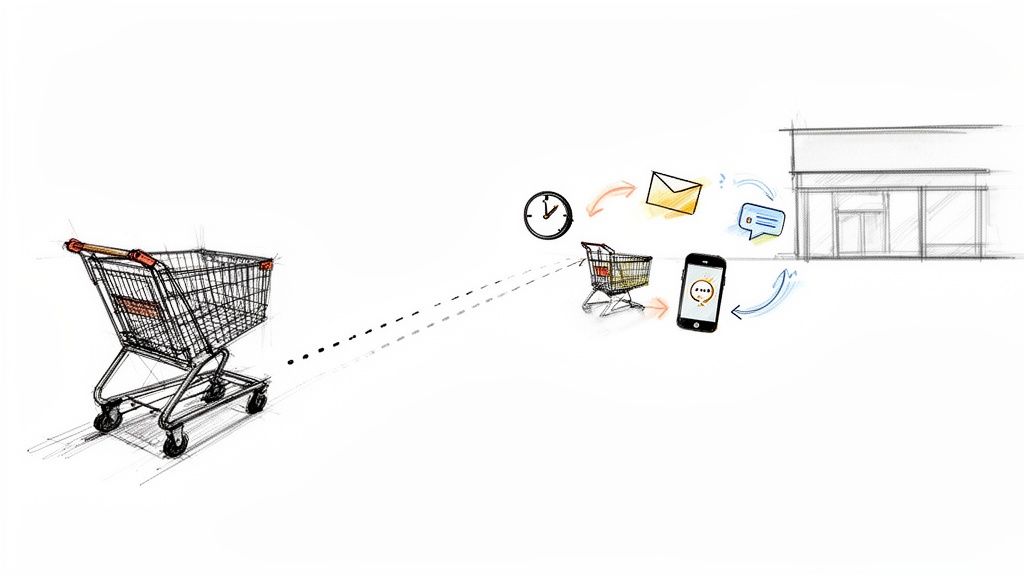
Stop leaving money on the table. Abandoned cart recovery automation is one of the highest-ROI e-commerce growth strategies for turning near-misses into sales. It automatically targets shoppers who add products to their cart but leave, sending personalized recovery sequences via email, SMS, or push notifications. This isn't just about sending one reminder; it's a strategic intervention to overcome last-minute hesitation and recapture lost revenue.
By re-engaging these high-intent customers, you address their potential objections, create urgency, and provide a compelling reason to return. Imagine a customer's phone buzzing an hour after they left your site with a message showing the exact headphones they almost bought, paired with a small, limited-time shipping discount. That’s the targeted, revenue-saving power of a well-tuned automation.
Why It's a Game-Changer
Automated cart recovery directly boosts your conversion rate and revenue with minimal ongoing effort. According to Klaviyo data, businesses using cart recovery automations can recover 3-14% of abandoned carts. The most common mistake is sending a single, generic "You left something behind" email. Luxury fashion brands excel by sending a tiered sequence: a simple reminder, then an offer with styling tips, and finally a small incentive. This transforms a transactional reminder into a high-touch, brand-building experience.
Actionable Implementation Steps
- Trigger Immediately: Send your first recovery message within 1-2 hours of abandonment while your brand is still top-of-mind.
- Show, Don't Just Tell: Use dynamic content to display images of the actual products left in the cart. This visual reminder is far more effective than a generic message.
- Segment Your Approach: Create different recovery sequences based on cart value. A high-value cart might trigger a more aggressive offer or even an alert for a human sales rep to follow up.
- Incorporate Social Proof: Add customer reviews or star ratings for the abandoned items directly into your recovery emails to build trust and alleviate purchase anxiety.
- Test Your Incentives: Experiment with different offers, like a percentage discount, a fixed dollar amount, or free shipping. Analyze which incentive provides the best recovery rate without excessively eroding your profit margins.
3. Personalized Product Recommendations
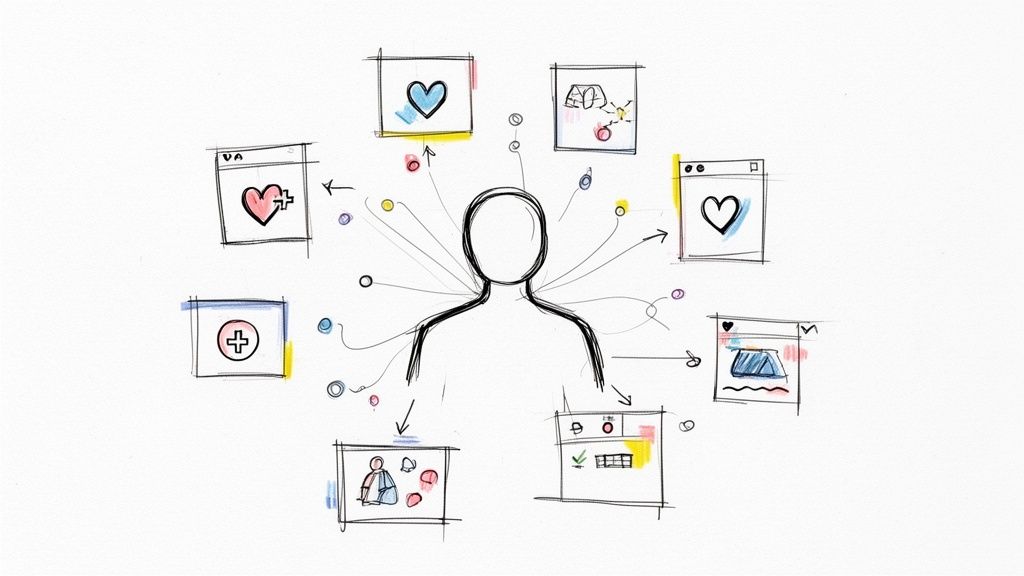
Stop showing every customer the same generic homepage. Personalized product recommendations use machine learning to analyze customer behavior, purchase history, and browsing patterns to showcase products they are most likely to buy. This strategy transforms a static catalog into a dynamic, personal shopping experience, making product discovery effortless and compelling.
By predicting what a shopper wants, you dramatically increase engagement, conversion rates, and cart sizes. Think of it as having a personal shopper for every visitor, guiding them to their next favorite product. A common mistake is only placing recommendations on product pages. Strategic placements on the homepage, in the cart, and in post-purchase emails are critical. This level of curation builds loyalty and makes customers feel understood.
Why It's a Game-Changer
Personalization directly impacts your bottom line by boosting Average Order Value (AOV) and conversion rates. Amazon famously attributes a huge portion of its revenue to its "Customers who bought this also bought..." engine. Similarly, Stitch Fix uses AI-driven styling to deliver hyper-personalized selections. Even a simple implementation, like a DTC supplement brand recommending a complementary product at checkout, can lift revenue significantly. This becomes even more powerful when delivered directly within a chat conversation, answering questions like "What else goes well with this?" in real-time.
Actionable Implementation Steps
- Start with Simple Rules: Begin with "Frequently Bought Together" or "Top Sellers in This Category" on product pages. These are easy wins.
- Enrich Your Product Data: Your recommendations are only as good as your data. Ensure your product catalog has detailed attributes, high-quality images, and customer reviews. If your product descriptions are weak, you can use our generator to improve them quickly.
- Place Recommendations Strategically: Don't just stick to product pages. Use recommendations on the homepage, in the shopping cart, and even in post-purchase emails to maximize visibility.
- Combine Recommendation Types: Blend different logic. Use behavioral data (what a user has clicked on) with content-based data (products with similar attributes) for more well-rounded suggestions.
- Monitor and Test: Continuously A/B test your recommendation algorithms and placements. Track metrics like click-through rate and conversion lift to validate your ROI.
4. Dynamic Pricing and Offer Optimization
Stop using static, one-size-fits-all pricing. Dynamic pricing is a sophisticated e-commerce growth strategy that uses algorithms to adjust product prices and promotions in real-time based on live market signals like competitor pricing, inventory levels, and customer demand. This isn't about random price changes; it's about making surgically precise adjustments to maximize profitability.
By automatically responding to market shifts, you can capitalize on high-demand periods and clear slow-moving stock without manual intervention. Imagine your prices for a popular summer product automatically rising slightly as competitor inventory dwindles. The biggest mistake is a lack of clear guardrails, which can erode customer trust. You must set firm price floors and ceilings.
Why It's a Game-Changer
Dynamic pricing directly impacts your bottom line by ensuring you never leave money on the table. Airlines and ride-sharing services like Uber have mastered this, adjusting fares based on demand. In retail, brands use this for everything from competitive price matching to inventory-based automated markdowns. This strategy empowers you to respond instantly to the market, a crucial advantage in fast-paced e-commerce.
Actionable Implementation Steps
- Start with Low-Risk Categories: Implement dynamic pricing on a small, non-core product category to test your rules without risking brand perception.
- Set Clear Pricing Guardrails: Establish firm minimum and maximum price thresholds for each product to prevent extreme fluctuations that could kill customer trust.
- Segment Your Offers: Use customer data to create targeted offers. A first-time visitor might see a "10% off" pop-up, while a loyal repeat customer is shown a "buy one, get one 50% off" bundle.
- Focus on Value Communication: When prices adjust, ensure your product pages effectively communicate value. Optimizing your descriptions and bullet points is key. If you sell on Amazon, a free bullet points tool can help you justify the current price point.
- Monitor Competitors Intelligently: Use competitor price tracking tools not just to copy them, but to identify opportunities. If a key competitor is out of stock, it might be the perfect time for a slight price increase.
5. Omnichannel Customer Experience Integration
Stop forcing customers down a single path. Omnichannel integration is a critical e-commerce growth strategy that ensures a seamless, consistent journey whether a customer interacts with your brand on your website, a mobile app, social media, or in a physical store. The goal is to synchronize customer data and messaging across every touchpoint so the experience feels continuous and intelligent.
A shopper can discover a product on Instagram, add it to their cart on their laptop, and receive a cart abandonment reminder via SMS an hour later. The biggest mistake is inconsistent data; if pricing or stock levels don't match across channels, you instantly break trust. It’s about meeting customers where they are, without ever losing context.
Why It's a Game-Changer
Omnichannel excellence directly impacts customer loyalty and lifetime value. Brands that master this create a cohesive ecosystem that keeps shoppers engaged. Target perfectly blends its app, website, and in-store pickup options, allowing customers to shop however they prefer. DTC brands leverage Shopify Plus to connect their email, SMS, and social commerce efforts, ensuring every message feels like part of a single conversation. An AI shopping assistant can act as a central hub, maintaining conversational context across your website and social media DMs.
Actionable Implementation Steps
- Map Key Customer Journeys: Identify the most common paths customers take from discovery to purchase. Do they start on social media and buy on your site? Do they browse on mobile and complete the purchase on desktop?
- Unify Your Customer Data: Implement a Customer Data Platform (CDP) or use integrated apps within Shopify to create a single view of each customer, tracking interactions across all channels.
- Ensure Content Consistency: Your product information, pricing, and brand messaging must be identical everywhere. A discrepancy between your website and your social shop will kill trust.
- Create Channel-Specific Promotions: While your message should be consistent, your delivery can be tailored. Offer an exclusive discount code for SMS subscribers or run a unique giveaway on Instagram to encourage engagement on that platform.
- Monitor Cross-Channel Attribution: Use analytics to understand how different channels work together. This helps you see the true value of each touchpoint and optimize your marketing spend.
6. Customer Data Integration and Segmentation
Stop guessing what your customers want and start knowing. Customer data integration unifies scattered information into a single, comprehensive view of each shopper, consolidating data from your Shopify store, email platform, and support tickets. This isn't just about collecting data; it's about making it actionable.
By centralizing this intelligence, you can unlock sophisticated segmentation based on actual behavior. Imagine automatically grouping customers who have purchased twice in the last 60 days, browsed a specific category, and live in a particular region. The most common mistake is collecting data without a clear plan to use it. This level of precision allows for hyper-personalized marketing that drives loyalty and skyrockets lifetime value.
Why It's a Game-Changer
Unified data allows you to move from generic campaigns to one-to-one conversations at scale, drastically improving conversion and retention. DTC beauty brands use platforms like Klaviyo to segment customers by skin type and past purchases, sending them perfectly timed promotions for complementary products. This makes customers feel understood. An AI shopping assistant like Selzee can leverage this unified data in real-time. When a "VIP customer" lands on your site, the AI can greet them by name, reference past purchases, and offer exclusive deals.
Actionable Implementation Steps
- Map Your Data Sources: Identify every place customer data lives: your e-commerce platform, email service provider, CRM, helpdesk, and analytics tools.
- Choose Your Platform: Implement a Customer Data Platform (CDP) like Segment or a tightly integrated email platform like Klaviyo to act as your central data hub.
- Create Foundational Segments: Begin with high-impact segments like "high LTV customers," "at-risk of churn" (e.g., no purchase in 90 days), "first-time buyers," and "abandoned cart in last 24 hours."
- Use Progressive Profiling: Don't overwhelm new visitors with massive forms. Use pop-ups, quizzes, and follow-up emails to gradually gather more data like preferences or specific needs over time.
- Activate Your Segments: Deploy your segments across all channels. Use them for targeted email flows, personalized on-site content, custom audiences for social ads, and proactive chatbot campaigns.
7. Social Commerce and Influencer Integration
Stop using social media as just a billboard. Social commerce is a powerhouse e-commerce growth strategy that transforms platforms like Instagram, TikTok, and Pinterest into direct points of sale. It enables shoppers to browse and buy your products within the app, eliminating the friction of redirecting to an external website. It’s about creating a seamless, in-app shopping ecosystem powered by authenticity and social proof.
By merging content with commerce, you capture buying intent the moment it strikes. Imagine a follower watching an influencer’s TikTok video and completing the purchase right there in the app. The biggest mistake is partnering with big-name influencers who lack genuine audience connection. Authenticity is key. This strategy shortens the customer journey and leverages the trust creators have built to drive real sales.
Why It's a Game-Changer
Social commerce excels at driving both discovery and conversions. Brands like Fashion Nova and Gymshark build viral momentum that traditional advertising struggles to match. The key is authenticity; a recommendation from a trusted micro-influencer often carries more weight than a branded ad, leading to higher engagement and a better return on ad spend (ROAS).
Actionable Implementation Steps
- Enable Native Shopping: Activate Instagram Shopping, TikTok Shop, and Pinterest Product Pins. Tag your products in all relevant content—posts, Reels, and Stories—to make your entire feed shoppable.
- Identify Right-Fit Influencers: Focus on micro-influencers (10k-100k followers) whose audience perfectly matches your ideal customer profile. Their engagement rates are often higher and their recommendations feel more genuine.
- Structure Your Partnerships: Go beyond one-off posts. Build long-term relationships with creators, providing them with unique discount codes to track performance and offering affiliate commissions to incentivize sales.
- Host Live Shopping Events: Partner with an influencer to host a live shopping stream. These events create urgency and allow for real-time interaction with an engaged audience.
- Amplify User-Generated Content (UGC): Encourage customers to post with your products. Reshare the best UGC (with permission) to provide powerful, authentic social proof that builds trust.
8. Email Marketing Automation and Segmentation
Stop sending generic email blasts. Email marketing automation is a fundamental e-commerce growth strategy that delivers hyper-relevant messages to the right customer at the right time. Instead of one-size-fits-all campaigns, this approach uses customer behavior, purchase history, and lifecycle stage to trigger personalized campaigns that feel like one-on-one conversations.
This strategy moves beyond basic newsletters to create sophisticated, automated "flows" for every scenario: welcoming new subscribers, recovering abandoned carts, and re-engaging lapsed customers. The biggest mistake is over-promoting. By segmenting your audience, you can send targeted offers to VIPs, product education to new buyers, and replenishment reminders to repeat customers, dramatically boosting engagement and lifetime value.
Why It's a Game-Changer
Automated and segmented emails drive incredible ROI because they are inherently relevant. Brands like Harry's master this with welcome series that build brand affinity and post-purchase sequences that educate customers. Klaviyo reports that stores using advanced segmentation can see a revenue-per-recipient increase of over 100% compared to non-segmented campaigns. This isn't just marketing; it's relationship-building at scale.
Actionable Implementation Steps
- Build Your Core Segments: Start by creating dynamic segments based on purchase history (VIPs, one-time buyers), engagement level (active, at-risk), and browsing behavior (viewed specific product categories).
- Launch a Welcome Series: This is non-negotiable. Create a 3-5 email flow for new subscribers that introduces your brand story, showcases best-sellers, and provides a compelling first-purchase offer.
- Automate Abandoned Carts & Browsing: Trigger immediate, multi-step email sequences for abandoned carts and, for an advanced touch, abandoned browsing sessions.
- Balance Your Content: Implement an 80/20 rule. 80% of your emails should provide value (educational content, tips, stories), while only 20% should be direct promotions.
- Maintain List Health: Quarterly, create a segment of unengaged subscribers (no opens in 90-120 days), run a re-engagement campaign, and remove those who don't respond. This improves deliverability and ROI.
9. Subscription and Membership Models
Stop focusing only on one-time sales. Subscription models are powerful e-commerce growth strategies that transform one-time buyers into long-term advocates. By offering recurring product deliveries or exclusive member perks, you create a stable, predictable income stream that dramatically increases customer lifetime value (LTV). It's about forging a deeper, ongoing relationship with your most valuable customers.
This model moves beyond transactional sales to create a community and consistent value. A common mistake is a rigid subscription system. Customers churn when they can't easily pause, skip, or swap products. That convenience, combined with exclusive access, locks in loyalty and makes your brand an indispensable part of their routine.
Why It's a Game-Changer
Subscription models are a masterclass in retention and revenue forecasting. Brands like Dollar Shave Club disrupted entire industries by simplifying replenishment. The key is the shift from acquiring a customer for every sale to nurturing a long-term relationship. For instance, a nutrition brand can use a subscription model to ensure customers stick to their health goals, building incredible brand affinity.
Actionable Implementation Steps
- Define Your Value Proposition: Clearly articulate why a customer should subscribe. Is it cost savings, convenience (auto-replenishment), or exclusive access to a VIP community?
- Offer Flexible Management: Reduce churn by allowing customers to easily pause, skip a delivery, or swap products. A self-service portal is a must.
- Build a Member Community: Create an exclusive Facebook group, members-only content, or early access to new launches. Make members feel like insiders.
- Personalize the Experience: Leverage customer data to tailor subscription boxes or recommend new products. An AI assistant can track purchase history to suggest relevant add-ons or upgrades within the customer portal.
- Monitor Churn Intensely: Track your churn rate as a primary KPI. When a customer cancels, trigger an automated exit survey to understand why and identify patterns you can fix.
10. Content Marketing and SEO Strategy
Stop paying for every single click. A robust content marketing and SEO strategy is one of the most sustainable e-commerce growth strategies you can invest in. It attracts, engages, and converts customers by providing valuable information that solves their problems. This approach builds brand authority, trust, and a long-term asset that drives organic traffic around the clock.
By creating content that answers the exact questions your ideal customers are typing into Google, you place your brand directly in their path of discovery. The biggest mistake is writing only about your products. Your content should focus on your customers' problems. For instance, if you sell supplements, you need an authoritative article on the "benefits of collagen for skin" to capture qualified leads before they even look for a product. Great product discoverability often starts with a great product name, so consider using a product name optimizer to improve your SEO at the product level.
Why It's a Game-Changer
Content marketing and SEO compound over time, delivering increasing returns. Shopify's own blog educates entrepreneurs and naturally positions its platform as the go-to solution. Similarly, beauty brands that create in-depth skincare guides establish themselves as trusted experts, making the eventual sale almost effortless. Partnering with dedicated SEO services can accelerate your visibility and ensure your content ranks for the keywords that matter most to your bottom line.
Actionable Implementation Steps
- Map Content to the Customer Journey: Create content for every stage: blog posts for awareness ("5 Ways to Improve Your Sleep"), comparison guides for consideration ("Melatonin vs. Magnesium"), and detailed use-cases for the decision stage.
- Conduct Deep Keyword Research: Use tools like Ahrefs or SEMrush to find what your customers are searching for. Target long-tail keywords ("best vegan protein powder for sensitive stomachs") to capture high-intent traffic.
- Build Pillar Pages and Topic Clusters: Create a comprehensive "pillar" guide on a broad topic (e.g., "The Ultimate Guide to Vegan Protein"). Then, write shorter "cluster" articles on related subtopics (e.g., "pea protein vs. soy protein") that link back to the main pillar.
- Mine Customer Questions: Your support tickets and live chat logs are a goldmine of content ideas. Turn frequently asked questions into detailed blog posts or FAQ pages.
- Optimize for Search Intent: Ensure your content format matches what Google ranks for a given keyword. If the top results are all "how-to" videos, a blog post is less likely to succeed.
- Repurpose Everything: Turn a successful blog post into an infographic for Pinterest, a short video for TikTok, a carousel for Instagram, and a segment in your email newsletter.
10-Point E-Commerce Growth Strategy Comparison
| Strategy | Complexity 🔄 | Resources & Setup 💡 | Expected outcomes ⭐📊 | Ideal use cases |
|---|---|---|---|---|
| AI-Powered Conversational Commerce | Medium–High 🔄: NLP, integrations, ongoing training | Engineering, conversation designers, product data, monitoring 💡 | ⭐⭐⭐⭐: real‑time support, ↑conversion & AOV; 📊 24/7 resolution and intent data | High‑traffic stores, complex catalogs, multi‑market support |
| Abandoned Cart Recovery Automation | Low–Medium 🔄: rule triggers and sequencing | ESP/SMS, templates, segmentation, timing rules 💡 | ⭐⭐⭐: recovers 10–30% carts; 📊 high ROI with low cost | Retailers with frequent cart abandonment, seasonal sales |
| Personalized Product Recommendations | Medium–High 🔄: ML models and data pipelines | Rich product attributes, behavioral data, ML/analytics team 💡 | ⭐⭐⭐⭐: ↑AOV 15–30%, better retention; 📊 improved cross‑sell & repeat buys | Large catalogs, repeat customers, discovery-focused stores |
| Dynamic Pricing & Offer Optimization | High 🔄: real‑time data, competitor monitoring, compliance | Pricing engine, market data, legal/compliance oversight 💡 | ⭐⭐⭐–⭐⭐⭐⭐: optimized revenue & margins; 📊 better inventory turnover | Demand‑sensitive categories (travel, electronics), inventory management |
| Omnichannel CX Integration | Very High 🔄: cross‑platform sync and org alignment | CDP, integrations, cross‑team processes, significant budget 💡 | ⭐⭐⭐⭐⭐: ↑LTV, seamless journeys; 📊 unified insights across channels | Brands with online + offline presence or complex touchpoints |
| Customer Data Integration & Segmentation | High 🔄: ETL, governance, privacy controls | CDP, data engineering, compliance/legal, analysts 💡 | ⭐⭐⭐⭐: enables hyper‑personalization; 📊 better targeting & retention | Data‑driven personalization, lifecycle marketing at scale |
| Social Commerce & Influencer Integration | Medium 🔄: partnerships and platform ops | Creator relations, social commerce setup, content production 💡 | ⭐⭐⭐: high engagement and discovery; 📊 strong for younger demos | Visual/trend products, brands targeting Gen Z/young audiences |
| Email Marketing Automation & Segmentation | Low–Medium 🔄: flows, triggers, deliverability | ESP (Klaviyo/etc.), copy/design, list management 💡 | ⭐⭐⭐⭐⭐: high ROI (~$42/$1); 📊 measurable revenue and retention | Nearly all e‑commerce businesses for lifecycle & retention |
| Subscription & Membership Models | Medium–High 🔄: billing, fulfillment, retention workflows | Recurring billing system, support, churn management, ops 💡 | ⭐⭐⭐⭐: predictable recurring revenue & ↑LTV; 📊 stronger retention metrics | Consumables, VIP programs, businesses seeking recurring revenue |
| Content Marketing & SEO Strategy | Medium 🔄: ongoing production and optimization | Writers, SEO specialists, content promotion resources 💡 | ⭐⭐⭐–⭐⭐⭐⭐ (long term): organic traffic & authority; 📊 sustainable conversions | High‑consideration products, brand‑building, long‑term acquisition |
From Strategy to Execution: Your Next Steps
You now have a roadmap of ten powerful e-commerce growth strategies, each a distinct lever to accelerate your store's trajectory. From the immediate conversion lift of AI-powered conversational commerce to the long-term brand equity built through content marketing, the potential for expansion is immense. We've broken down complex concepts like omnichannel integration and advanced customer segmentation into an actionable playbook.
Scaling your brand isn't about finding a single "magic bullet." It's about a relentless commitment to a cycle of implementation, measurement, and optimization. Your Shopify store is a living ecosystem, and these strategies are the inputs that fuel its growth. The true power lies in executing them with precision and adapting them to your unique business.
Your Blueprint for Immediate Action
Feeling overwhelmed? Don't be. The goal isn't to implement all ten strategies by next Tuesday. The goal is to start smart. Here are your immediate next steps:
- Conduct a Growth Audit: Before you build, measure. Where is the biggest leak in your sales funnel right now? High cart abandonment? Low AOV? Poor retention? Use your Shopify analytics to identify your single biggest bottleneck.
- Choose Your "First Strike" Strategy: Based on your audit, select the one strategy from this list that directly addresses your biggest pain point.
- High Abandonment? Focus on Strategy #2: Abandoned Cart Recovery Automation.
- Low AOV? Prioritize Strategy #3: Personalized Product Recommendations.
- Weak Retention? Implement Strategy #9: Subscription and Membership Models.
- Define Success & Set KPIs: For your chosen strategy, define what success looks like. Is it a 15% reduction in abandoned carts? A 10% increase in AOV? A 20% lift in repeat customer rate? Set a clear, measurable, time-bound goal.
- Execute, Measure, Iterate: Deploy the tools and tactics. Monitor your KPIs daily. Don't be afraid to tweak your approach based on what the data tells you. Growth is an iterative process, not a one-time setup.
The Unifying Thread: Automation and Personalization
As you move from one strategy to the next, you'll notice a powerful theme: the intersection of automation and personalization. Today's customers demand an experience. They expect you to know their preferences, anticipate their needs, and communicate with them on their terms, 24/7.
This is where embracing technology, especially AI, becomes a non-negotiable competitive advantage. Manually personalizing every interaction is impossible at scale. Leveraging automation for tasks like cart recovery emails, segmented marketing campaigns, and AI-driven customer conversations frees you to focus on high-level strategic decisions. Mastering these e-commerce growth strategies is about building a resilient, intelligent, customer-centric engine that works for you, even when you're not working. Your next breakthrough is waiting in the data. Now, go make it happen.
Ready to supercharge your customer conversations and turn more visitors into buyers? Selzee is the AI Shopping Assistant built specifically for ambitious e-commerce brands like yours, automating support, personalizing recommendations, and recovering abandoned carts 24/7. See how you can implement many of these growth strategies automatically by starting your journey with Selzee today.